Tobin Yelland: Happy Accidents
- Interview by Ira Alfred Ingram
- Published:
- In Features
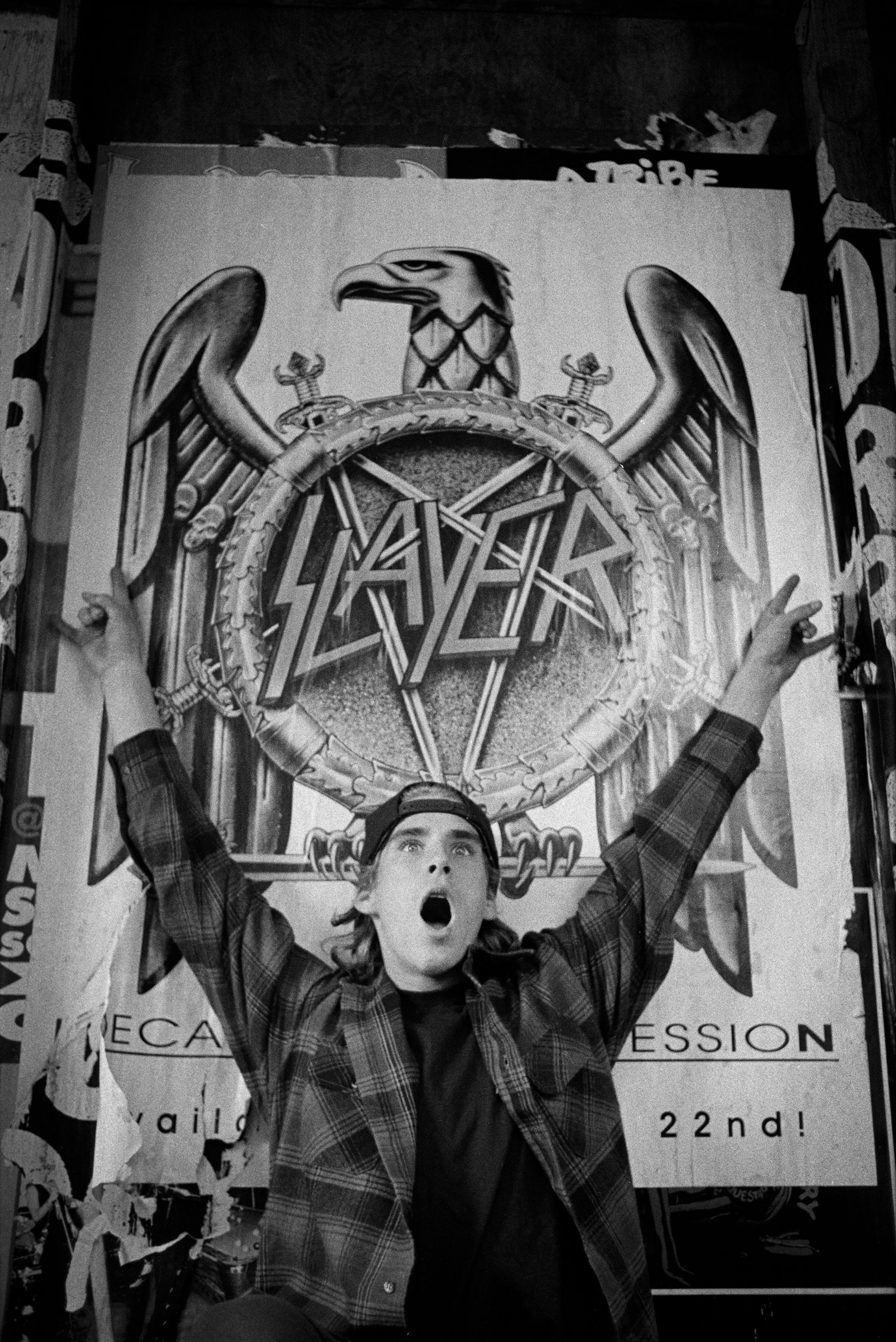
It happens to me all the time. Based on the work of an artist I revere, I’ll create an image of who I think they might be in real life. I thought Tobin Yelland would be terrifying in person, maybe not all together sane even…a sort of wild-eyed drifter with a razor in his shoe.
I was a teenager when I first fell in love with his work. It was a fascinating glimpse into a world so unlike my own. It drew me and my friends out of the suburbs and into the cities. We wanted to find these wild streets Tobin brought to life so vividly.
Meeting him decades later in LA, I found him to be nothing like the lunatic I had conjured up for all those years. The Tobin I met is a family man with a soul as kind as was ever made, a bit shy even, and seemingly completely unaware of his own brilliance let alone the impact his work has had on my generation. -IAI
IRA: Out of all the photos you’ve shot, is there something that has stuck with you?
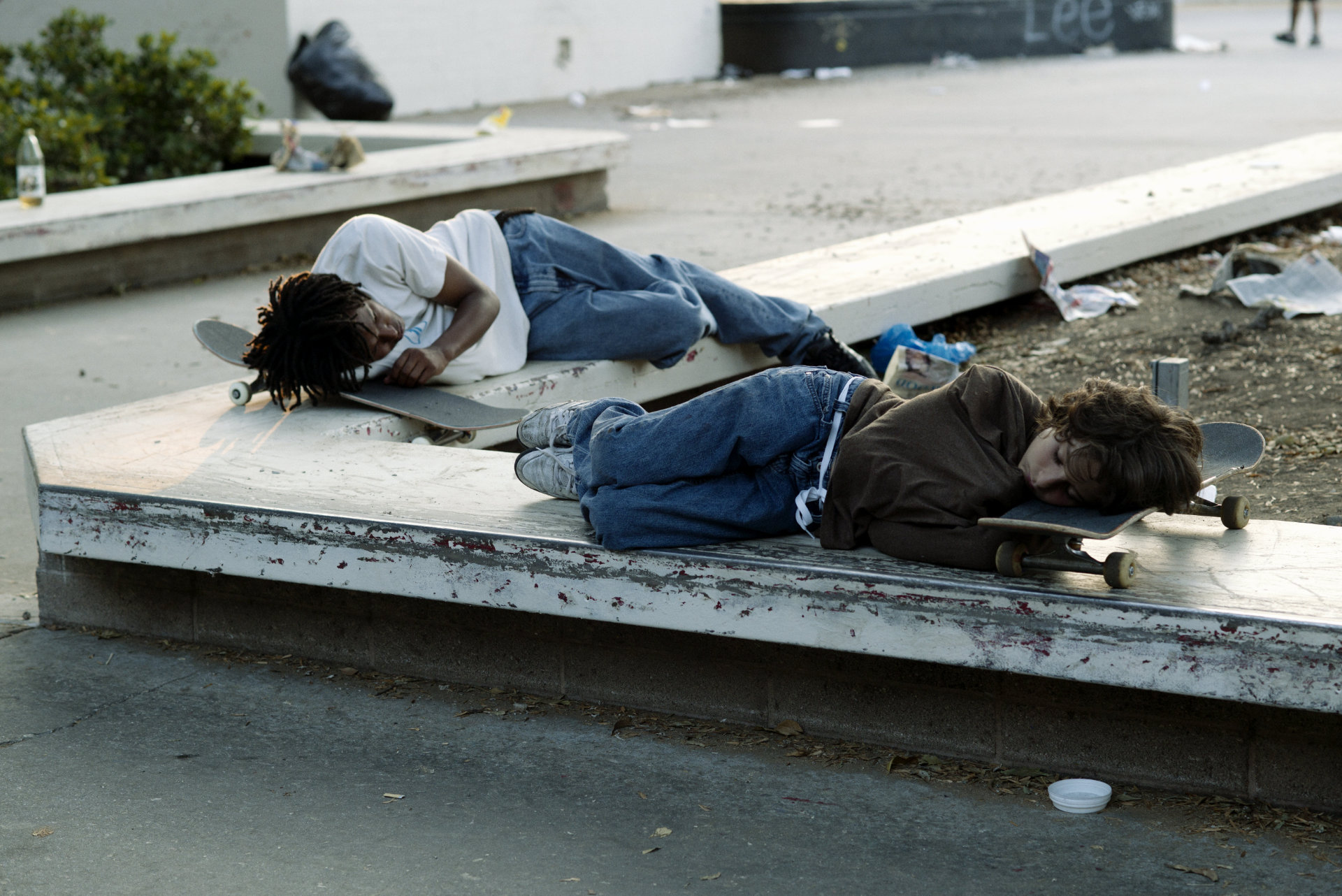
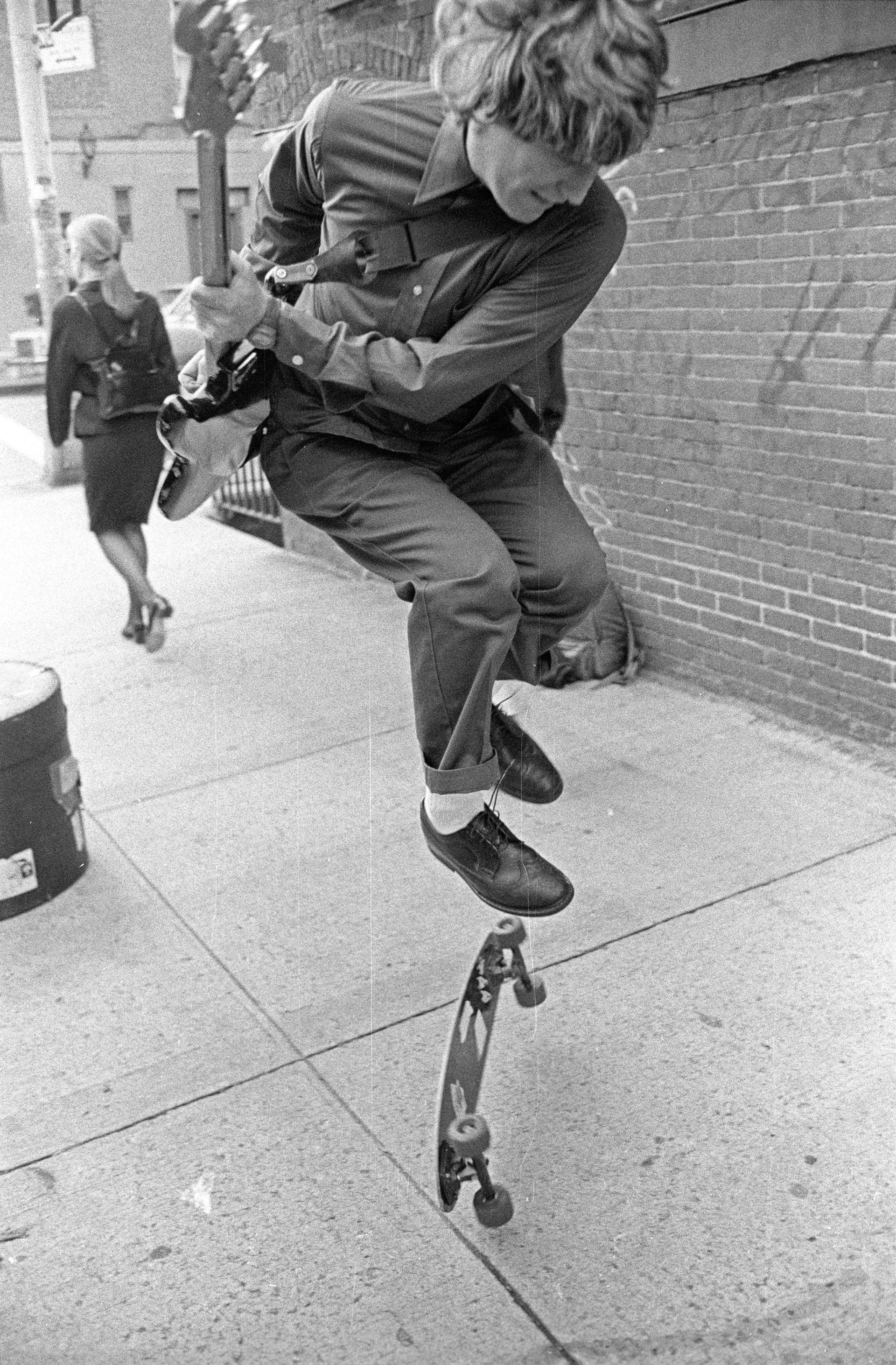
TOBIN: Out of a roll of film or day trips, there are always a few good shots to go back over and get excited about. I think it’s more of a feeling of exploration. The type of photography I like to do is a happy accident.
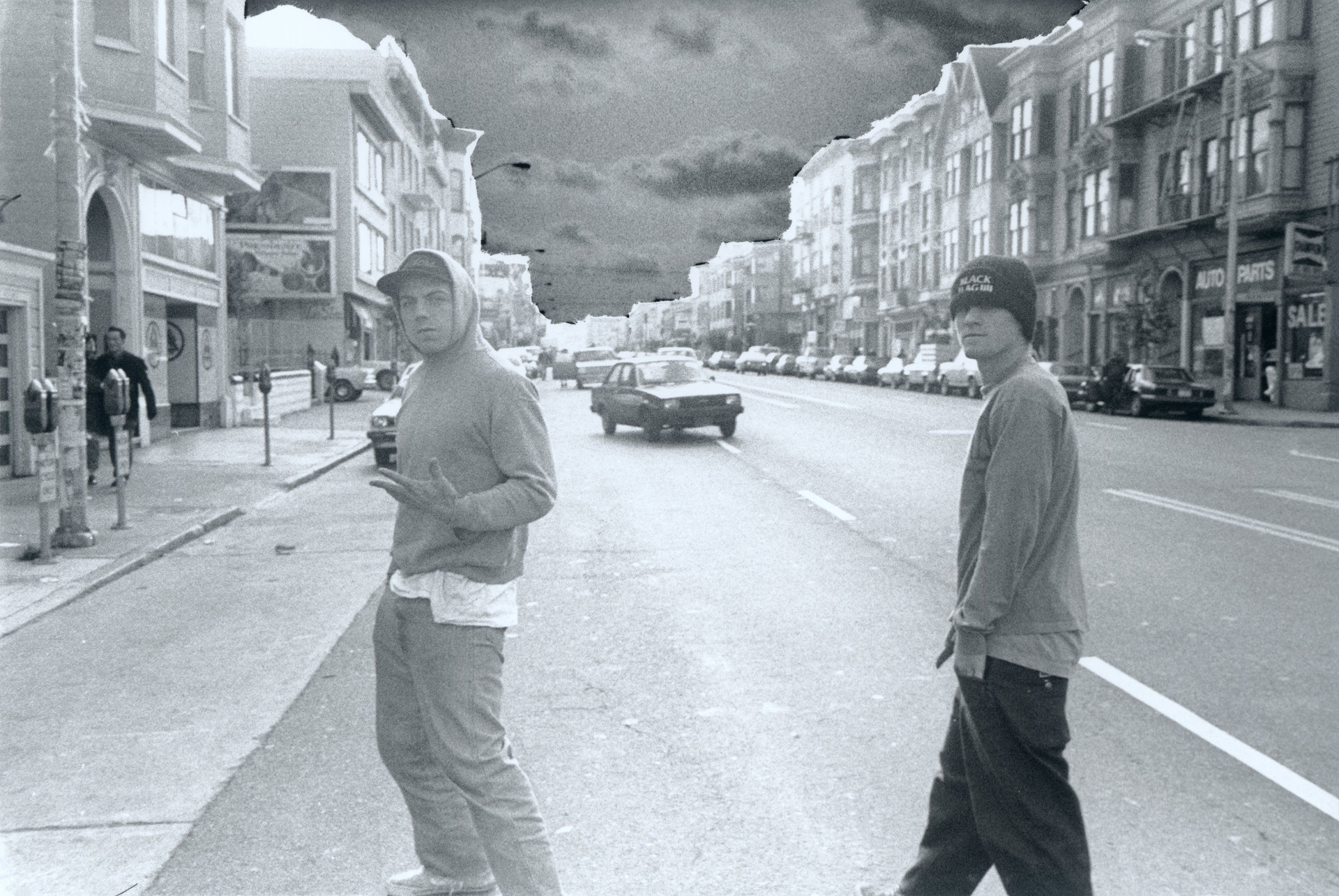
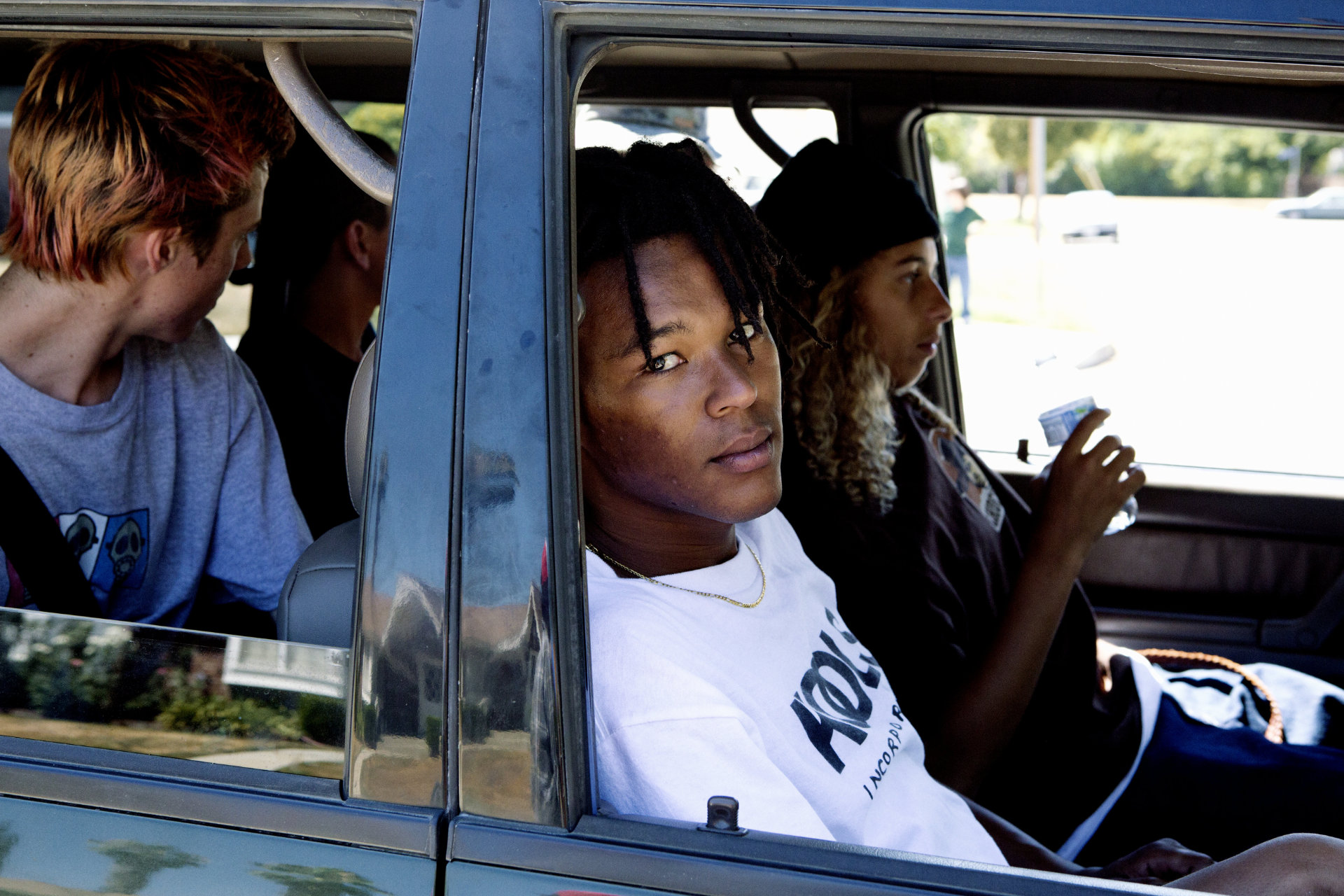
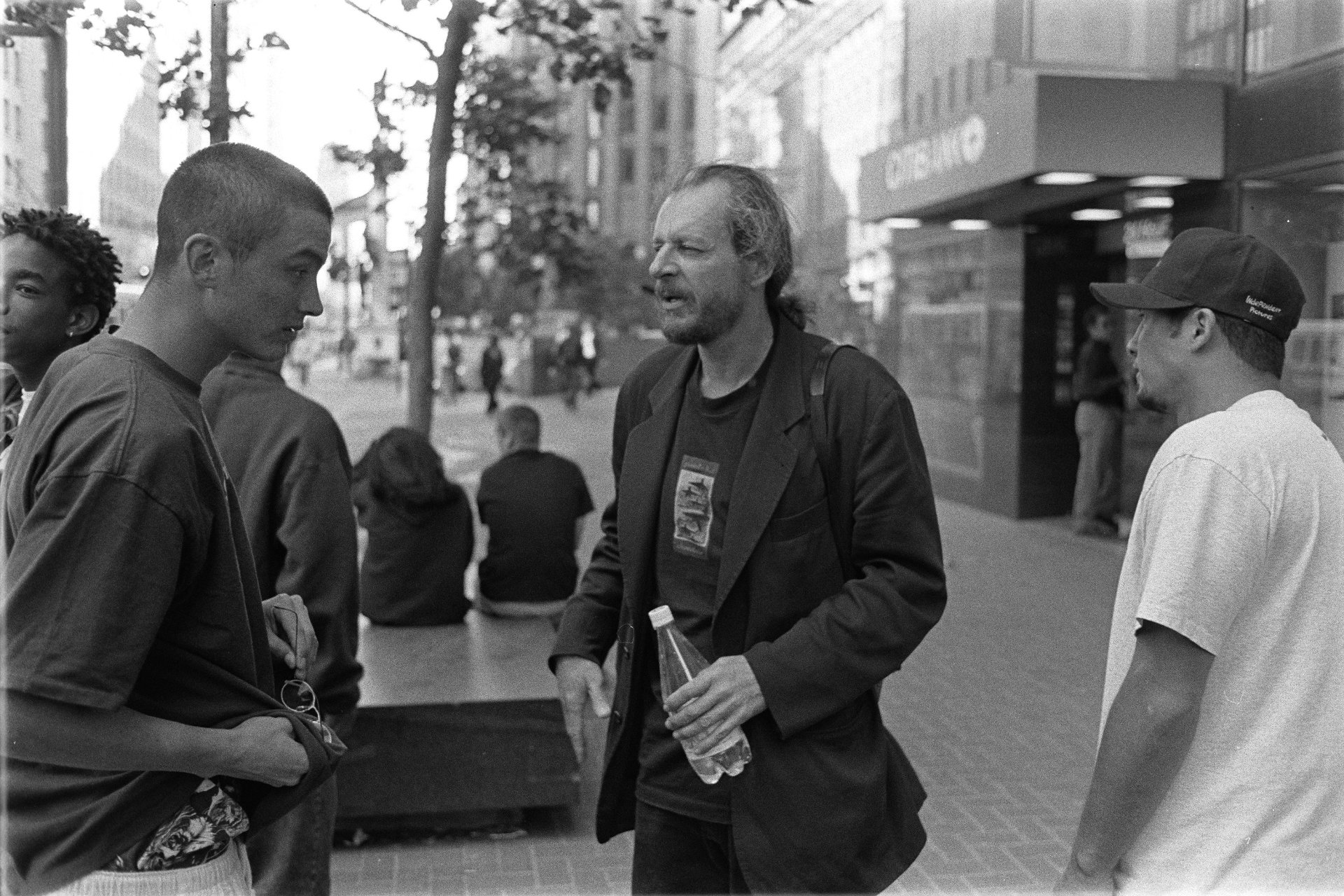
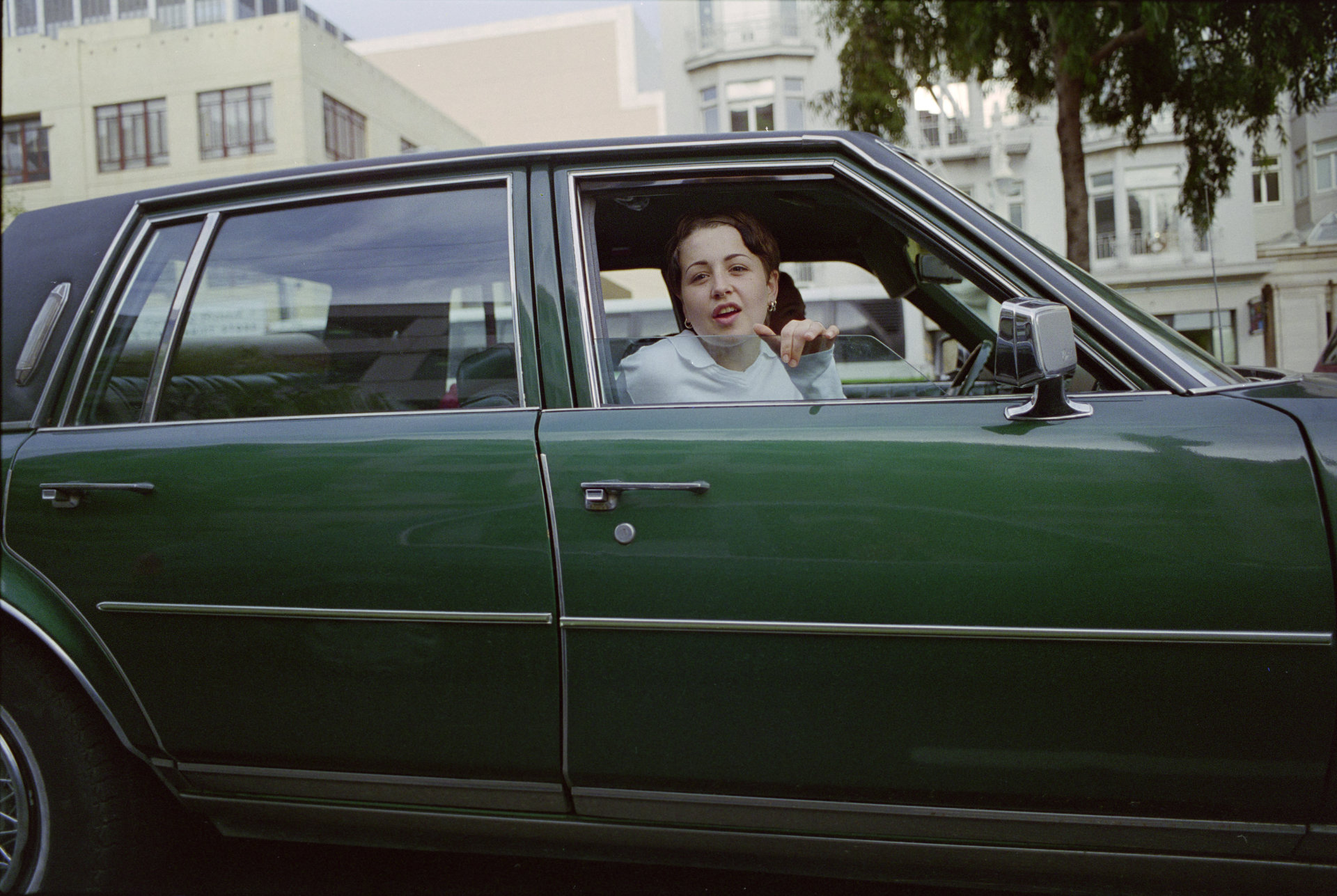
An example is when I was driving in San Francisco with the skateboarder Sean Miller, who did very strange, weird tricks. We were shooting skate photos, but I had my little camera on my lap. All of a sudden, he was talking to someone in the car next to us. We stopped long enough so I could take a picture. That type of moment is what I try to capture.
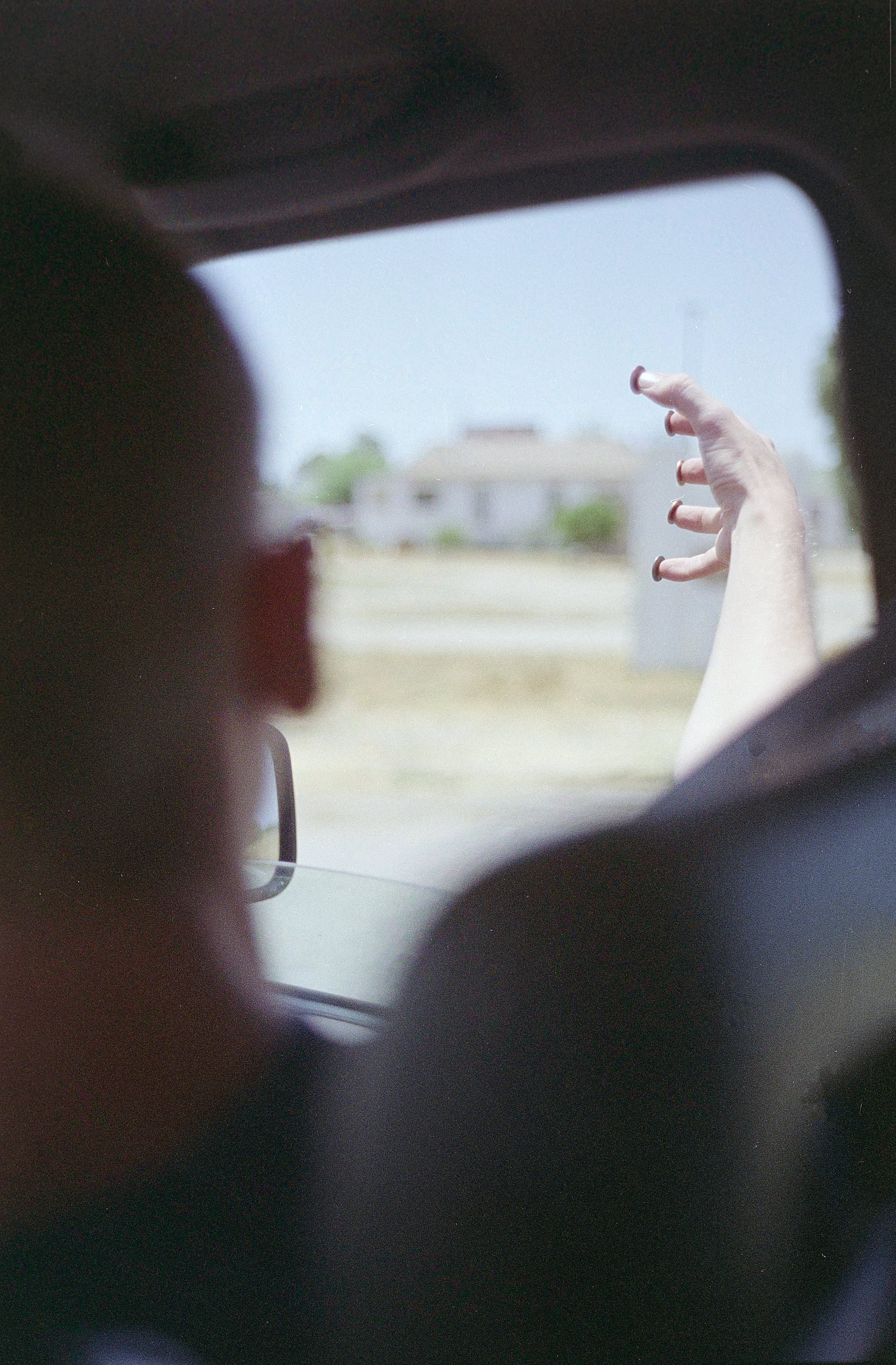
That type of photography always feels a little bit like magic. So often I’m not prepared, and then you get those moments where all of a sudden you’re immortalizing a little bit of magic.
All the good stuff that happens, just happens. And why does it happen? It’s the universe pushing things around, pushing you into the right place, and something happens. It’s not like you’re making it happen; everything is just coming together.
There’s no pre-production except for having the camera on you.
I am looking for a specific type of moment, so in that way, there is intention. And sometimes there are days and weeks of nothing. The moment just doesn’t happen, and has me thinking, “Am I even a photographer? There are no good pictures to take.”
What do you do to stay motivated when you’re not necessarily feeling inspired, because sometimes that’s where you get the best stuff, those days when you almost didn’t bring a camera?
I try to give myself projects sometimes, or maybe I’ll think of someone I know that I could go hang out with if I don’t have anything to do today. I have the overall feeling that I need to take pictures; I need to practice. Also, I like quotes by famous people; they help me a lot.
I’m such a nerd for this. I reference quotes I love all the time.
That helps me get inspired and just think, “Oh yeah, this isn’t terrible. What am I complaining about?”
Do you have any favorite quotes?
I do. The Quincy Jones quote, about finishing things that I start, helps me a lot because I have a habit of getting halfway through working on something, getting distracted, and forgetting about the first thing. The quote is: “My daddy told me the same thing. Once a task has just begun, never leave it till it’s done. Be the labor great or small, do it well or not at all.”
There’s another, from George Bernard Shaw. Jeff Goldblum was on a talk show and shared this quote: “This is the true joy in life, being used for a purpose recognized by yourself as a mighty one, being a force of nature instead of a feverish, selfish little clod of ailments and grievances, complaining that the world will not devote itself to making you happy. I am of the opinion that my life belongs to the whole community. And as long as I live, it is my privilege to do for it what I can. It is a sort of splendid torch, which I have got hold of for the moment, and I want to make it burn as brightly as possible before handing it on to future generations.” I think that’s pretty cool.
That is a nuclear quote. I remember him reading that too. Just using quotes to get into a different headspace is powerful stuff. Are there artists you draw inspiration from?
Like Kevin Thatcher, Mofo, Bryce Kanights, and other people like Josh Klassman, Josh “Bagel” Glassman from Venice, Charles Katz, Luke Ogden, Gabe Morford, Lance Dawes, Grant Brittain, Atiba Jefferson — so many photographers in the skate community. And then Larry Clark, who was a big influence on me when I was just getting inspired, thinking, “Oh, okay, you can take pictures of your friends and it can be something you do. That’s a cool direction to go in.”
Before I went to that three-day photography workshop, I thought I was going to be a fashion photographer, because I thought that was the idea of what a photographer could do. I didn’t think anything of skateboarding because it was just what I was around, and I didn’t think it was special. Coming away from that workshop, I realized, or I was told, “Everyone’s trying to take pictures documenting the homeless in your town — that’s what everyone’s doing for their art project. Maybe you should just photograph what’s around you and all your friends, because you’re young now, but it’ll change really fast. If you just photograph that, that could be really good.” So that inspired me, and that was really important. Larry Clark is probably the biggest inspiration.
I definitely want to get into Larry Clark, but first, there was something about your early photos I’ve always been drawn to. They were mostly in the Bay Area, right? When you were shooting skateboarding at the beginning?
Yeah, mostly. I grew up in San Francisco, so that’s really where I shot skateboarding. I started skating in the mid-eighties and moved out of San Francisco in 1998.
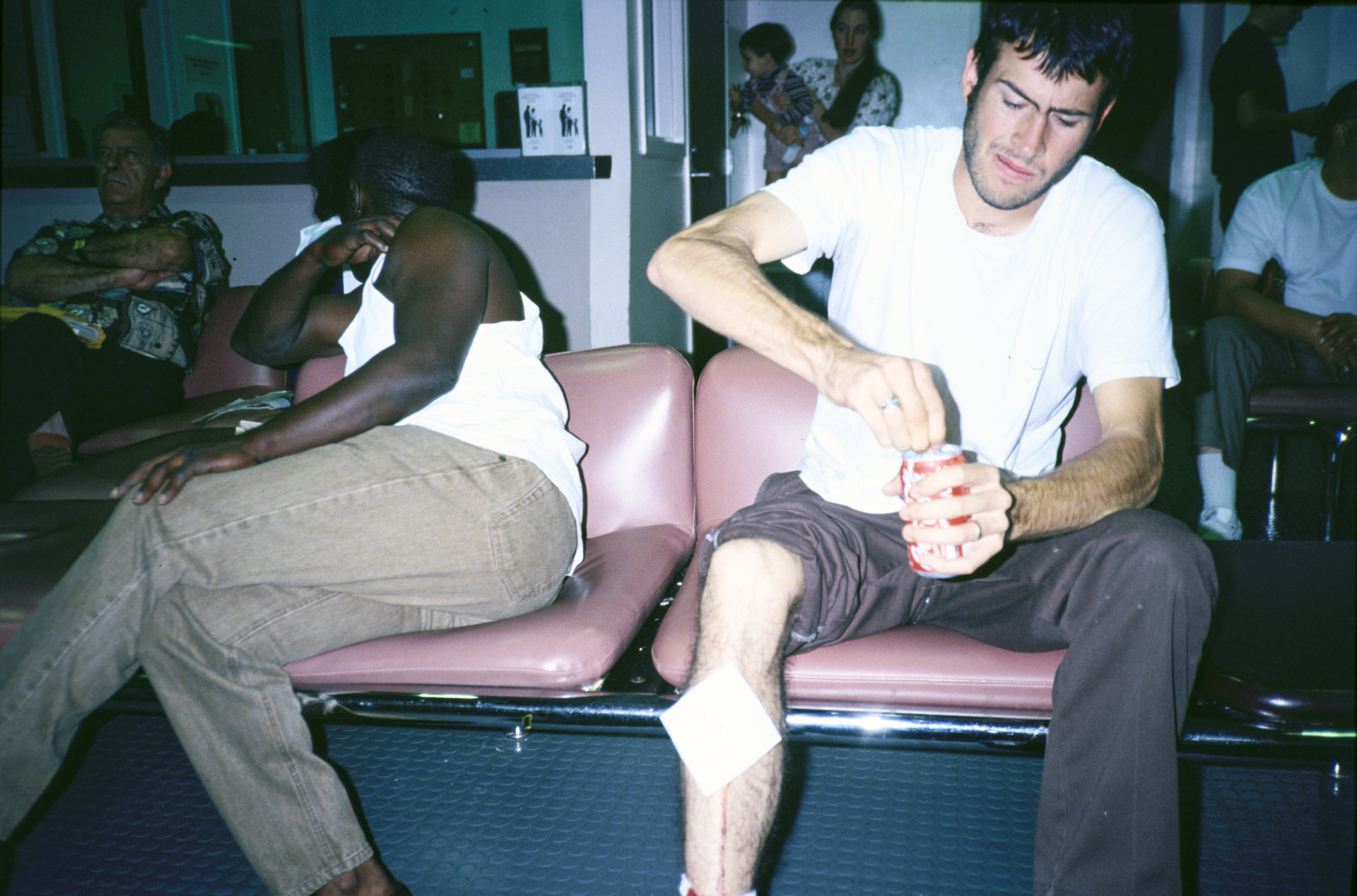
“He was really into collecting artifacts. The T-shirt of the kid who got hit in the head with a skate key was covered in blood. The T-shirt got ripped off, and Larry grabbed it. It ended up pinned to the wall in his studio with darts.”
Those early photos in SF have such an edge, and a lot of that is environmental, but that era you documented is super significant to me and a large number of skateboarders. That time and place seemed so raw and dangerous, but there’s humor in all your photos from that era. Was that what it felt like to be living through that?
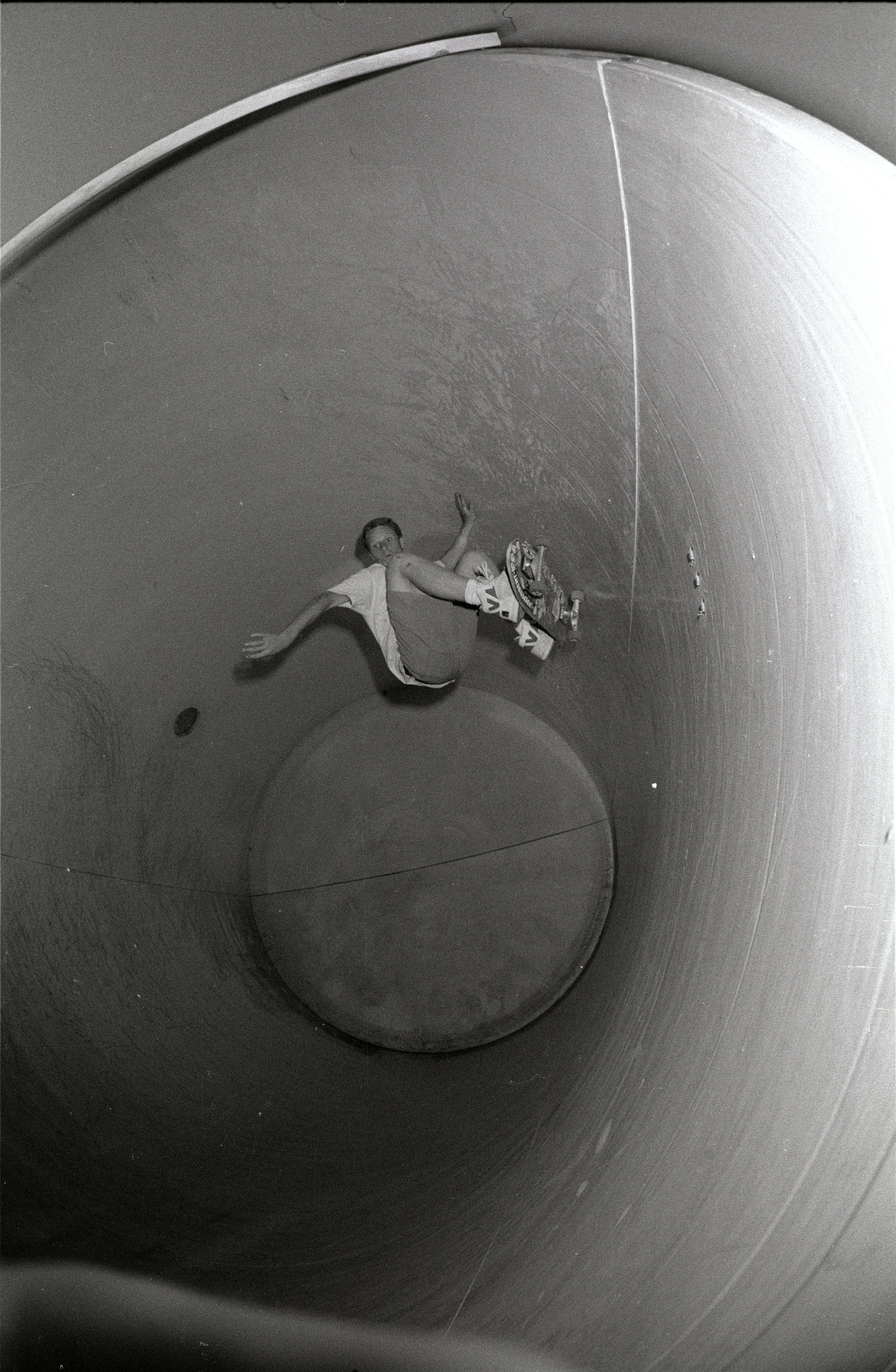
It’s hard to revisit what it felt like. I’m so used to my life today, in 2026. But I do have memories, and that might communicate what it was like for me. It was a really fun city to skate in because it was seven miles wide. You could skate across the width in a couple of hours. The most fun days were skating and taking the bus — maybe buses up hills — and then just skating unbelievably far distances. I guess we just had so much energy.

I think about the era, before me and my friends had a car, and we were just skating everywhere. There was no questioning it; you’re just out the door, you meet up here, and then you’re just gone. And then the sun’s down.
You were talking about the feeling — San Francisco is a port town, and I feel like it’s always been pretty open. There are bars that open at 6:00 AM, people drinking, drugs and alcohol. When I grew up there in the eighties, Ronald Reagan was president, and I think he cut off SSI. There was a big influx of people who had medication and then no longer had it. They were kind of homeless and not getting their medication, talking to themselves. There were a lot of people on the street, and we were just skating everywhere.
Around 1992, there was a recession, and the skateboard industry kind of caved in. There wasn’t a lot of stuff happening. You didn’t have a lot of money; it was kind of bleak. Maybe it’s the film…film is grainy, so maybe it looks rougher?

SF, New York, and LA can be pretty rough too, but LA feels like 20 cities to me. We all kind of stay in our own corner, and when you go around, it doesn’t have the same distilled feeling that New York and San Francisco have. They feel like powder kegs to me, with people living more on top of each other, and the energy is so good for skateboarding and photography and being young. There’s a lot to feed off of.
I think you hit it with “being young.” You’re young and probably acting out, and all your friends are acting out. Because of that, you’re bumping off other things, and everyone has a lot of energy, so things are happening, and there are big feelings. People think puberty is when you’re a teenager, but I feel like I had a lot of “puberty” going on through my twenties — a lot of ups and downs. That kind of shared experience, those big, young moments, translates to photographs that show those big moments in people’s young lives.
Yeah, I think you’re totally right. It seems like there is a secondary, cognitive-type puberty that lasts until your brain is fully developed around 25.
We talked about Larry Clark, and you met him at that workshop. Was that your first time meeting him? How did you stay in contact? Because you ended up working with him again, and you had introduced him to Harmony Korine? Is that right?
My memory is pretty fuzzy on all that. But I’ll tell you what I remember. My grandfather paid for the photography course, which was awesome. Larry gave his number to everyone in the class, saying, “Hey, call me up, send me some pictures, maybe I’ll call you back.” So I sent him photos — skating photos — and he was curious about skating. He would call back with advice: “Shoot more verticals. Don’t be scared of anything.” That was in the late eighties. I was still living with my parents when I went to the three-day photo workshop. It was put on by the Friends of Photography, which was founded by Ansel Adams. I just showed up, and it was all kinds of photographers — news photographers, journalists. It was an awesome experience.
We began corresponding and sending photos. Then he wanted to come out. I remember he came out when Luke Ogden and I lived in an apartment together. He just stayed on my floor. He wanted to follow us, check it out, go shoot photos, and go where we went. That first time he came out, I was working on a Wade Speyer pro spotlight. He came along with us to Visalia because we wanted to skate with Karma Tsocheff. We picked up Wade and then went down to Visalia. It must have been kind of weird for him because we were 19 or 20, and he was about 40. We all slept on Karma’s mom’s floor. I was shooting a lot of photos. I don’t have any photos of him from that trip, but I remember he would buy a lot of candy bars. If we went to go eat burritos, he would buy nachos and share them with everyone. I gathered that he wanted to research for a possible movie. He actually did a trade that first trip. He gave me a print, saying, “Do you want a print? You’re taking me out to see skateboarding; I’ll give you a print.” The photograph was of a woman smoking from Tulsa. It was a profile shot, and she had a big, beehive hairdo. It was pretty awesome.
On one trip, he asked me to bring Corey down to Los Angeles to shoot with Ed Lachman. Lachman is a sick DP. We ended up at Ed Lachman’s house, and Harmony Korine was there. He had already met them. My memory is fuzzy, but there’s a span of meeting up and checking things out. They did a lot of interviews with Corey Chrysler, just pulling stories. Some of those stories ended up in the movie Ken Park, which was written by Harmony. The way Larry tells the story, he ended up making that after Kids but it was supposed to be the first movie, then he got in a disagreement with Ed Lachman. Since he’d already been working with Harmony on the script, they ended up writing Kids and doing that. I wasn’t there for Kids.
In 1993, there was a contest in New York at Brooklyn Banks. Me, Andy Roy, John Cardiel, and Julien Stranger drove out in my car to New York and stayed at Larry’s house. This was before he’d met people in New York, like Leo Fitzpatrick, and I think it was also before he met Harmony. The Brooklyn Banks contest was insane. It was put on by Vinny…someone at a skate shop who had a Toyota truck filled with Old English forties and beer. It was not organized like any modern skate contest. It was in April, still kind of chilly. We stayed at Larry’s house for about a week. It was really generous of him to let us stay there. I don’t think he was drinking before we stayed there, but then he started hanging out with us and drinking beer, which wore him ragged that week.
I feel like that week was really important for him, being magnetized to all the skateboarders in New York he would end up collaborating with. That contest was walkable from his loft in Tribeca. We drove down to the contest in my car, and he was there, drinking Old English and taking photos, really excited. It was an exciting day for skateboarding, but there were also a lot of kids drinking beer. There was a fight — someone tried to steal a kid’s board. Because there were so many kids, they ganged up on that person and started beating him up. Mickey Reyes saved him, saying, “Hey, stop. Let’s not beat him up.” Then there was a rat that ran through, and all the kids threw their boards at it and killed it. The singer of the band Deee-Lite was there with her friends, filming with a Super 8 camera. When the kids killed the rat, she was so upset. It was kind of horrific — a Lord of the Flies moment.
That static energy, and all that angst. Malt liquor is not a great fuel to add to that situation.
No, it’s not. After all that energy of that day, we got in my car — me, Larry, Mickey, and maybe Leo, or he invited Leo and the kids he met back to his house. We all ended up in his loft, drinking beer.
It sounds like an origin story for Kids, or at least the desire to make it?
I think before that, Larry didn’t know Harmony or those people. Then we would leave his house and go to Washington Square. Larry was skating a bit because he’d already been to California five times and had gotten skateboards and was wearing skate shirts. He would always wear a jacket with a skate T-shirt underneath it, like an Eric Dressen shirt with dynamite. He had long hair and a ponytail.
I also remember that a while after that, Spike Jonze asked me to send him a picture of Larry Clark because he wanted to check out his style. He was doing Being John Malkovich and was looking for costumes for the Lee character played by John Cusack. Cusack has the ponytail. That’s the ponytail origin story.
Thats fucking amazing, I love both the films that story touches on. They are both formative films for me. Speaking of film, how did you end up in Local 600 (The International Cinematographers Guild), getting on set?
That’s all Larry Clark. I feel like we had this reciprocal relationship. He would trade me prints or something for introducing him to people and inviting him along, telling people he was cool. When he got a chance to make his second movie, Another Day in Paradise, he invited me to do stills, even though I had no experience at all — zero. I screwed up a lot. I ended up getting the poster, and I did some okay photos for a first-time unit still photographer, but I totally screwed up. I had never met another unit still photographer before.
He gave me the opportunity to do stills on a feature film. I think he just let the producers deal with me. They offered me a hundred dollars a day. I’m like, “Sure, I’ll try that.” In hindsight, I realized I had no idea what I was getting into. That film was shot in and around Los Angeles for about a month and a half. I stayed with Marc McKee. It was an amazing experience. That was my first film.
Then I got to do Bully. That was in Florida. Another Day in Paradise was in the late nineties, and Bully was around 1999 or 2000. Bully was more his thing because it had younger actors, and it was based on a true crime story that someone wrote. He wanted to replicate what that story was, and his vision. There was violence involving this dysfunctional, toxic friend group — a bully who the four or five other kids have a plan to kill, and they do. It’s a real crime.
That movie gave me a sick feeling in my stomach, especially the murder and the panic afterwards. It’s captured so well. I wonder how much of that tension was felt on set. Things can sometimes feel a little sterile on sets. Did you know it was going to be that way?
I don’t think I had any idea what I was getting into. I don’t remember so much about the shooting, but I know I read the script and the book. What I remember most about it is that it was really important to the director to shoot in the same places that the characters lived in. One creepy part was that the house where the actor Brad Renfro gets arrested was the actual kid’s house who got arrested. On the sidewalk in that neighborhood, there were their names. It felt like, “Ooh, this is where this true crime story really happened.”
Going back to your first experience as an on-set photographer, I think that story is so important. Every good opportunity I’ve had — and that so many other filmmakers, photographers, and artists I know have had — has come from getting into really deep water that you’re not comfortable with. Saying yes to stuff, and then being terrified and figuring it out. David Bowie famously said, “Always go a little further into the water than you feel you’re capable of being in. Go a little bit out of your depth. And when you don’t feel that your feet are quite touching the bottom, you’re just about in the right place to do something exciting.”
I love that. I’m kind of a scaredy-cat, but I think I work myself up slowly to take chances where my feet don’t touch the ground.
Do you have advice for younger artists or photographers?
I was just thinking about advice the other day. My friend Luke Ogden gave a quote to our friend Shelby Woods when he first started photography. Shelby asked, “What should I do? Do you have any advice for me? I never took photos before.” Luke’s advice was simply, “Just go do it.” I like that because it doesn’t fill in the blanks. The act of going out and doing something should be something you have to figure out in your own way. If I don’t tell you how to take a good photo, maybe you’ll come up with your own way, which would be much better.
To that point, how important do you think the process is? Finding what works and is inspiring to you? Not necessarily doing something the way you’re supposed to do it, but finding specific things that kind of keep your mind turned on.
For me, it’s always changing. Something that once worked doesn’t work anymore. It’s a mystery that keeps unfolding. Because there are ups and downs, and there are days where it just doesn’t work out, you have to figure out that puzzle: What’s better, or what’s a better way? For me, it’s a lot of trial and error.
But I think it’s also about being prepared. I have a preparation quote from Samuel Taylor Coleridge: “He who is best prepared can best serve his moment of inspiration.” I don’t think I could say that better.
Or from The Art of War, Sun Tzu: “Plan for what is difficult while it is easy, do what is great while it is small.” You can’t really do better than that.
Share