Kayla Mattes: Online
- Written by Max Olson
- Published:
- In Features
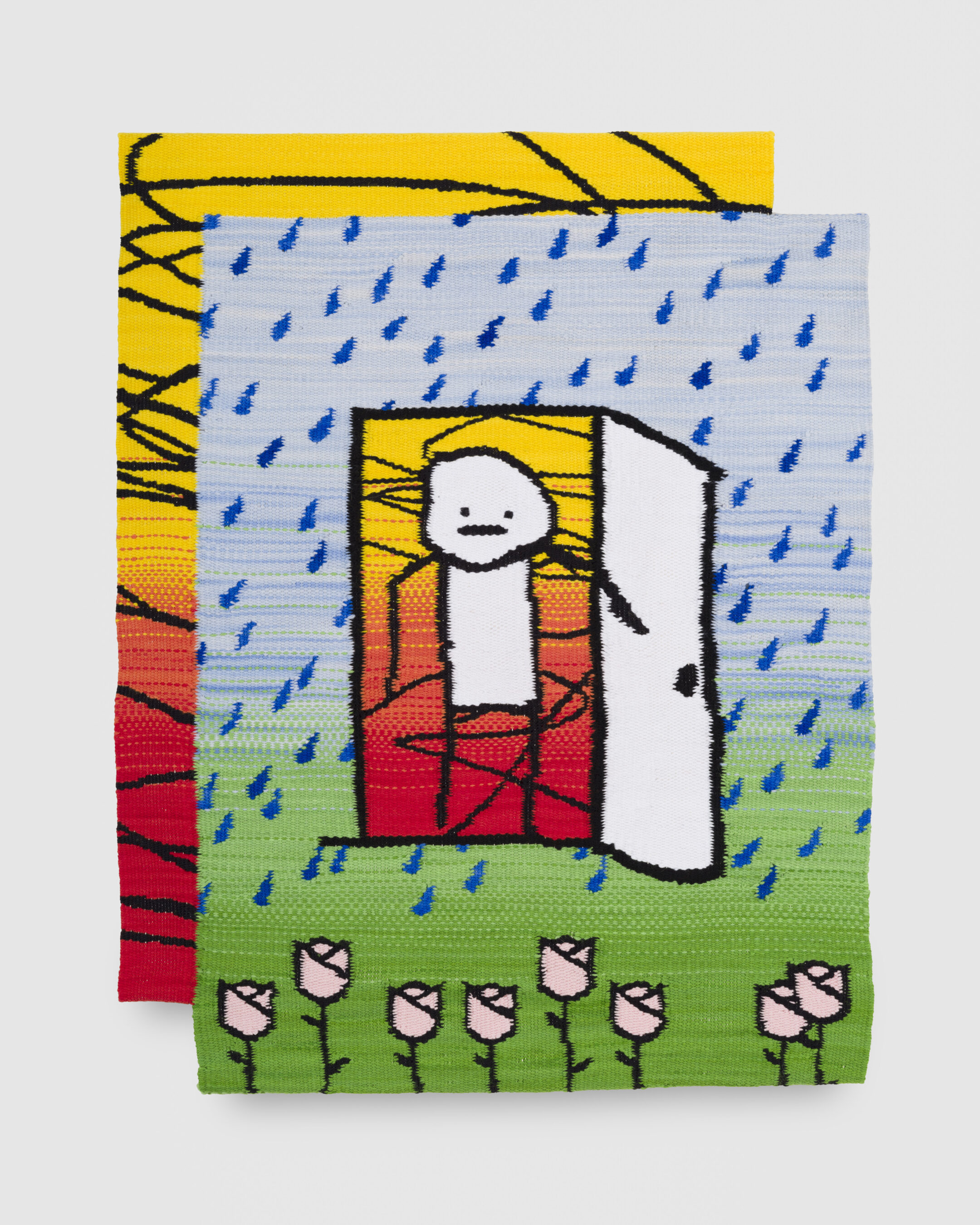
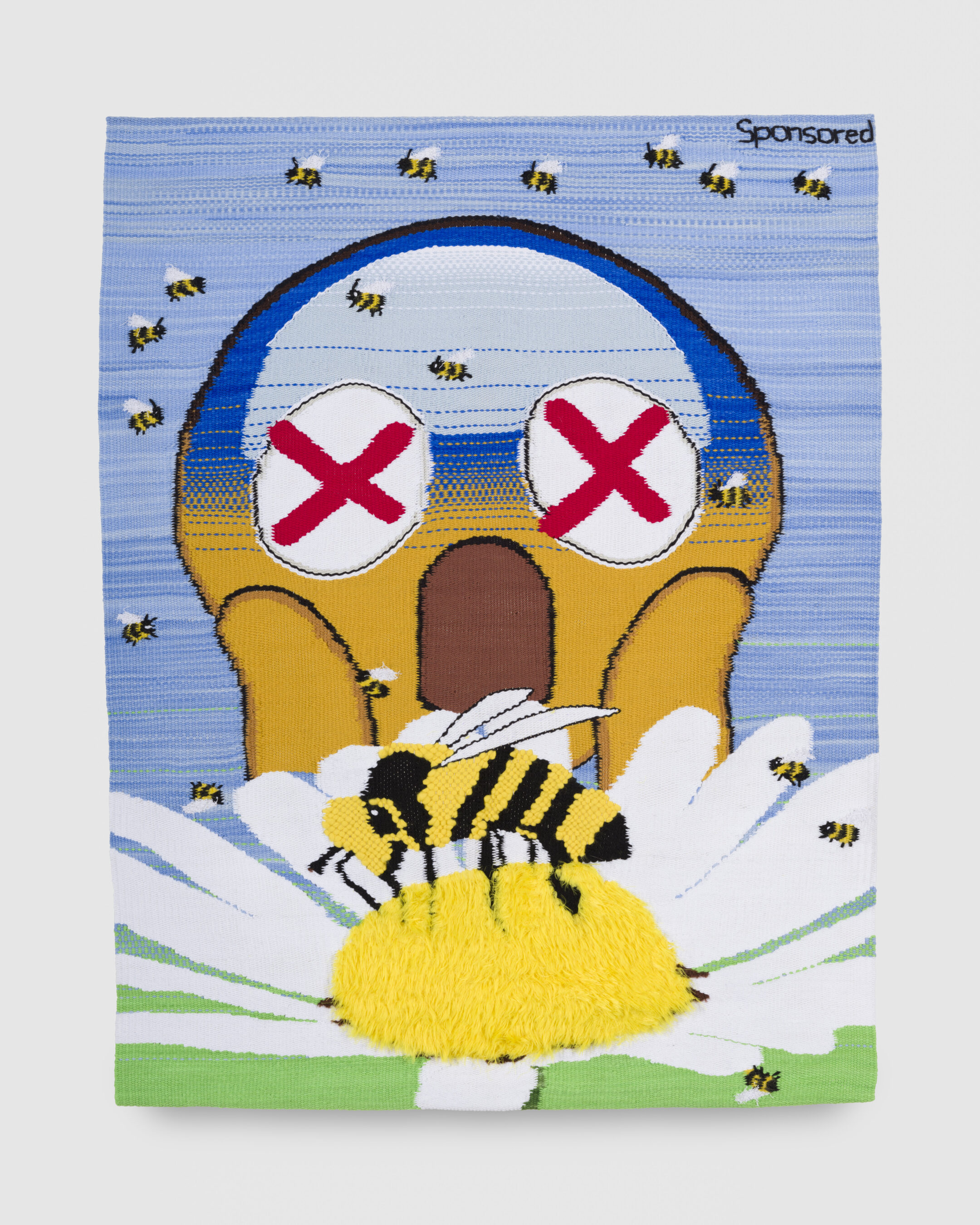
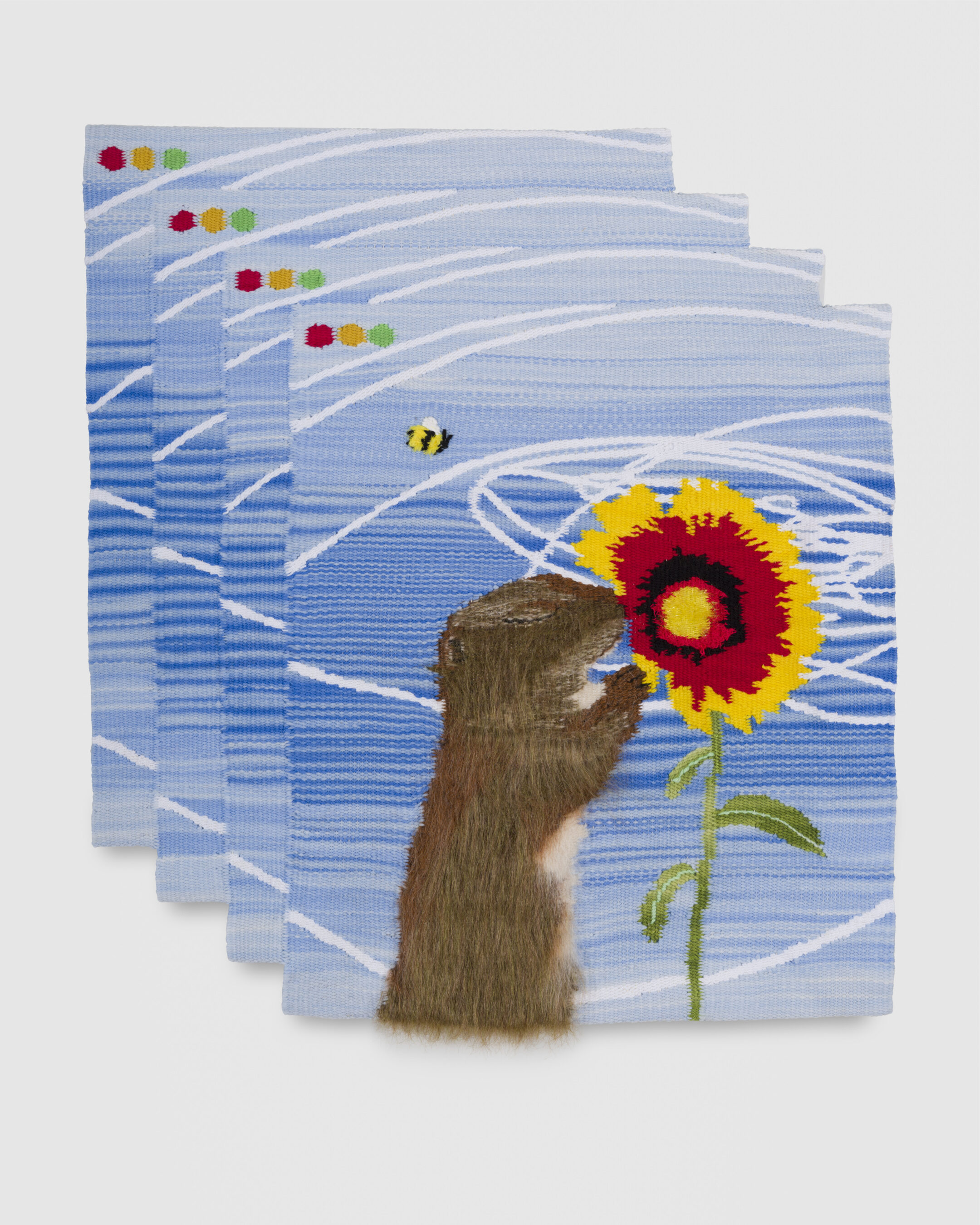
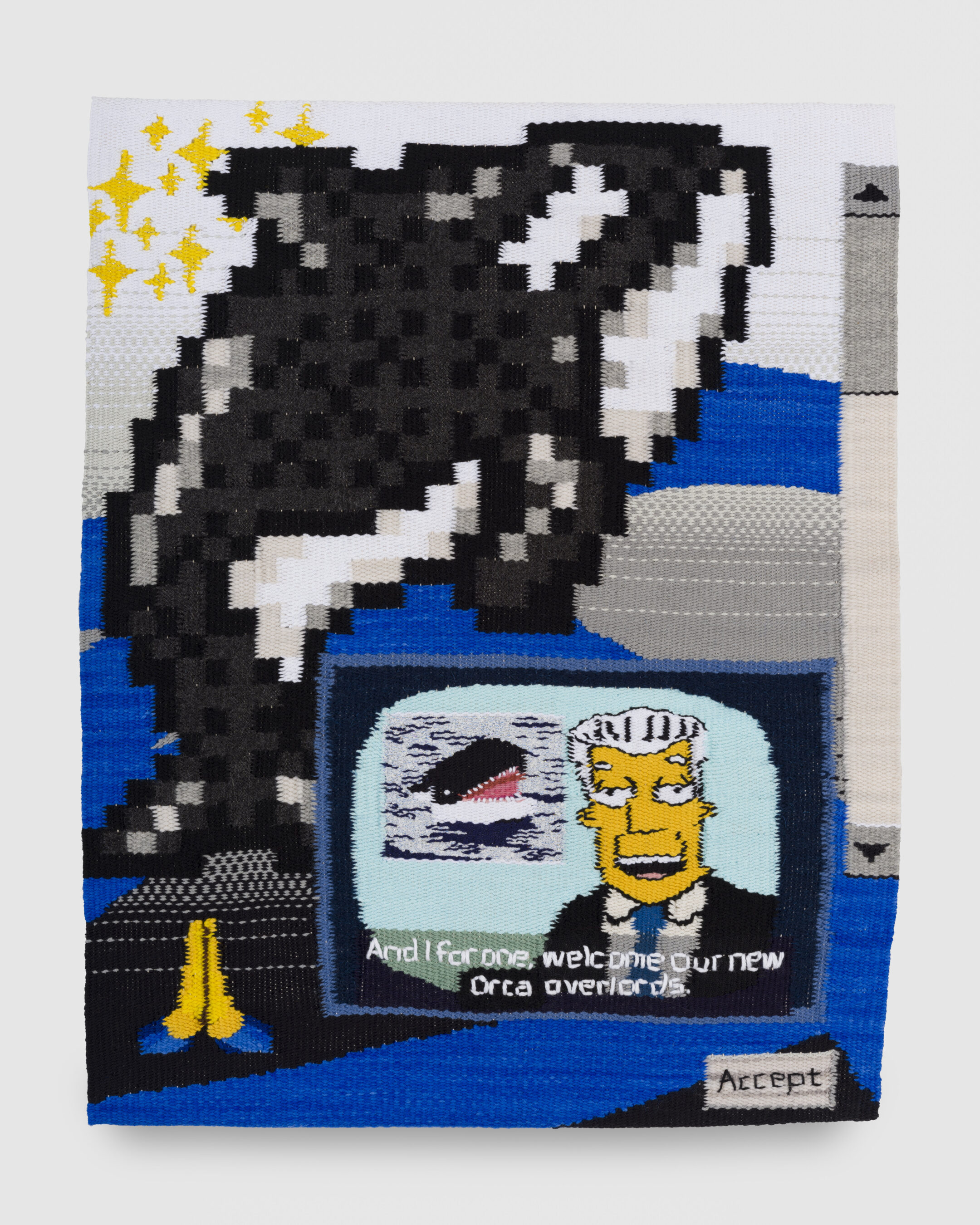
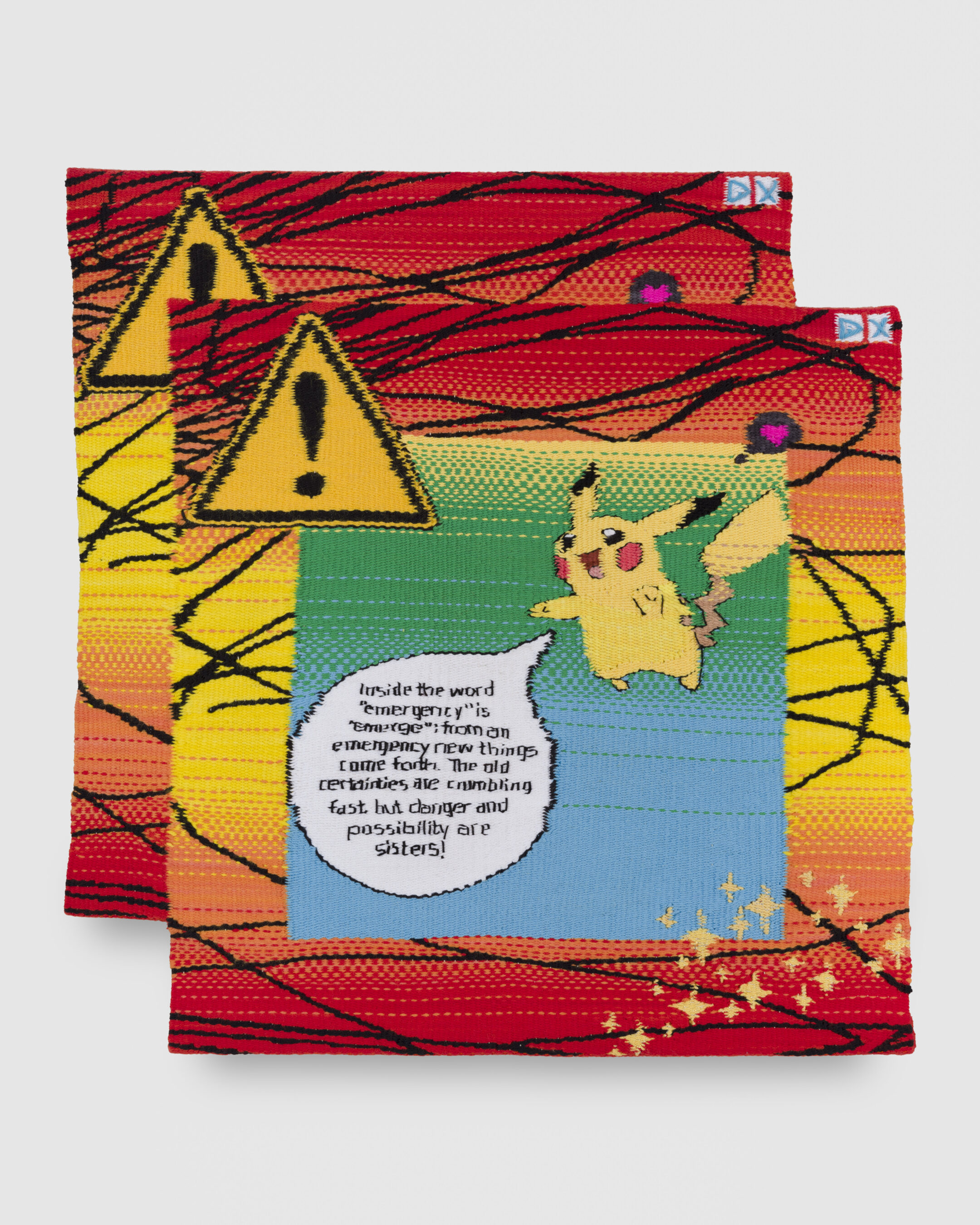
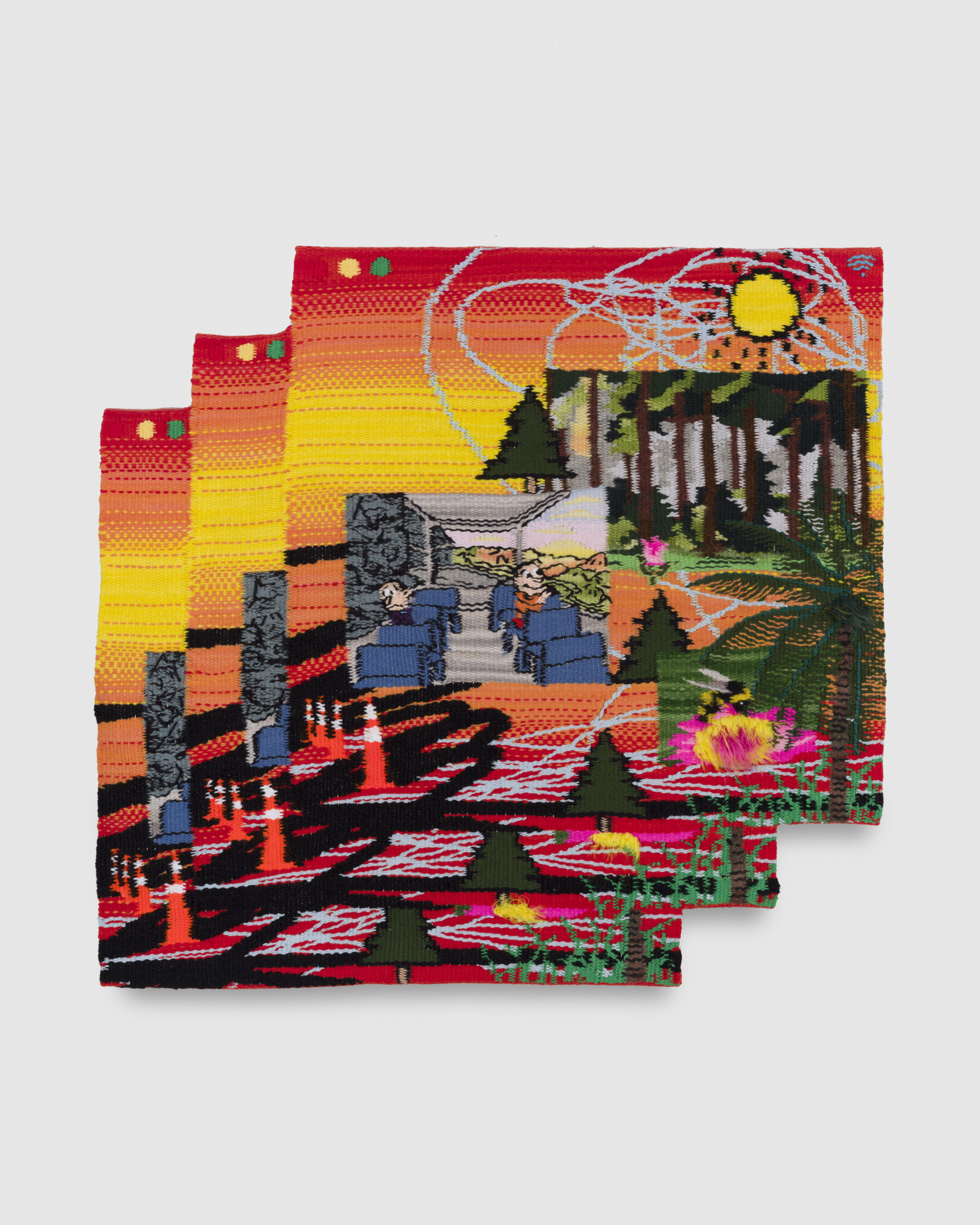
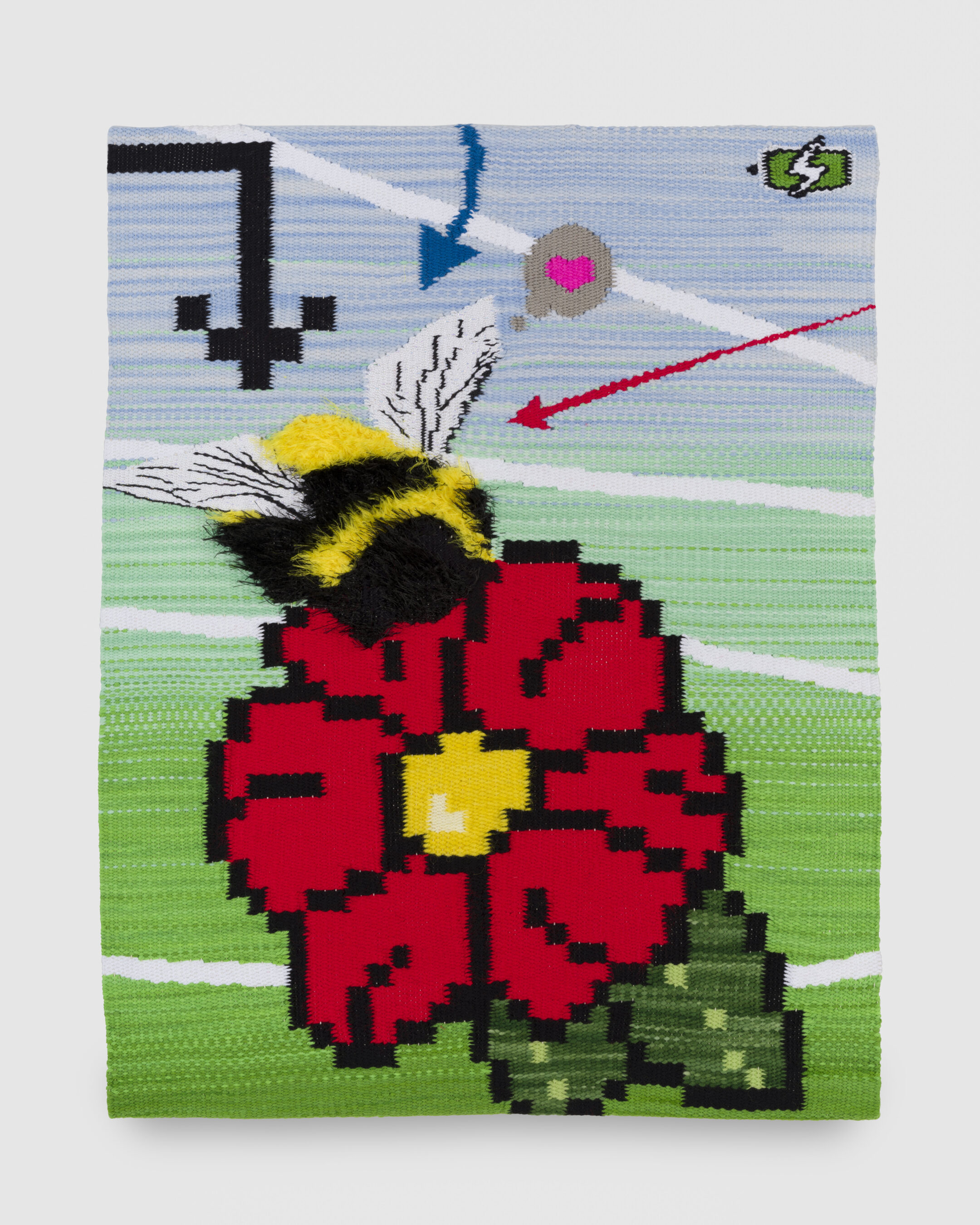
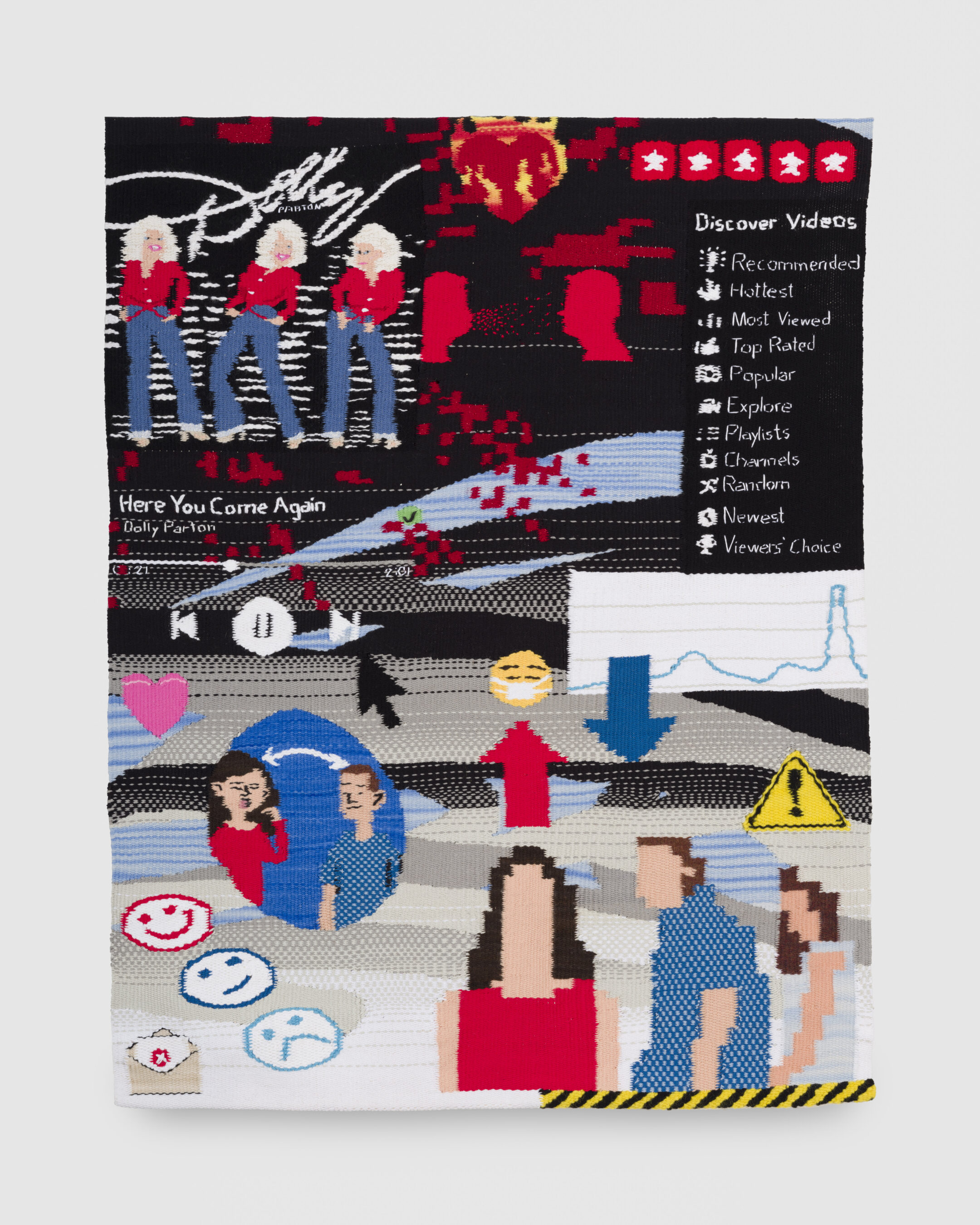
By translating internet culture into the ancient, tactile medium of tapestry, Kayla Mattes forces us to look closer at the digital detritus that usually litters our attention. Her work is an artful collision of social commentary and humor that softens the daily bombardments of information we confront in our hyper-connected world.
Sawa: Is the fucked up world we’re living in at least leading to some fire memes?
Kayla: Oh yeah. I think that I approach all of my work in that way, where I’m looking at the world and making a meme that has humor instilled in it, even though I’m looking at these really depressing situations. I feel like the only good thing that comes out of injustices in this world are the memes critiquing it.
How do we take these tragic things and make them more comforting by also finding humor in them?
The collective effort is a really interesting part to me, because memes are replicated and altered and changed. When we do have one of those viral memes, there’s hundreds of versions of them. So the fact that people are anonymously making them and spreading them, is this representation of collective thought.
You have reused memes and added your own quotes. Can you tell me more about where those come from?
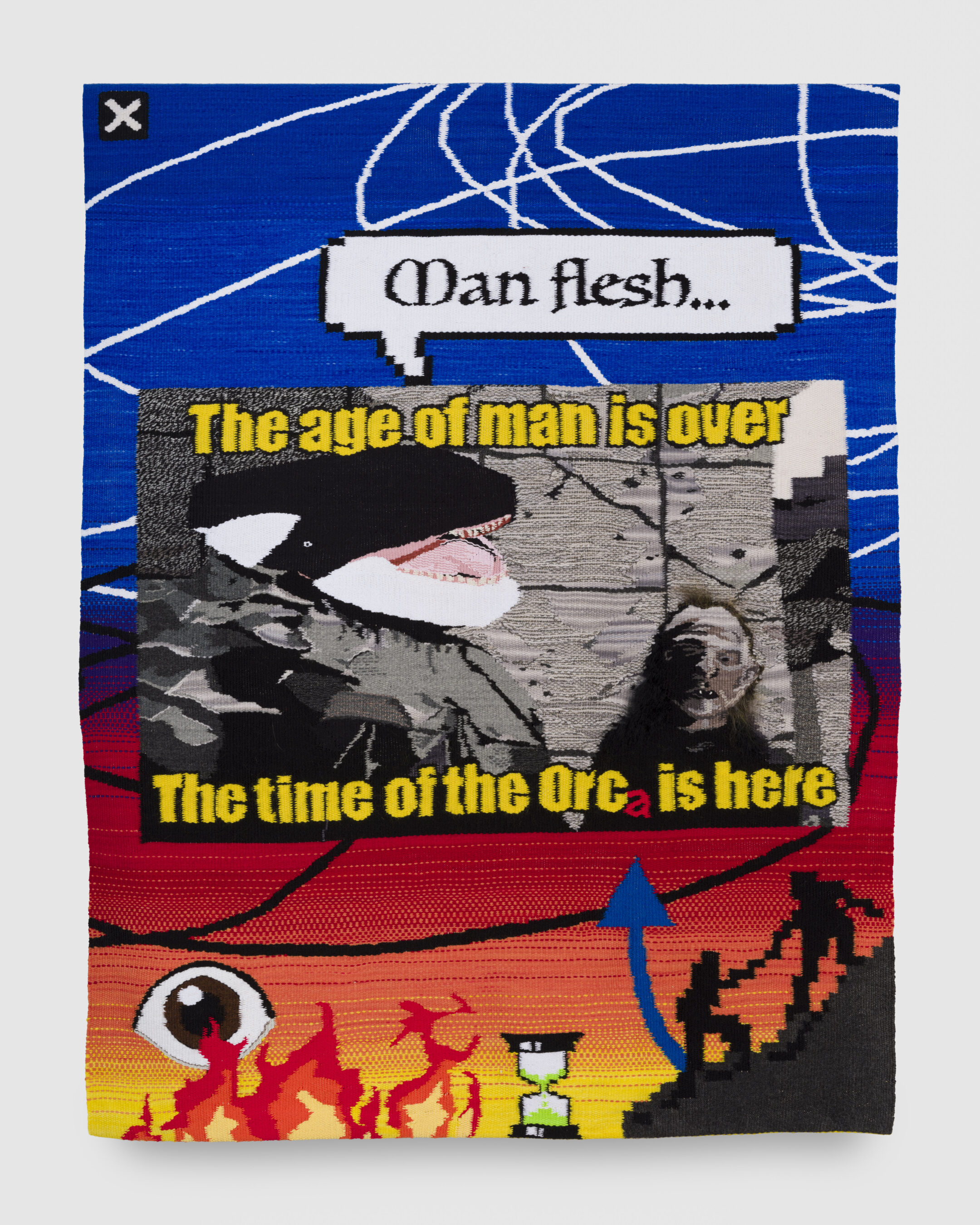
Some of them are purely appropriated from other pieces. But sometimes I create my own language in context of the meme. And there’s also something about taking this fleeting meme, with multiple versions of it, and then actually creating it, turning it into this physical thing that is made in this process. It feels like the most fitting way to even translate these images, by working them into physical material. It kind of archives them and makes them something that will exist beyond the ephemeral memes that float around the internet.
Weaving is this ancient process that has a ton of history, and it’s a physical object that you can hold in your hands and memorialize. Can you say anything to the polar opposites of those two things? Is it something you think about when you work?
For sure. They are so different, but then there also are these similarities in terms of how they’re structured. Like, looms actually influenced the development of computers, so there’s this crazy relationship between the two. The fact that weaving has existed for thousands of years, we don’t even know exactly when it started. The looms that I work on, essentially they are pretty similar to the way looms were made in medieval times. So it’s basic technology, but technology that was made the way it should be made, and it still does what it does.
It’s wild that it’s an analog process — it feels more meaningful to process all of these images in this medium.
We love physical media that you can hold in your hands. What are the merits you find in tangible art?
Textiles affect everyone, because everyone uses them and everyone has some kind of association or relationship with fabric. I find that since my work is created with this delicate material and turned into a sort of reinforced artifact, people feel the time put into it, which is a part of the experience:Slowing down memes, which are really fast to make, and recreating them in a more intimate, physical way allows us to slow down with them. I also have a hand in so many aspects of the process, like dyeing a lot of the yarn and embroidery.
I really like what you said about slowing down, creating intentionality in the process. It seems comforting and satisfying. Or maybe it’s tedious. Can you walk me through your process? The mental state, the art of slowing down while our attention spans are constantly being hijacked?
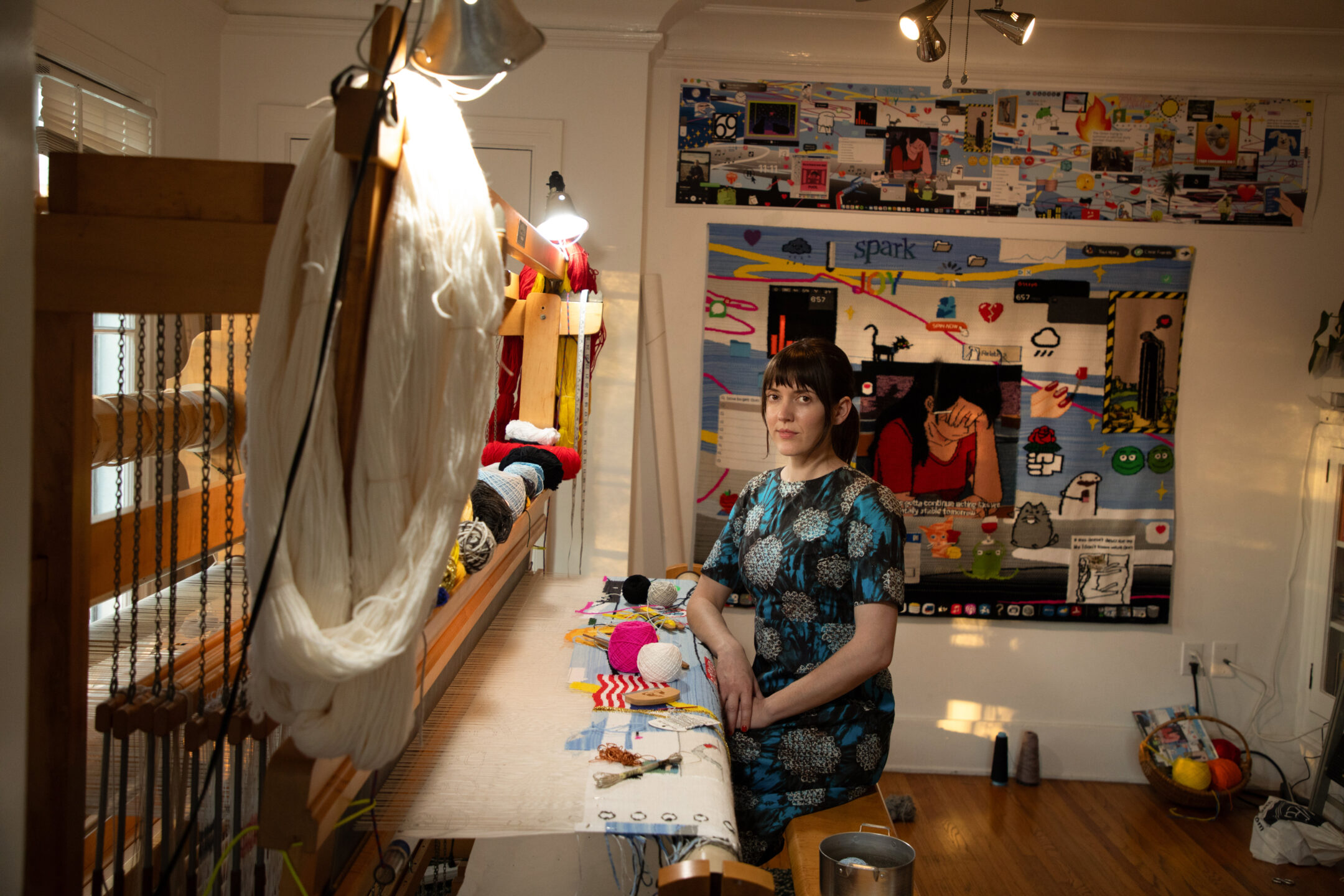
I’m really grateful that I’m making work in a way where I only have to use a screen a little bit. At first I make these digital collages, but then I’m at the loom working with material, painstakingly turning them into this physical thing. The digital collages I make always feel kinda off, but when they’re turned into the woven version, they just become alive.
I love art that serves as a beautiful respite from the dire times, but there’s also an importance in speaking to the moment that we’re living in. I like how you do it in a way that’s digestible; art doesn’t always have to shove it in our face. How do you feel your work reflects the current sociopolitical moment?
As a tapestry weaver, it makes a lot of sense to me to work in this medium because for one, it’s always been used as a way to document what’s happening, to archive and tell stories. But there’s also a feminist aspect to this medium, in that it has long been isolated from being perceived as art, and instead been dismissed as women’s work and craft.
I just can’t not make this kind of work at our current moment. I’m, for whatever reason, not the kind of person that can avoid that. Not that I think that this work is going to change the world or anything, but it just feels important to be archiving it.
“Companies like Tic Tac and Skittles had to post these absurd tweets to protect their brand. But now Twitter doesn’t even exist anymore and is owned by Elon Musk.”
It’s an interesting time for artists, with so many people getting censored and canceled.
Historically artists have been part of the group of people that get jailed and oppressed because of what they’re doing with their work.
I love some of your older work that has a whole series with cats in it.
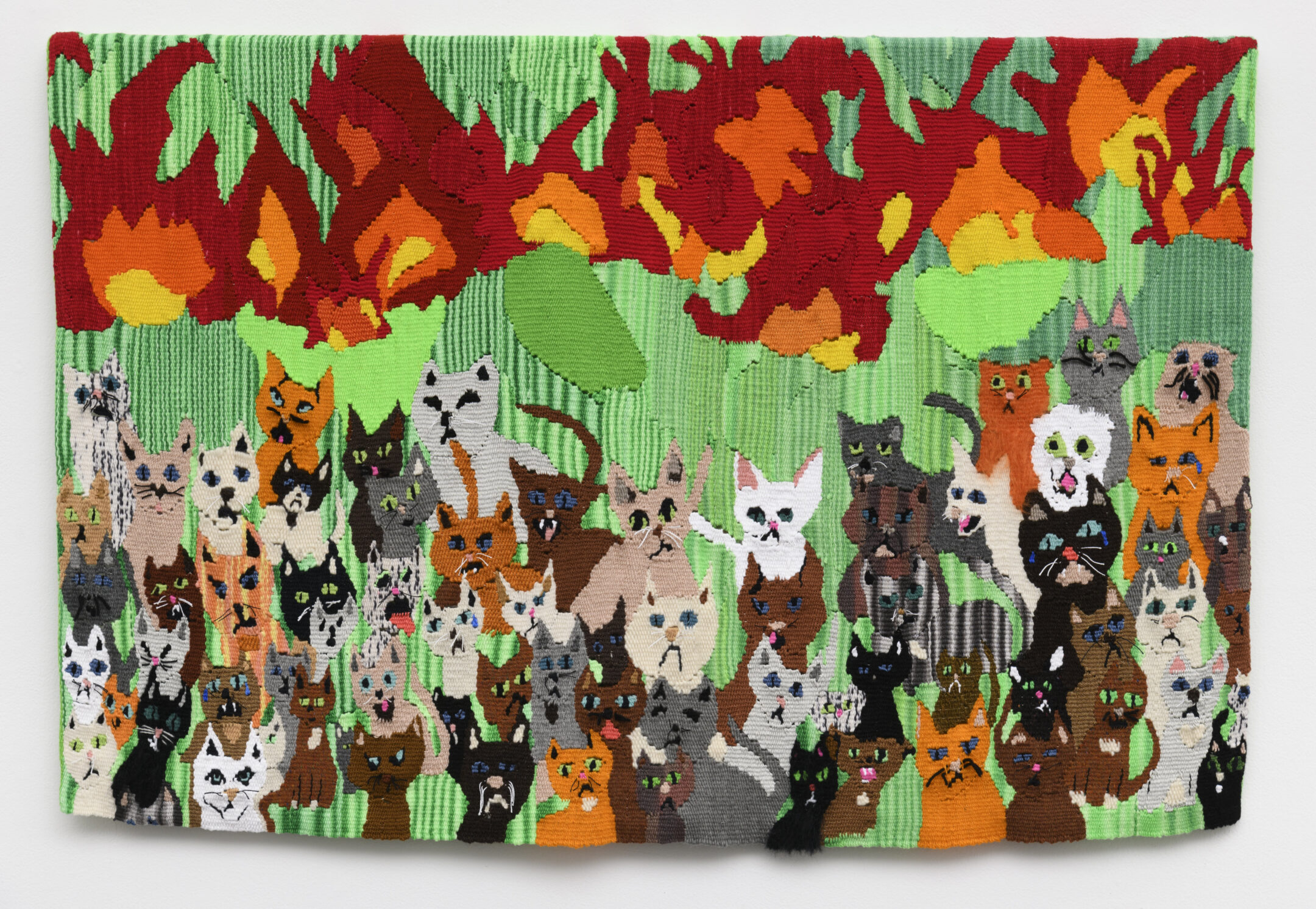
I did this whole series years ago, putting cats into these catastrophic situations where they’re looking at us and asking why we weren’t doing anything about climate change. I would make these packs of cats and think of them as these little protesters, which I feel is in line with their personality. Cats are confident in what they’re thinking and react accordingly. I’d put them in dire situations but all the titles of the pieces were in the LOLcat speak of the mid 2000’s. So the humor of these titles subdued their tragedy and also referenced the virality of cats on the internet.
How do you find the imagery in your collages before you get to the loom to weave?
I am always gathering images, most of the content in the pieces is appropriated. So, I’m screenshotting. Some of it comes from just walking around and seeing symbols that, when they’re put into the context of all the digital stuff, you might not even realize they’re from the physical world. All the work is pretty grounded in semiotics, the study of signs and symbols.
I have this huge library that I pull from and I turn them into PNGs. I make these collages which then get blown up with a projector to scale the piece. And then I make this thing called a tapestry cartoon, which is a to-scale drawing and is a technique that has been used for hundreds of years. It’s how you translate the image to the loom. So you put that drawing behind the warps, which are the vertical strings, and then that helps you weave it.
Once I cut it off the loom, there’s all this finishing work that can happen later. Any of the small text that’s on the pieces is embroidered, and I like to incorporate different 3D elements when it makes sense. A lot of the cats in these pieces have whiskers that are actually coming off of the fabric. I made an Elmo piece that had fuzzy mohair yarn that I brushed and ended up feeling exactly like his fur.
The more I sit here and look at your work, the more layers I find in there.
A lot of the work that I make is so maximalist and dense. And sometimes I’m working against what is expected in terms of composition. But I like the idea of putting so much imagery in, to the point that you can look at it for a long time and keep finding new things. There’s a reason that I’m putting that symbol next to the other and it helps to tell the story.
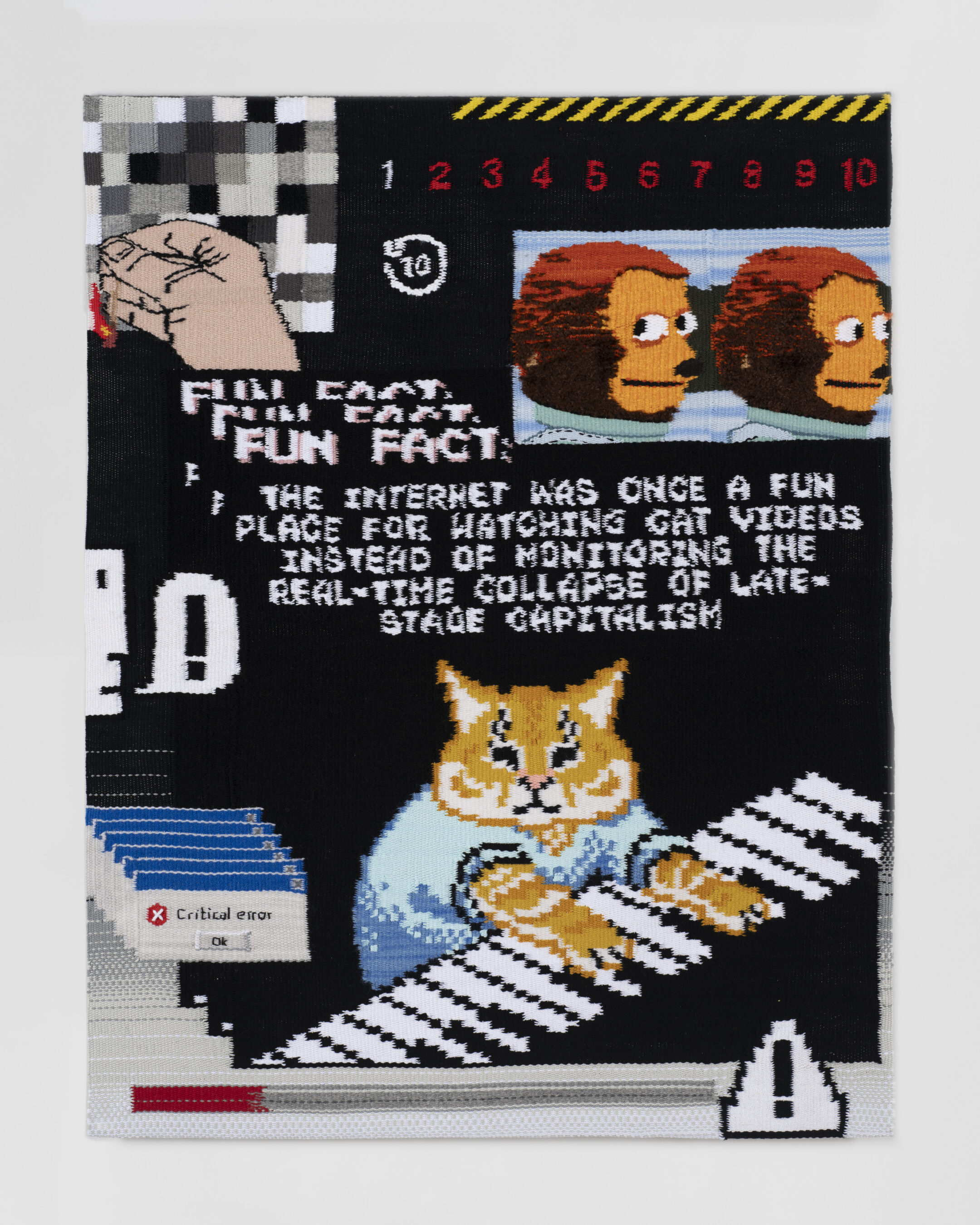
Seeing it all together definitely resonates. It all feels very nostalgic — some of your other pieces have error pop-up windows from old Microsoft computers. We see these technical eras, all presented in this timeless, ancient medium.
Some of it is nostalgic. That’s something that’s interesting to me, thinking about the work and how it will age over time. I made this series, seven years ago, of these blown up woven tweets. They had a timestamped date on them, and are actual tweets posted by corporations about horrific actions and events during the 2016 Trump administration. Companies like Tic Tac and Skittles had to post these absurd tweets to protect their brand. But now Twitter doesn’t even exist anymore and is owned by Elon Musk. The whole meaning of the work has already changed.
Share