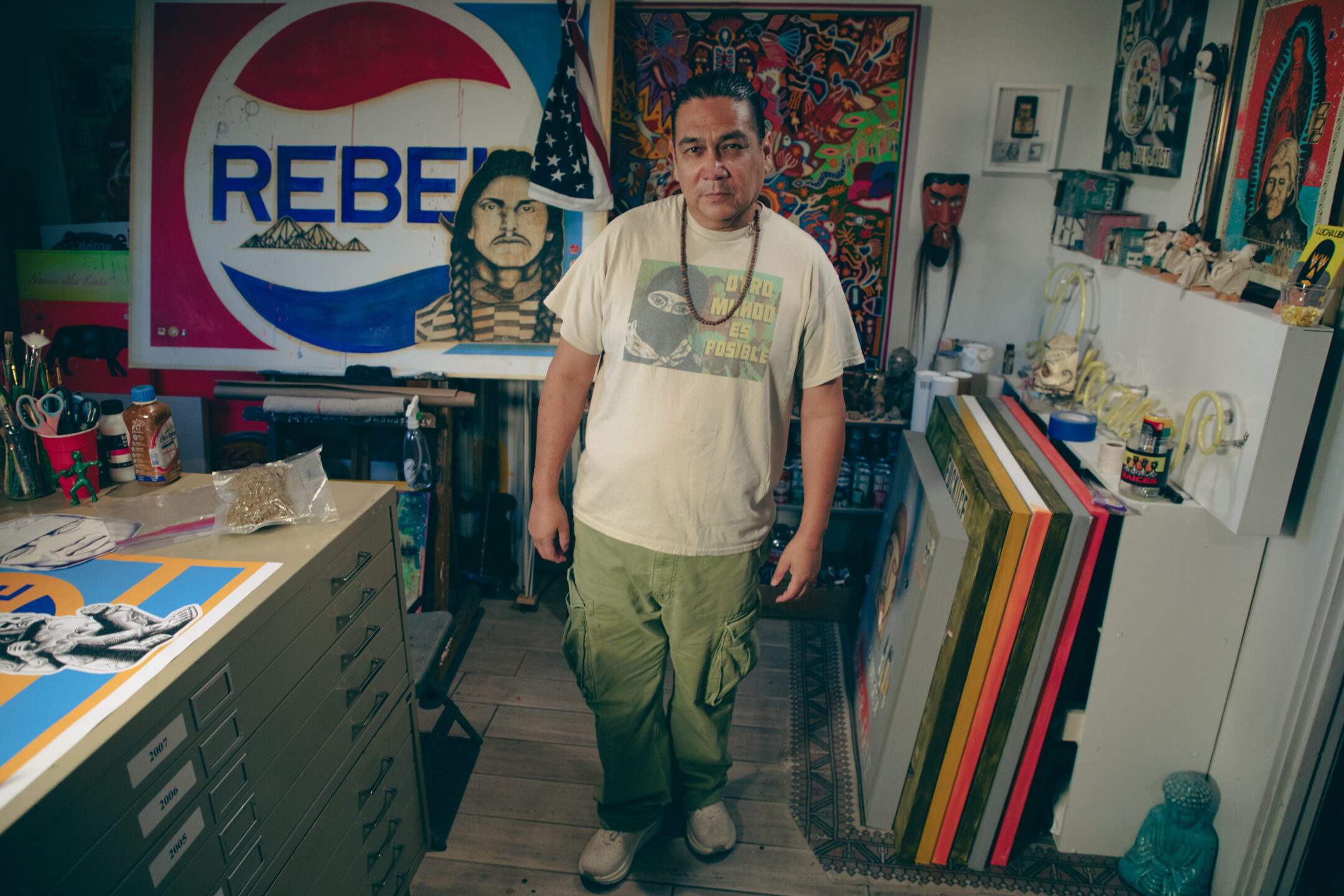
When you said you weren’t accepted into different types of art, were you saying institutions or galleries or communities or…
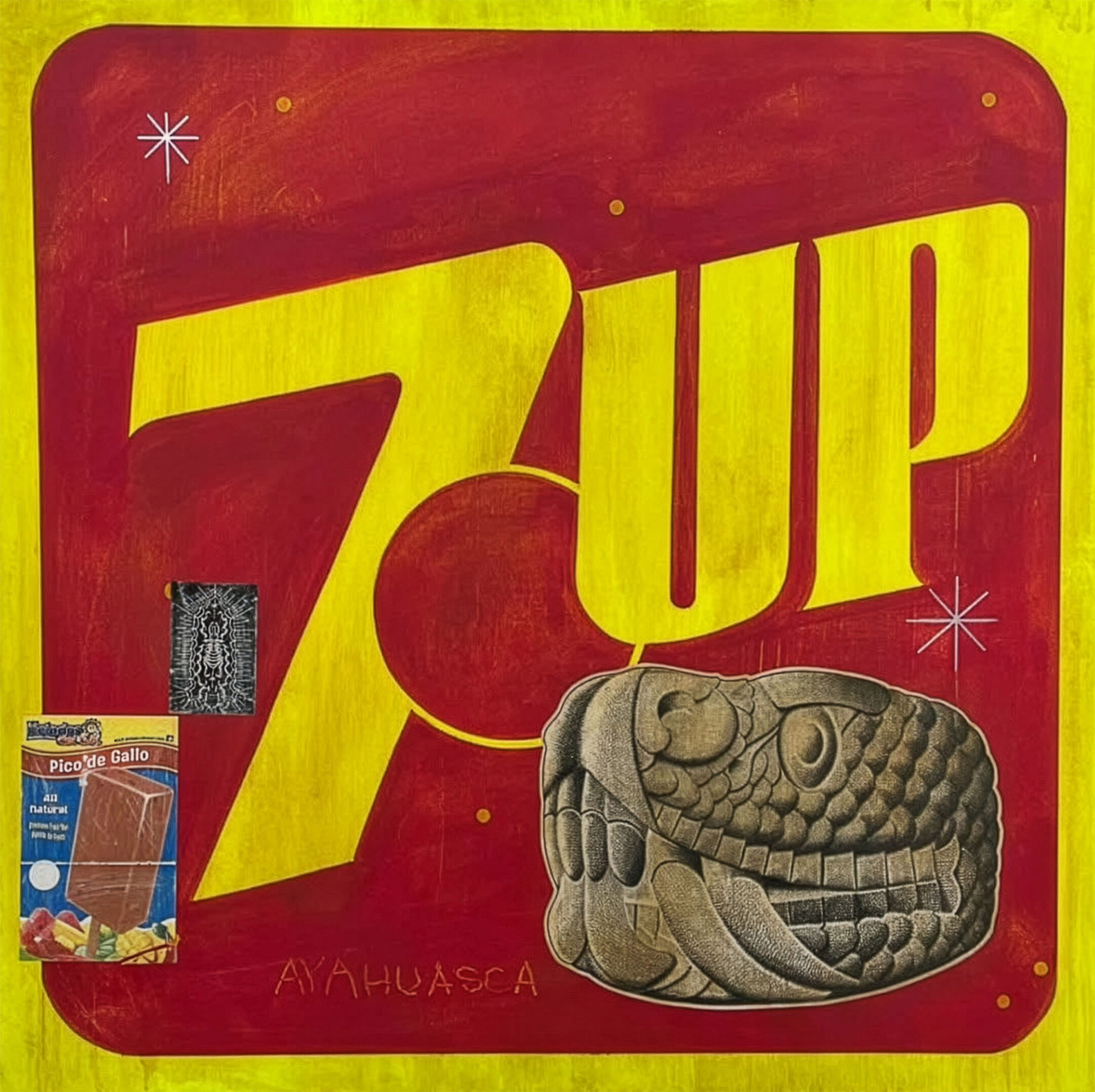
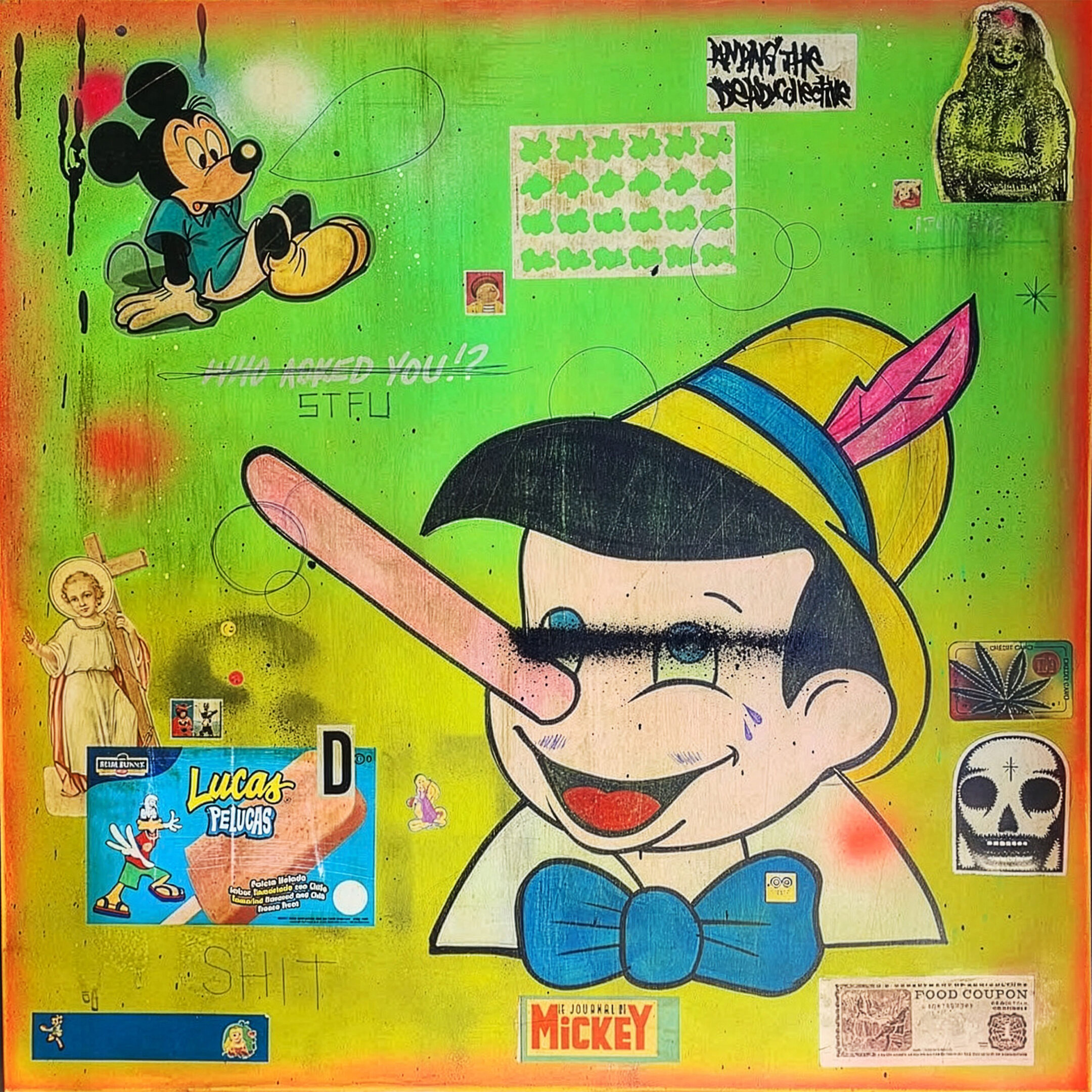
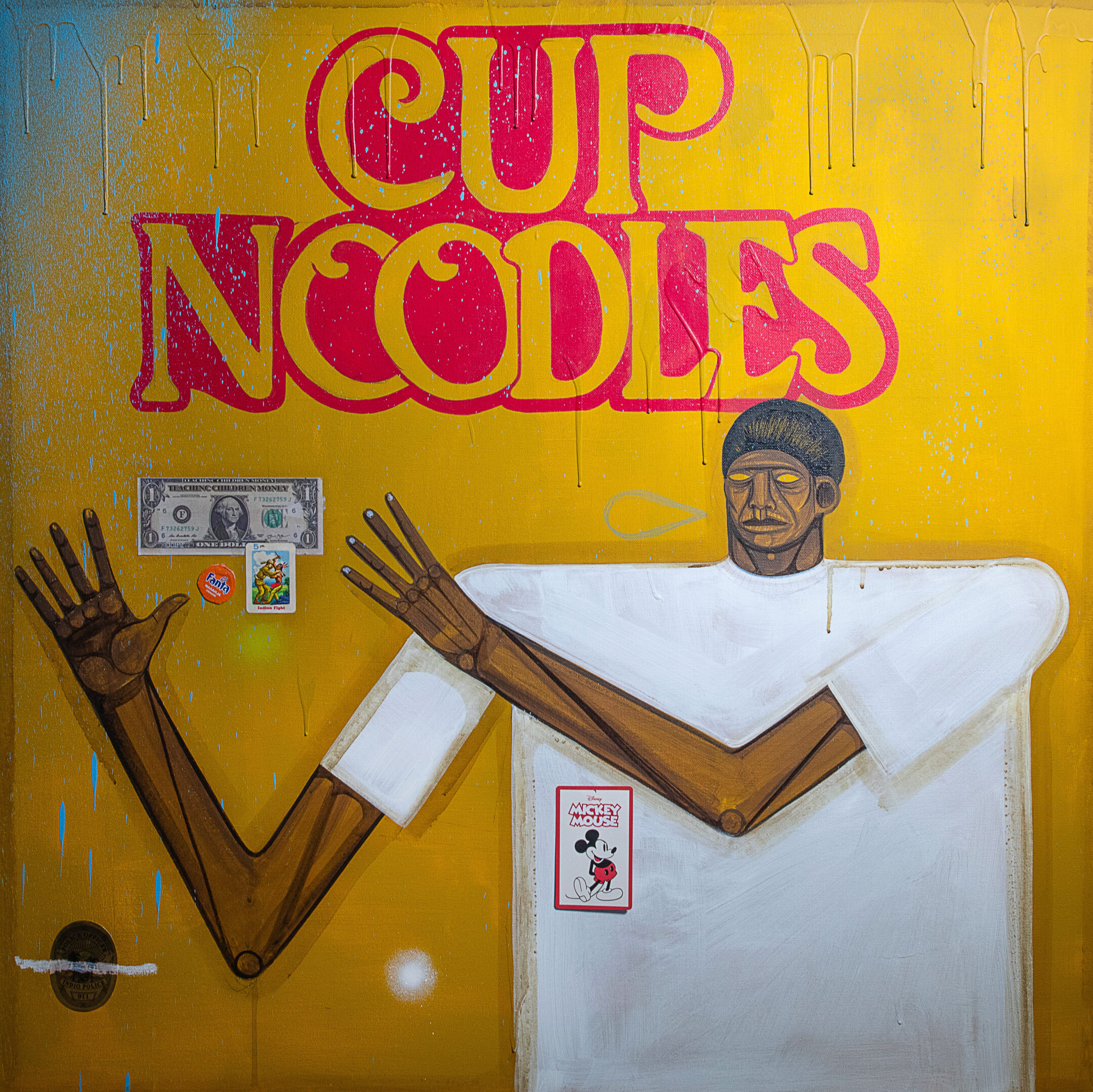
All of the above. And it was kind of hurtful at first, but I think I found a formula. People would see my art and were like, “What is this?” before they knew who I was. Then I began to use familiar iconography. =, but in a special way. Add value to it again. Somehow they accepted that.
There is something about the desert that attracts and inspires artists, the vastness. People go to the desert to have rituals or reconnect with themselves, because we get so distracted in the cities. How does the desert feed your creativity?
Well for me, I think it’s a little in reverse because I grew up here, so I didn’t appreciate what I had. But when I started going to the busier cities it changed. I think when you’re in a desert, it really doesn’t give you anything, it appears dry and desolate. But if you look for it, you’ll find life, you know? It’s kind of magical for me. You hear yourself a little better, a little louder, a little clearer. And I think so many people don’t go out into nature as much. When they come out here, they’re kind of like, “Who am I?” You start with all these little questions in yourself. And that’s what I see the desert giving people.
It’s also a window into the contrast of what busy is, and what peace is. I guess some people that have never had that peace don’t know what to gauge it against. Once you get that contrast, you’re like, Whoa. I know people that come out to the desert, and they don’t wanna leave.
You use a lot of cultural iconography, juxtaposed with totemic, ancient imagery. Can you tell us more about that?
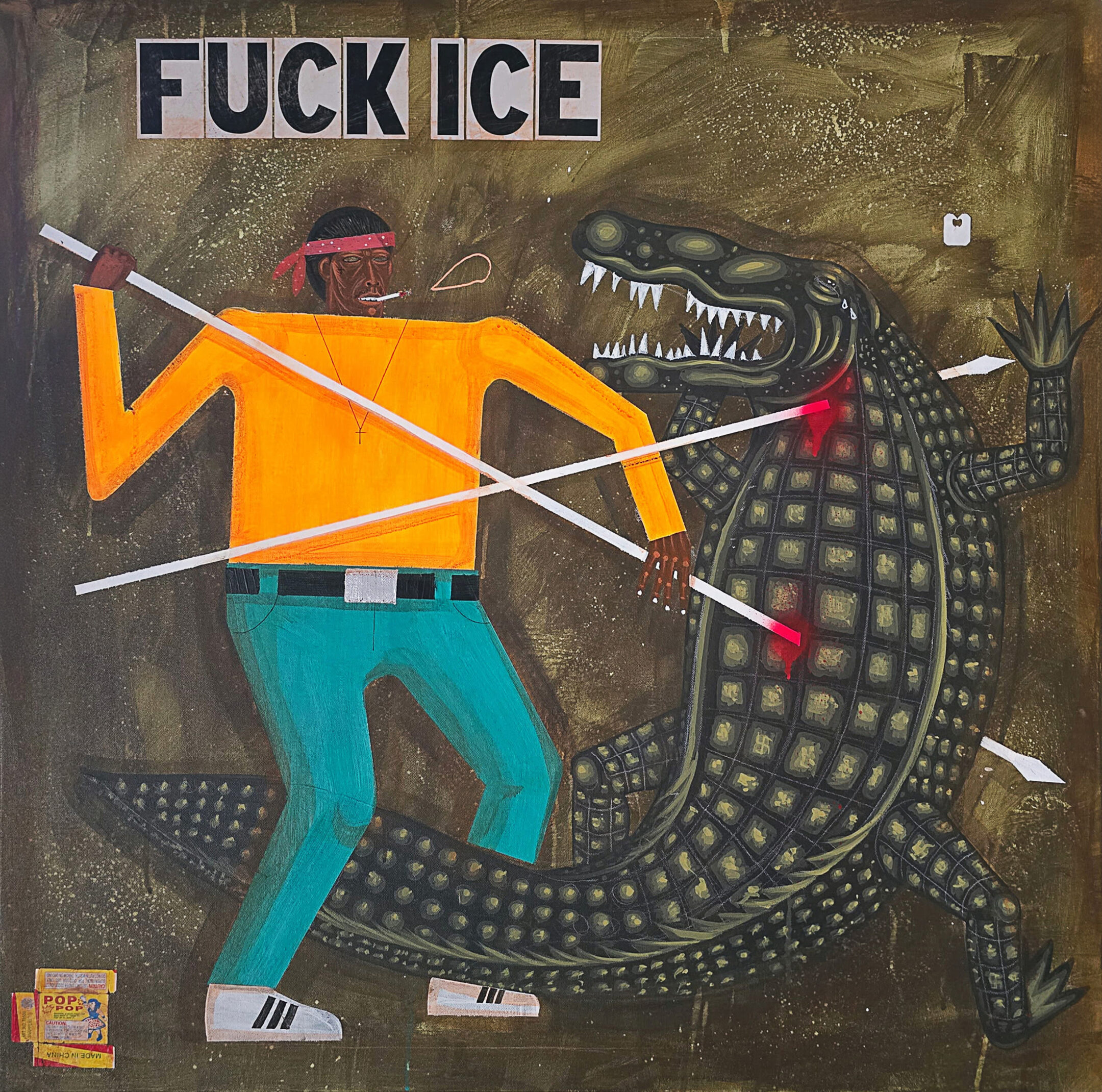
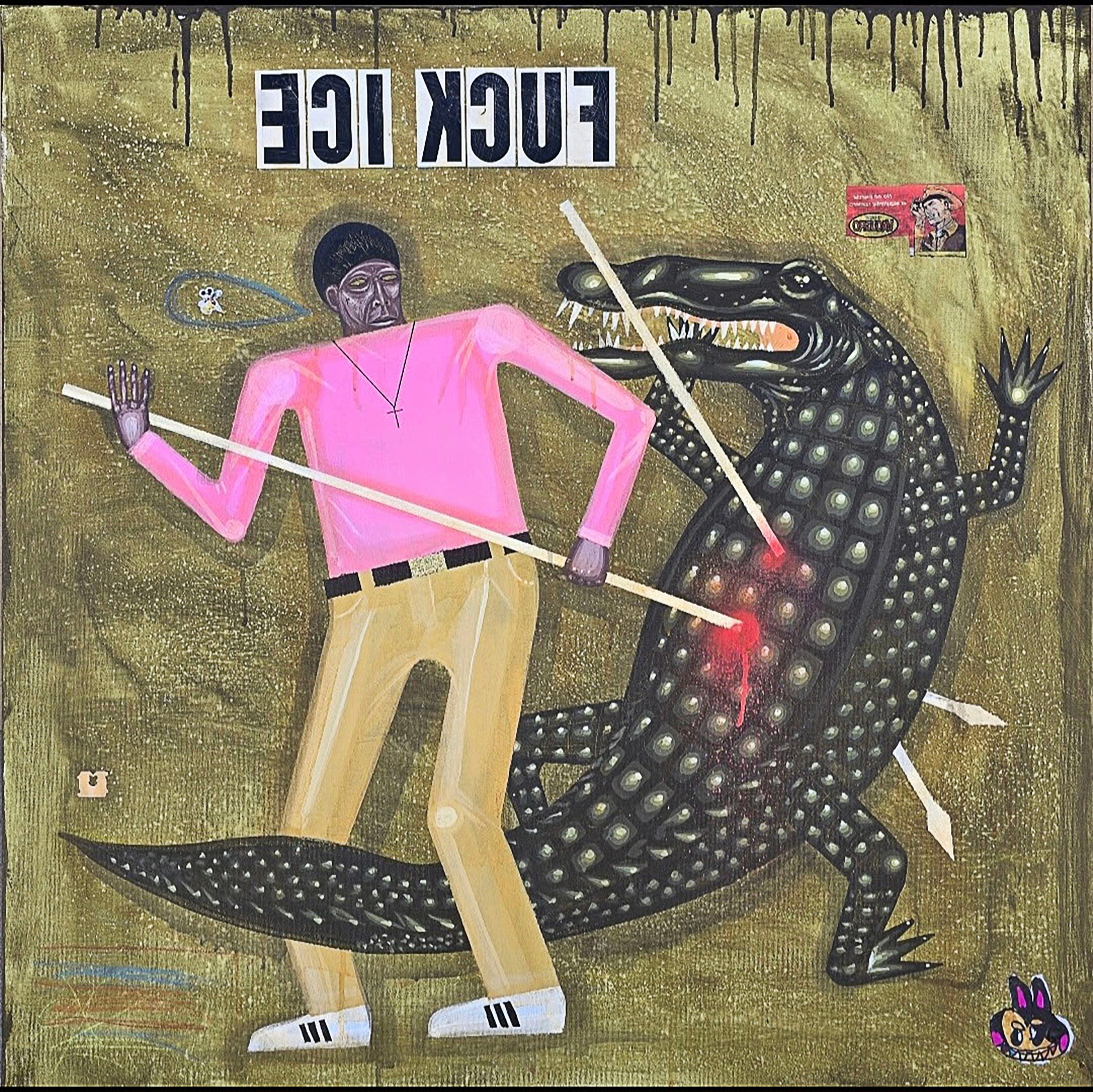
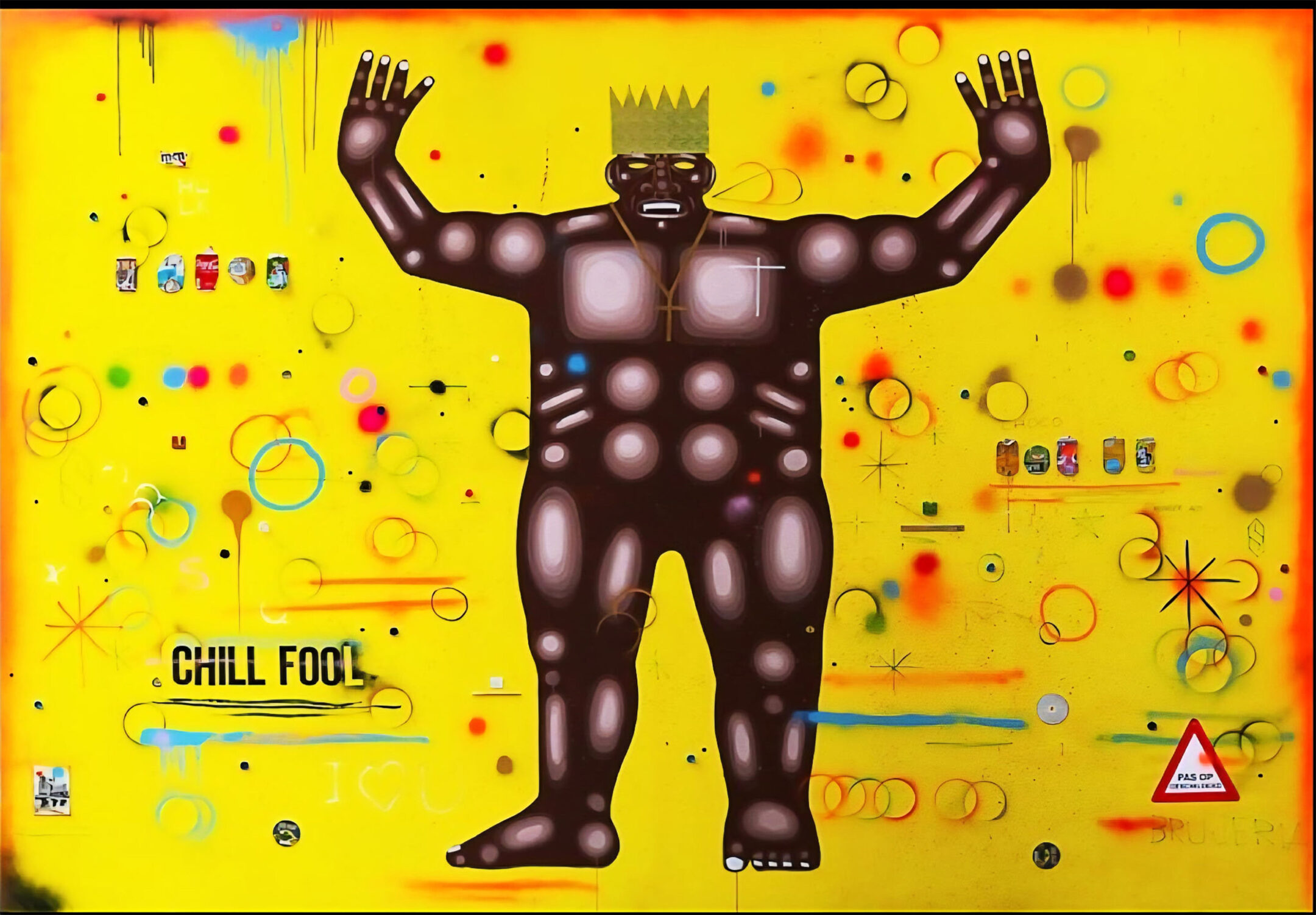
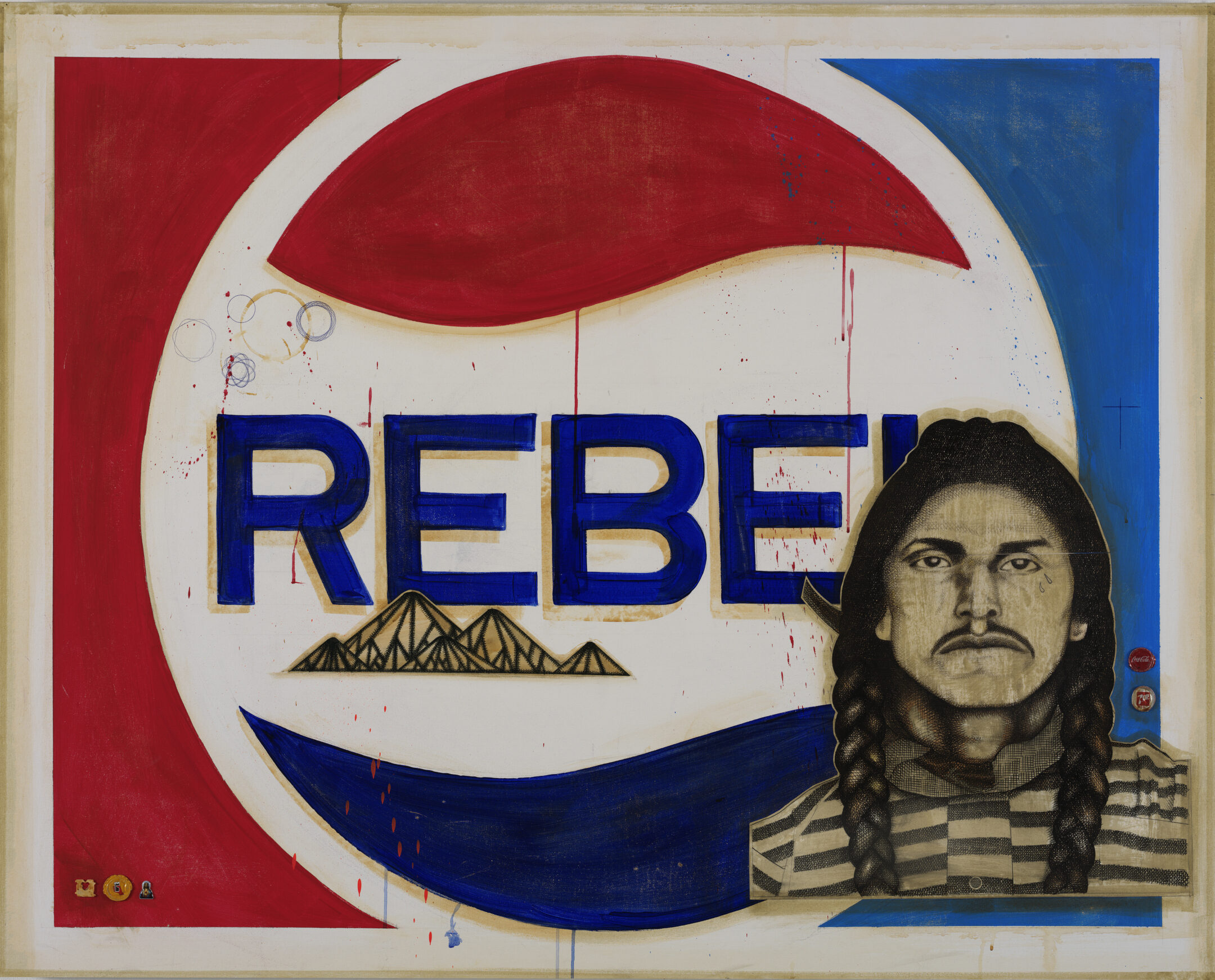
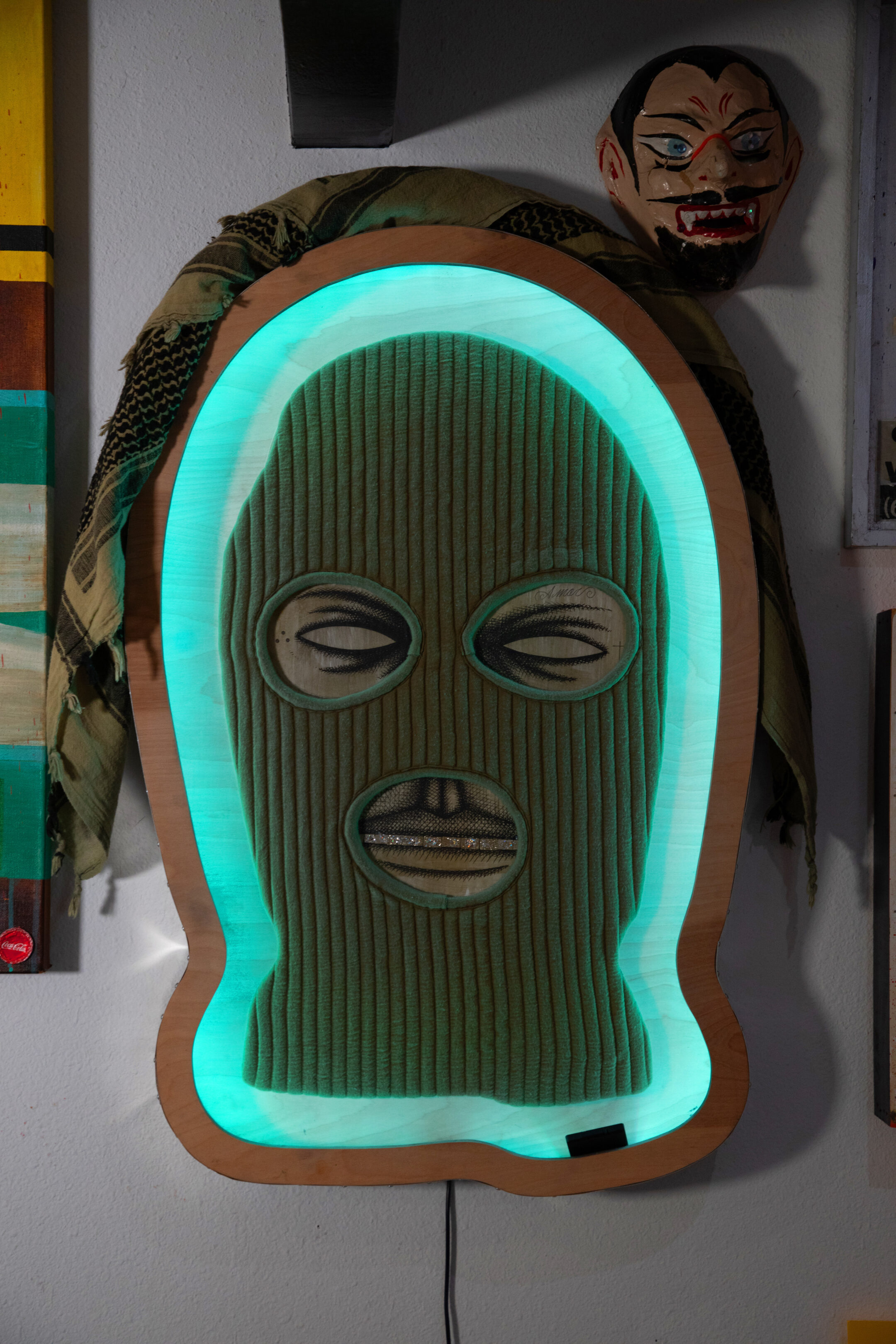
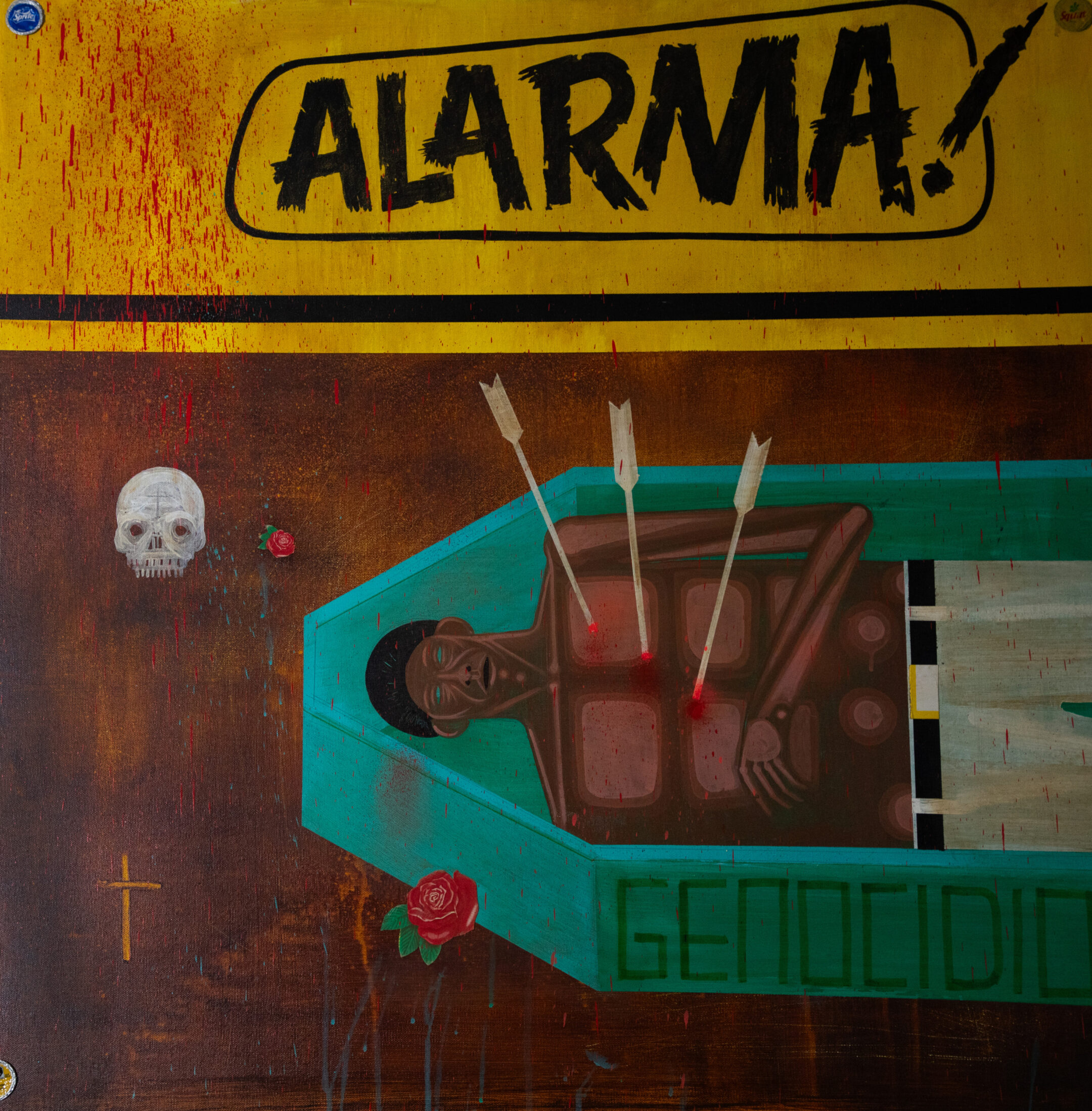
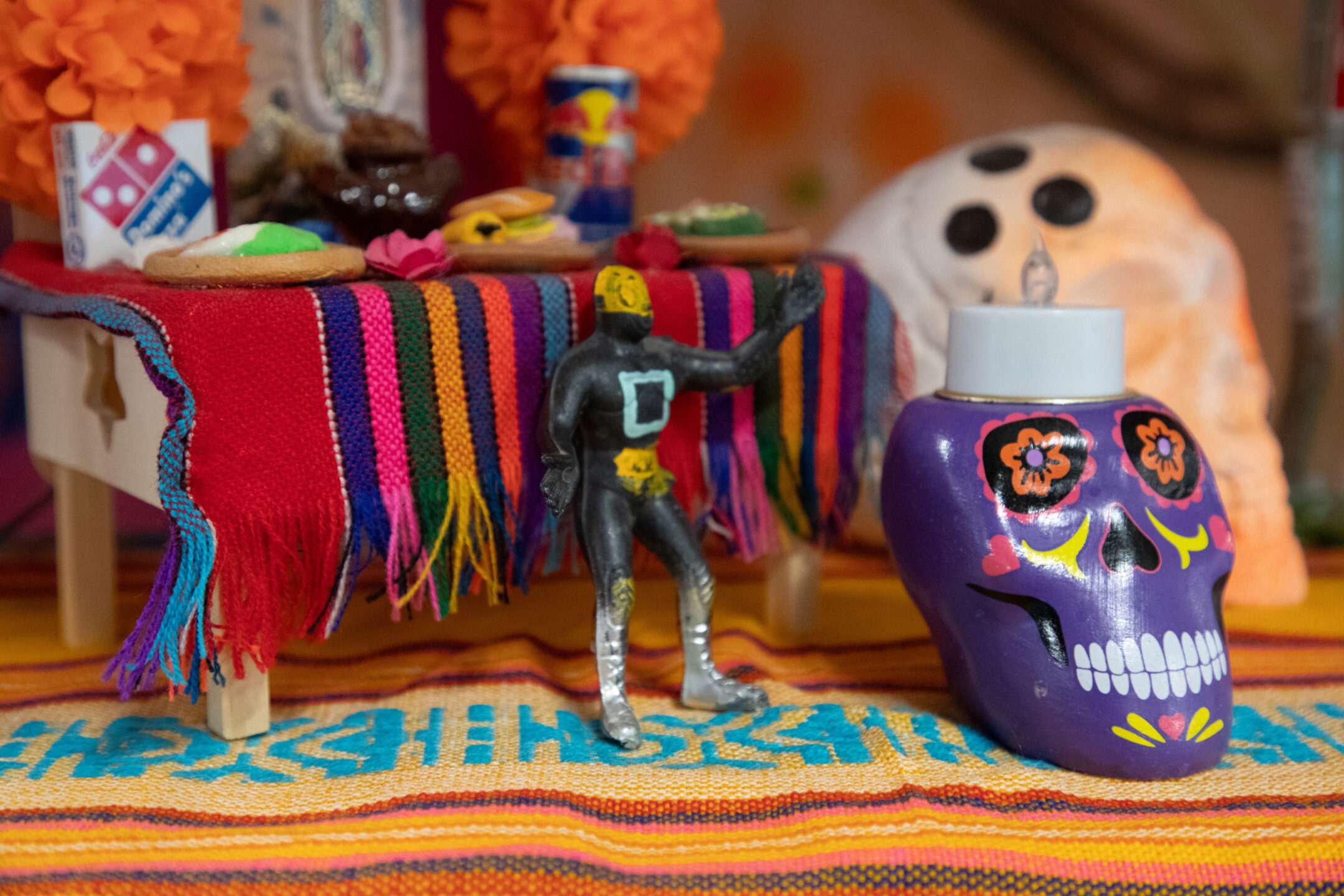
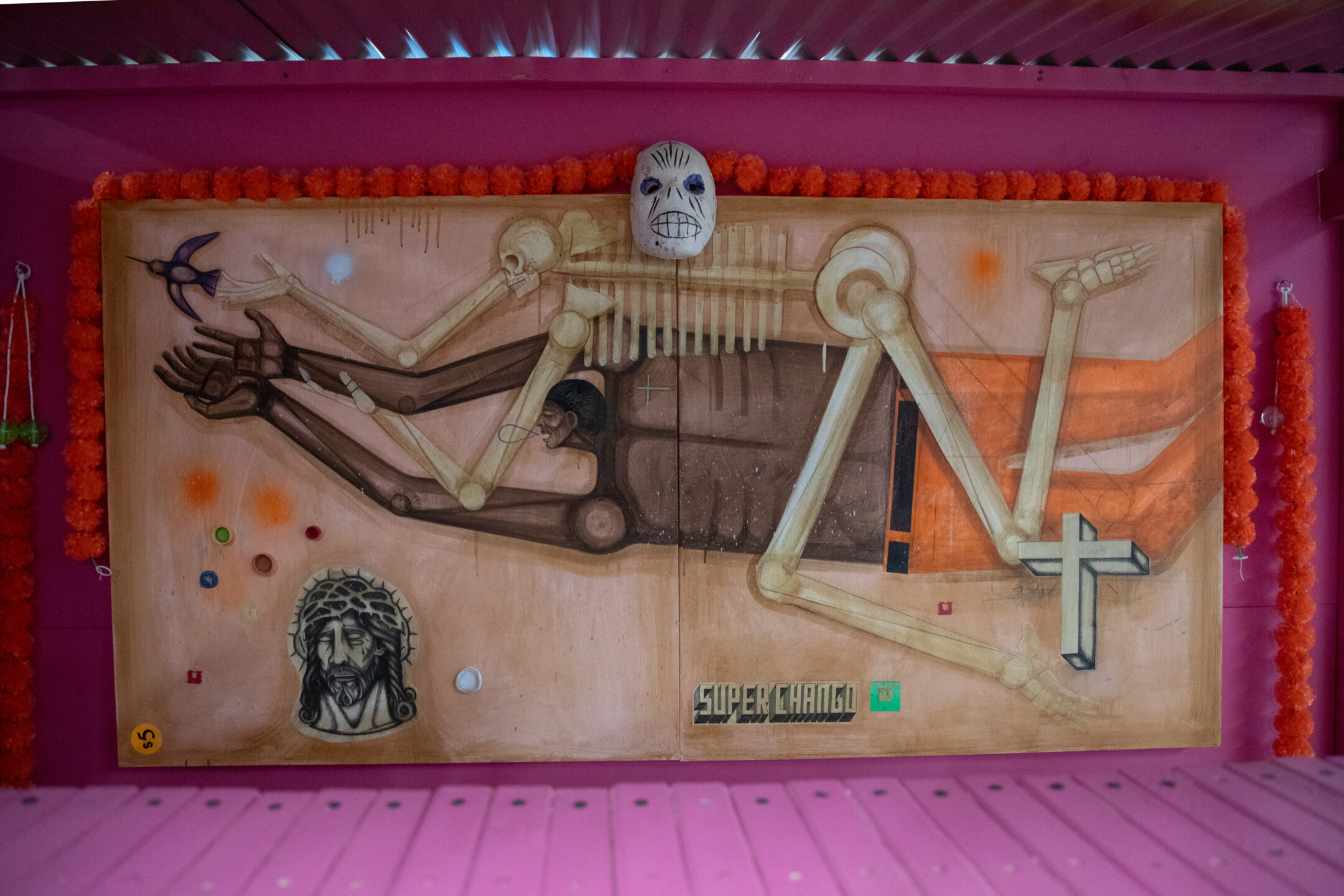
It goes back to my heritage, culture and ancestors. I found a way to incorporate that into my work so that people are familiar with it. We’re trying to give a testimonial of what and who we are as a society, and ask what direction we are going in. I think I’m just trying to be a witness.
If I were to time travel a thousand years into the future and come back to this time, what would we look like? What would I say? I kind of take and compose with blunt messages. And it used to be really subtle, but with the social climate today, it’s gotten more obvious for me. And with that being said, it’s because it’s healing to me. And I think artists should purge. It’s almost a sin not to say it.

I’m not doing this for money or fame. I’m doing this to really send a message to people that aren’t even here yet. I think it’s important to send that message, whatever the risk for me personally.
Speaking of the risk, we are seeing shows getting canceled and art being subject to censorship. It’s dangerous to have a voice these days.
It’s very dangerous.
But that also makes it more important than ever. Obviously they go after the arts first, and there’s a reason for that.
I think they go after the arts first because it’s a testimonial to the time and of who was in whatever political position. If it does get to the point where you can’t make art anymore, you’re gonna wish you would’ve said something.