Zara Kand: Dream World
- Interview by Sawa
- Published:
- In Features
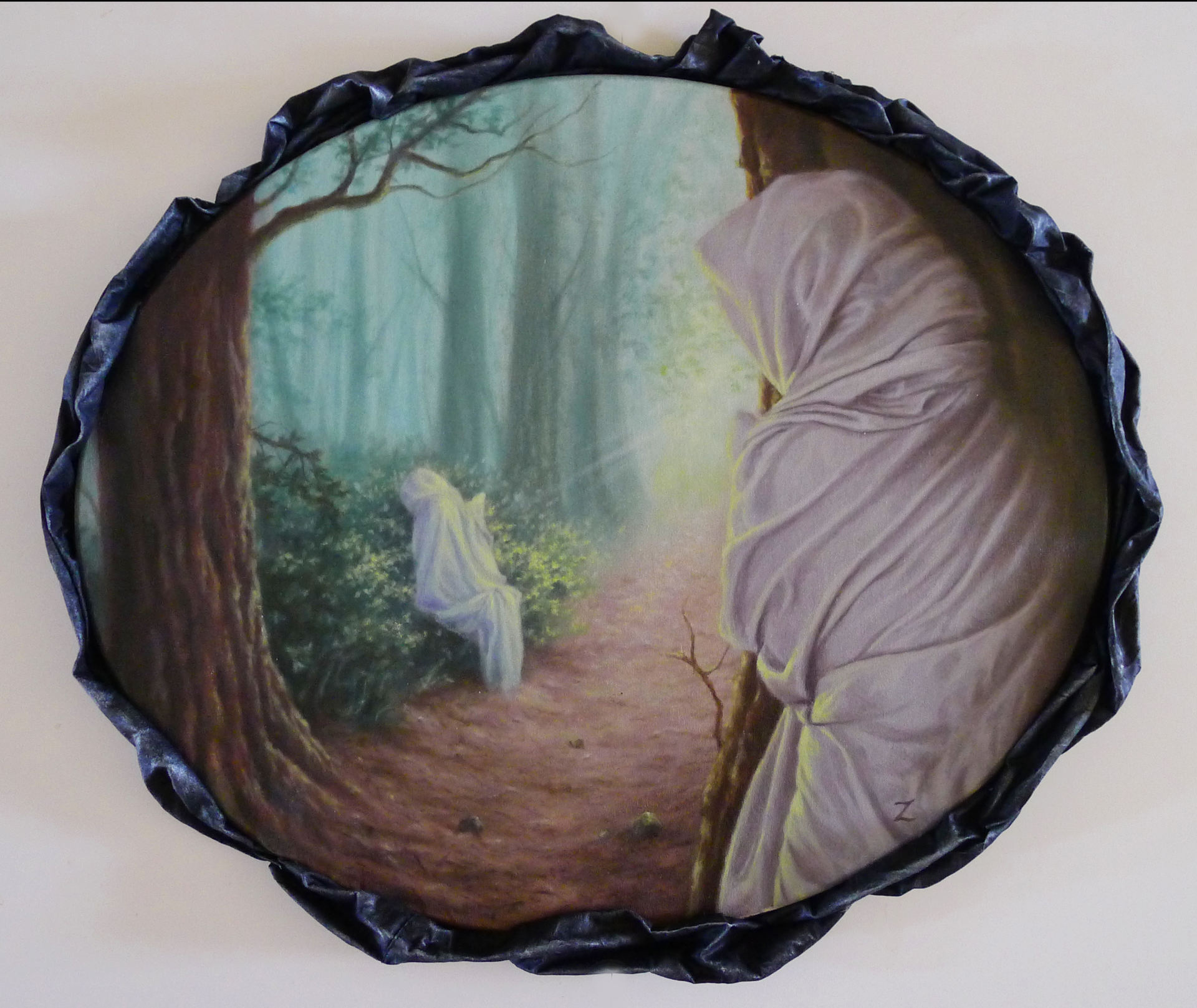
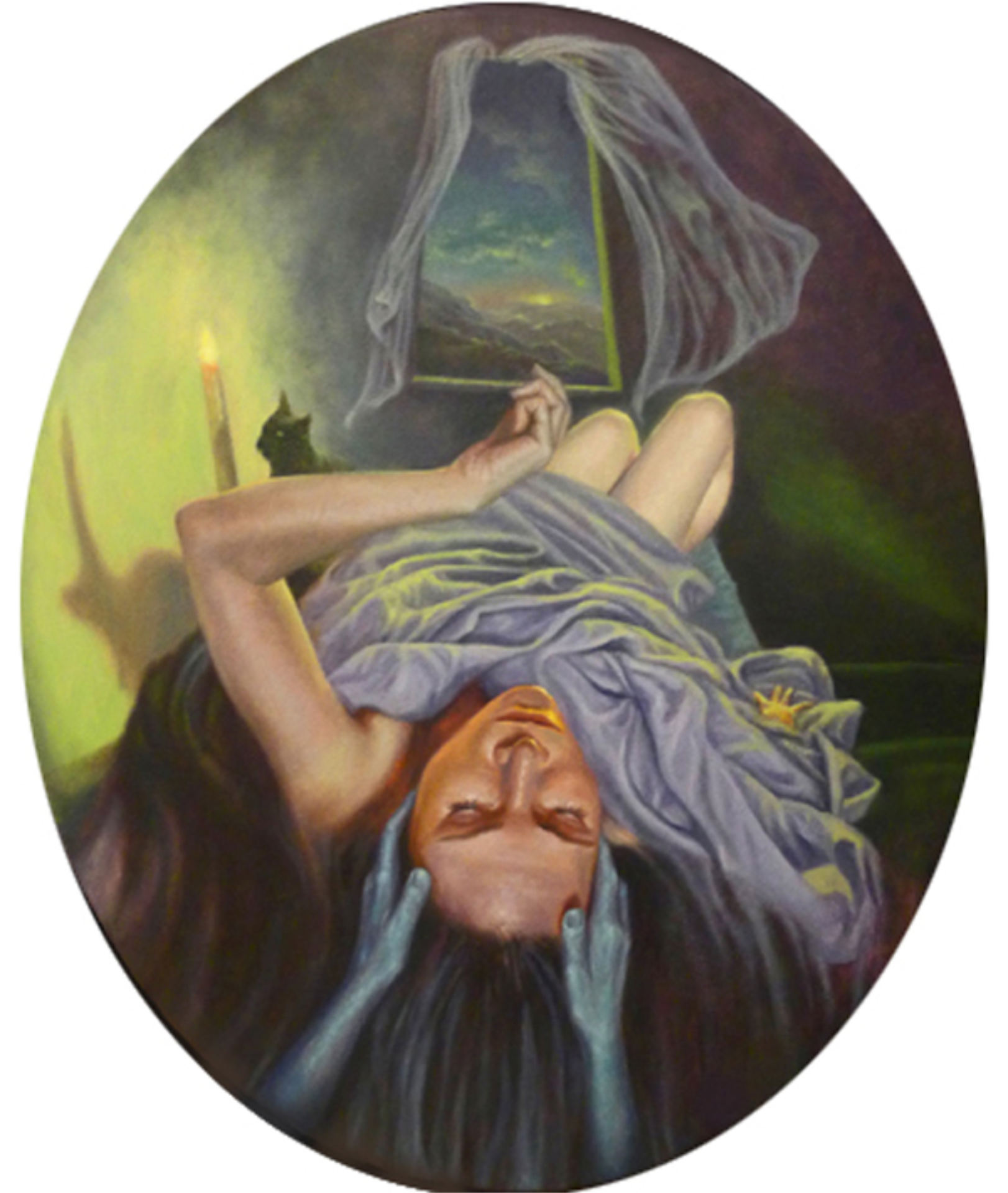
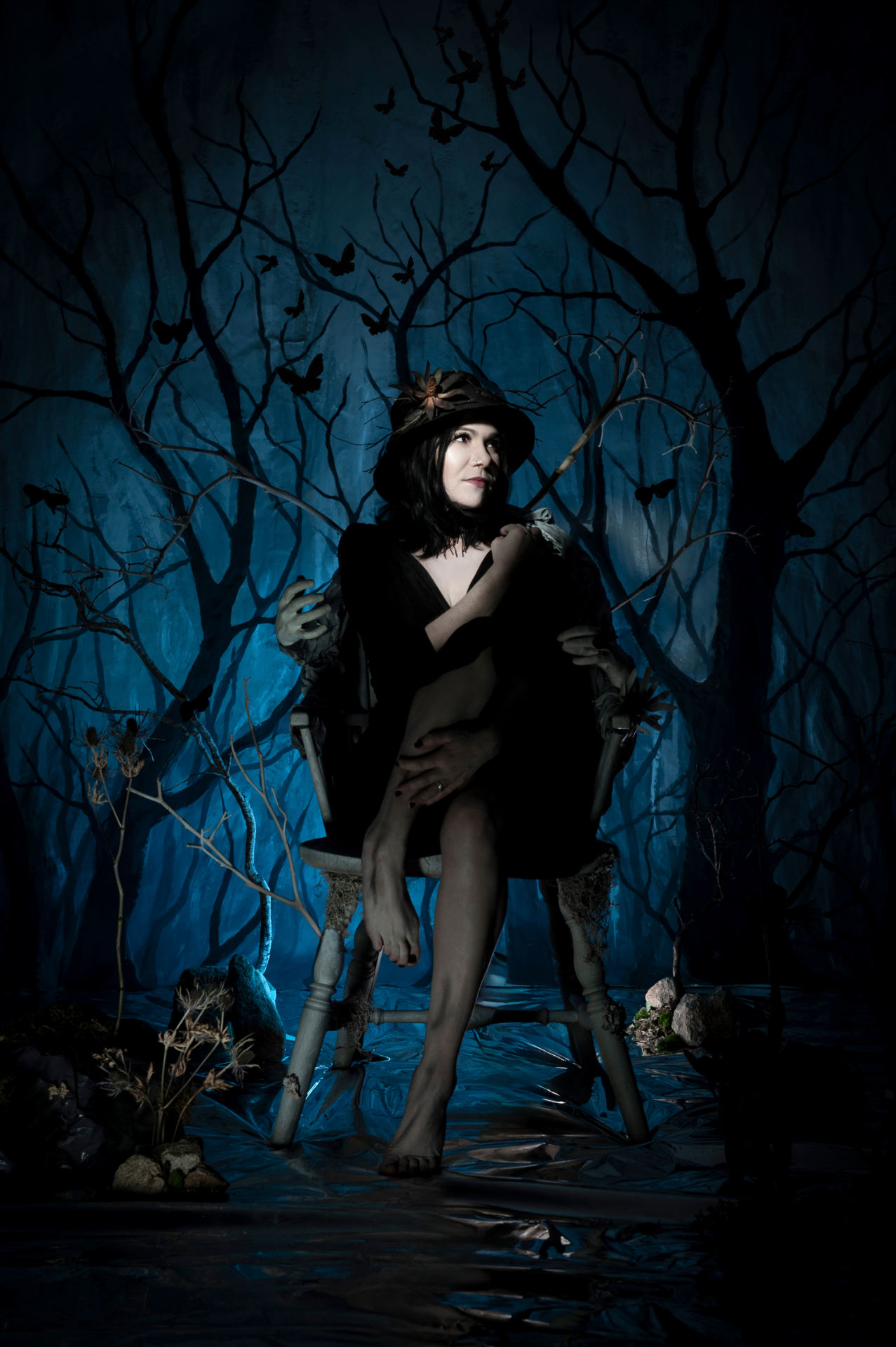
Zara Kand believes honesty is the secret ingredient in the magic spell that is art, and finds an ultimate truth in exploring the underworld of the human psyche. In her hauntingly sparse and enchanting portraits, Kand paints archetypal figures set in liminal dream-like spaces as a means of transforming the darker aspects of the human condition into light.
Sawa: I want to know about your journey of becoming an artist. When did you know that you wanted to make art, and how did you begin your process?
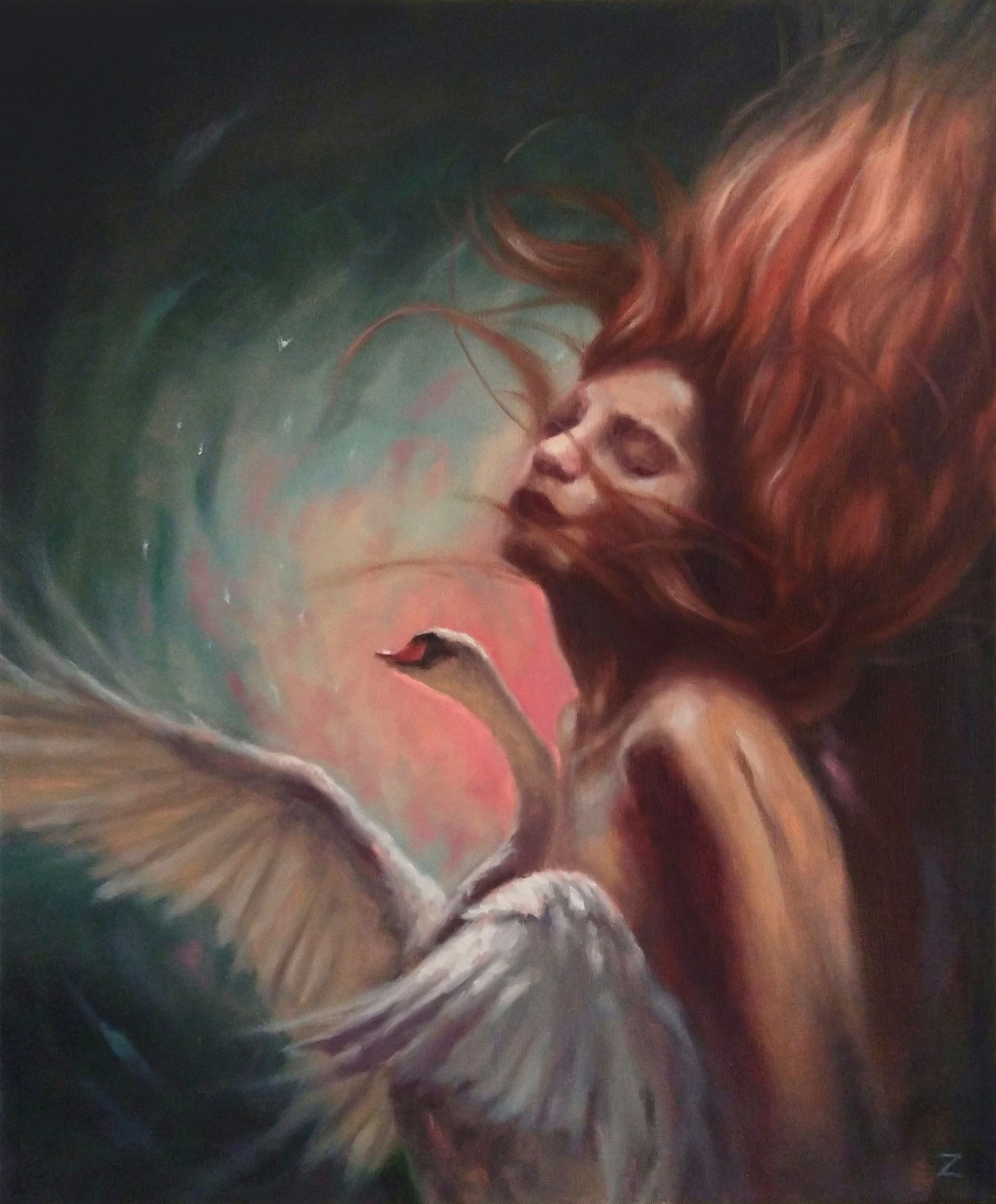
Zara: Sheesh, where do I start? I don’t think I ever lived a day past the infant stage that wasn’t tied up in creative expression, it’s been a part of my identity for so long. Of course when you’re a kid you don’t think about these things, you just do what comes naturally (for me that meant drawing on paper or walls, with pens, mud — anything I could get my hands on). Fortunately, my weirdo musician parents encouraged this behavior, and never gave me that talk of pursuing a “more serious” kind of career once I got older. But I do remember having that moment, perusing college brochures and heeding the societal propaganda they teach you in high school, of thinking I should decide on a sensible profession. I’d considered becoming a make-up artist or graphic designer, but didn’t necessarily feel that enthusiastic spark over such options. Then it hit me, stark as a lightning bolt, that I already knew what I wanted to be: a painter. So why be something else? I knew it wouldn’t be an easy road, but would certainly make for an interesting, enriching one. And it has. Not to sound cheesy but I believe we should always go in the direction of our heart’s calling, for therein lies a rare and powerful freedom. And I think we can still be smart about navigating the world as we follow those passions, it’s just a matter of finding balance.
I gravitate towards work that makes me feel something, and I have that experience when I look at your paintings. How do you create artwork that triggers an emotional response?
I consider that a huge compliment, thank you. I’m definitely not trying to create work that merely looks good above a couch, rather, work that tells a story about who we are. I feel that art (painting, writing, music, dance, film etc.) is another form of language which communicates the important nuances that other forms of language can’t. Humans are incredibly complex, especially our emotional matrices, and I love expressing that through paint. Emotion is one of those important facets of human experience we’re so often told to suppress, even though acknowledging and embracing it is one of the healthiest things we can do for ourselves. So I like taking advantage of art as a means of tapping into those silly taboos and exposing essential parts of ourselves that are rawer than the polished, curated versions we normally put out there into the world. It’s nice when a painting can make you feel something right away; you don’t even have to analyze why it does, you just know it has unlocked something that resonates with who you are at the core.
Your work is conceptually steeped in psychology, exploring the human-psyche through symbology like a dream.
Yeah, I feel this relates a lot to my previous statement about telling stories about who we are. Our psyches are another labyrinthian component which ultimately dictate our behavior. Before any action there is first the idea/thought, so understanding where our thoughts come from helps us understand why we do the things we do. That’s why I love portraying the internal worlds of people as they go about navigating the external world, how those two realities clash at times. I love creating scenes where dreams and reality blur, and I’ll use symbolic imagery to represent hidden thoughts dwelling inside us, shaping who we are. A lot of my paintings focus on healing and inner transformation because I believe that a society can only remain “sick” if the population itself is in a state of mental/spiritual sickness. This means the more well-being there exists on the individual level, the better off we all are as a whole. And I don’t mean going to our yuppy yoga studio once a week and breathing a little “gratitude” prayer into our chai lattes. I mean doing the real work of confronting our demons, taking responsibility for the way we affect others, exercising genuine humility and compassion.
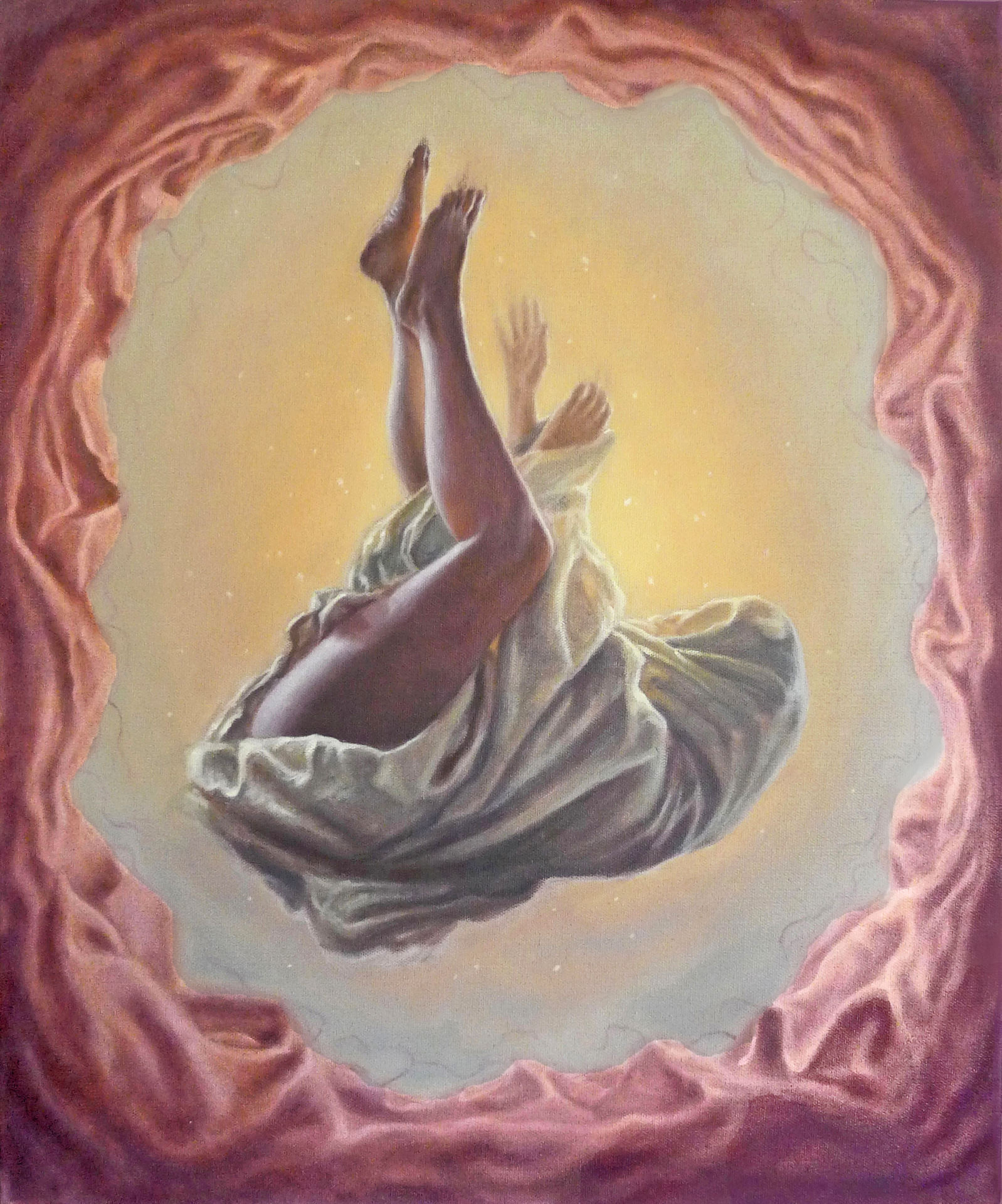
I know you made the painting Above, Beyond when you were depressed about the political state of the world and wanted to make something uplifting. Can you tell me more about the therapeutic power of this painting, and how art helps us alchemize emotions and find comfort in the creative process?
It’s true that my work is usually pretty dark — I guess by the very act of trying to paint human experience, it’s bound to, right? But occasionally I’ll make a conscious effort to paint something uplifting, because like magic, art has the power to transform the way we feel about the world. When I painted Above, Beyond in January of 2025, there was a lot of angry, bewildered energy surrounding our political climate (still is) which felt suffocating. I wanted to create an image of strength and hope that might cut through all those defeated feelings, because wallowing in our disgust wasn’t going to help anything. Did the pretty painting help anything at the time? Maybe only on a small level, but hey, those small moments of relief are often what keep us going through the day. I know it helped lift me out of depression while I made it, because you can’t paint an image of beauty without channeling it a bit.
It’s so important to channel beauty even when everything is falling apart around us. Our work doesn’t always have to reflect the grief and rage we may feel, but both approaches are important.
Art tends to be a mirror that reflects current states of the world, and at its best, can even transcend those states. I think that as long as honesty is the main ingredient used in the magic spell that is art, then that painting will do what it needs to, regardless of how dark or light in subject matter. Honesty is what puts us in touch with ourselves and others, and fortunately through art, we can communicate things we might be too timid to say in real life.
“I wanted to create an image of strength and hope that might cut through all those defeated feelings, because wallowing in our disgust wasn’t going to help anything.”
Art trends can come and go, but your work feels timeless and authentic. How have you developed your unique style?
If you’re trying to stroke my ego with your questions, it’s working! I’ve never concerned myself over what other artists were doing at any given time. It’s true that trends are temporary, which seems oxymoronic where art is concerned, since I believe art is something that should be able to surpass generations. Throughout my own career, I’ve prioritized listening closely to my emotions, or like working a butterfly net, trying to capture the bizarre imagery floating around my subconscious. How the paintings are received on the outside is always secondary. Maybe that’s why, for the longest time, I couldn’t find myself fitting into any particular genre. My paintings were always either too weird or not weird enough. Not kitschy enough for the lowbrow scene, or not serious enough for the fine art scene. But this only strengthened my punk conviction to continue doing what felt right to me. Because of this, I got to develop my voice in an intimate way and the feedback I’ve received from my audience and collectors over the years has been incredibly meaningful and rewarding.
Funny enough, in recent years the boundaries of some art scenes have become more flexible, and I find myself fitting into places I wouldn’t have in the past. Turns out I’m much less the loner than I was before. Nonetheless, it seems to me that doing the work to cultivate our own identities, although a lengthy commitment, is a more worthwhile investment than chasing immediate acceptance, a terribly fickle thing.
In your paintings are these veiled and cloaked flying figures you refer to as a “symbolic figure in the mythology of your own mind.” Who are these beings and what do they represent to you?
They’re benevolent beings that blur those boundaries between dreams and reality, remaining in a sort of in-between state. Sometimes they act as protectors and sometimes they’re the vulnerable ones that need protecting, as in From the Folds of the Womb. Are they corporeal or intangible? I’m not sure, but either way, they give us permission to step back and detach from cold hard reality, reminding us that things might not be as concrete as we think. I love playing with them to represent the ambiguous strands of existence where we can’t be sure if something was just a figment of our imagination.
What is your advice for artists who struggle with the dilemma of quitting their job to do art full time, or of finding the time to do art despite juggling different jobs? I know you have had a variety of careers and am wondering how you found the balance.
I used to think of creativity as an infinite source, and in some ways it is, but as far as mental and physical energy is concerned, it turns out there’s a limit. When I moved to Joshua Tree from Los Angeles in 2015, I began a private chef business (cooking has always been a passion of mine). Because it’s a creative profession, I placed all my artistic energy toward fine dining for a couple years, and there wasn’t room for much else. The inspired imagery filling my head at night were plates of artichoke confit and not dreamy painting compositions. For a while there I tried my best to excel daily at both art forms but burnt myself the fuck out. I still work as a private chef but have scaled it way down so that painting has become my romance, my one true love, again. I also am a regular arts writer as well as occasional curator and private painting instructor. But because these professions align with the visual arts world, I’m able to juggle all these facets without stretching my brain too hard. Compartmentalizing when you do what — i.e. mornings are for painting, afternoons for writing — really helps too. Lately I’ve also been specializing in art cakes and concept dinners (and less on traditional dinners), which also happens to align more with being an artist. So my advice would be to choose jobs that somewhat resemble the ultimate path you are trying to reach. A lot of times these different jobs can work hand in hand. But in my experience, if you are trying to master vastly differing disciplines and mentally taking it home with you each night, your art career is probably going to suffer some.
What sort of music do you listen to while you paint?
I absolutely love listening to music when I paint. My musical tastes are all over the place, and I think my playlists would drive most people crazy while working. In any given session, moods might jump from post punk to trip-hop to soul to black metal — just the other day I had Rowland S. Howard, Tones on Tail, Eric Satie, Curtis Mayfield, Canned Heat, and The Residents all playing within the same 30 minutes. Call me a spaz but I find this kind of mishmash energizing!
Is there any genre of art that you’re particularly excited about?
There are many I’m super intrigued by, but stop motion animation is one that keeps me utterly enchanted. During my childhood in Holland, my stepfather at the time owned an alternative video store that specialized in B-horror movies, manga, Betty Page erotica, and plenty of old school stop motion by the likes of Jan Švankmajer, Brother’s Quay, etc. Švankmajer’s Alice and others have been burned into my subconscious since that young age. Creepy inanimate objects springing to life perfectly complement a young child’s peculiar imagination — I was hooked then, and still am today.
Share
You might also like ...

Tommy Mitchell: If You Dream, Life Will Pinch You
Tommy Mitchell has mastered the humble ballpoint pen over the past few decades, while continuing to push his work into new frontiers.

Hirotton: A Future in the Past
Hirotton cut his teeth as an artist in the streets of Osaka and went on to distill his work in London, like so much fine gin. While his punk rock roots still endure in his paintings and drawings, they also reveal a magical world that’s all his own.

Various Artists: Shadow Work
Healing the Jungian shadow-self through dark art. Curated by Diana M. Ahuixa.

Jerry Hsu: A Vague Hope
Our dear friend and filmmaker Christopher Blauvelt sits down with revered skateboarder and photographer Jerry Hsu. Their dialogue conjures up a bouquet of fresh film canisters, spilled coffee in a used book store, and hot wet asphalt.