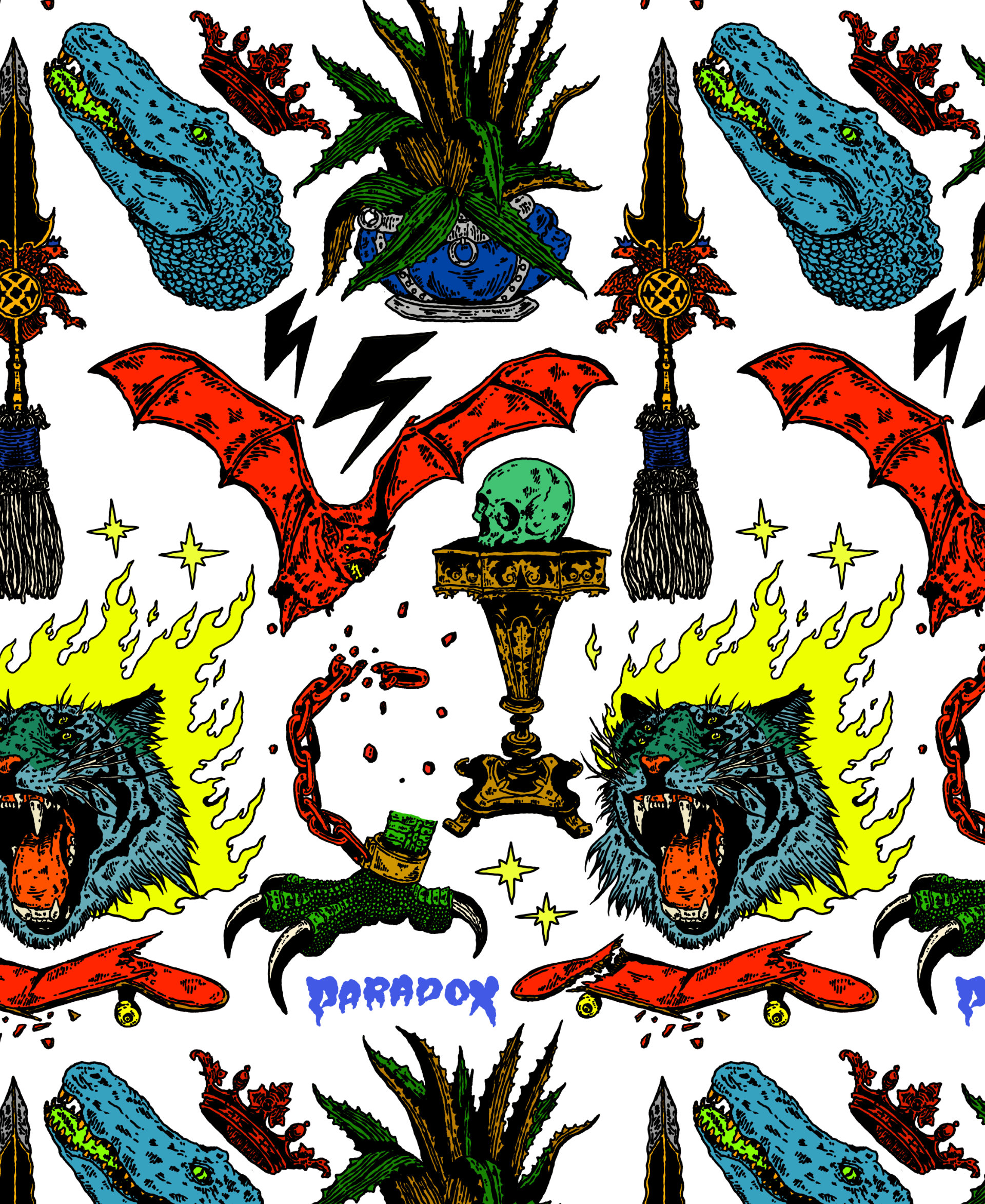
Hirotton: A Future in the Past
- Interview by Ira Alfred Ingram
- Published:
- In Features
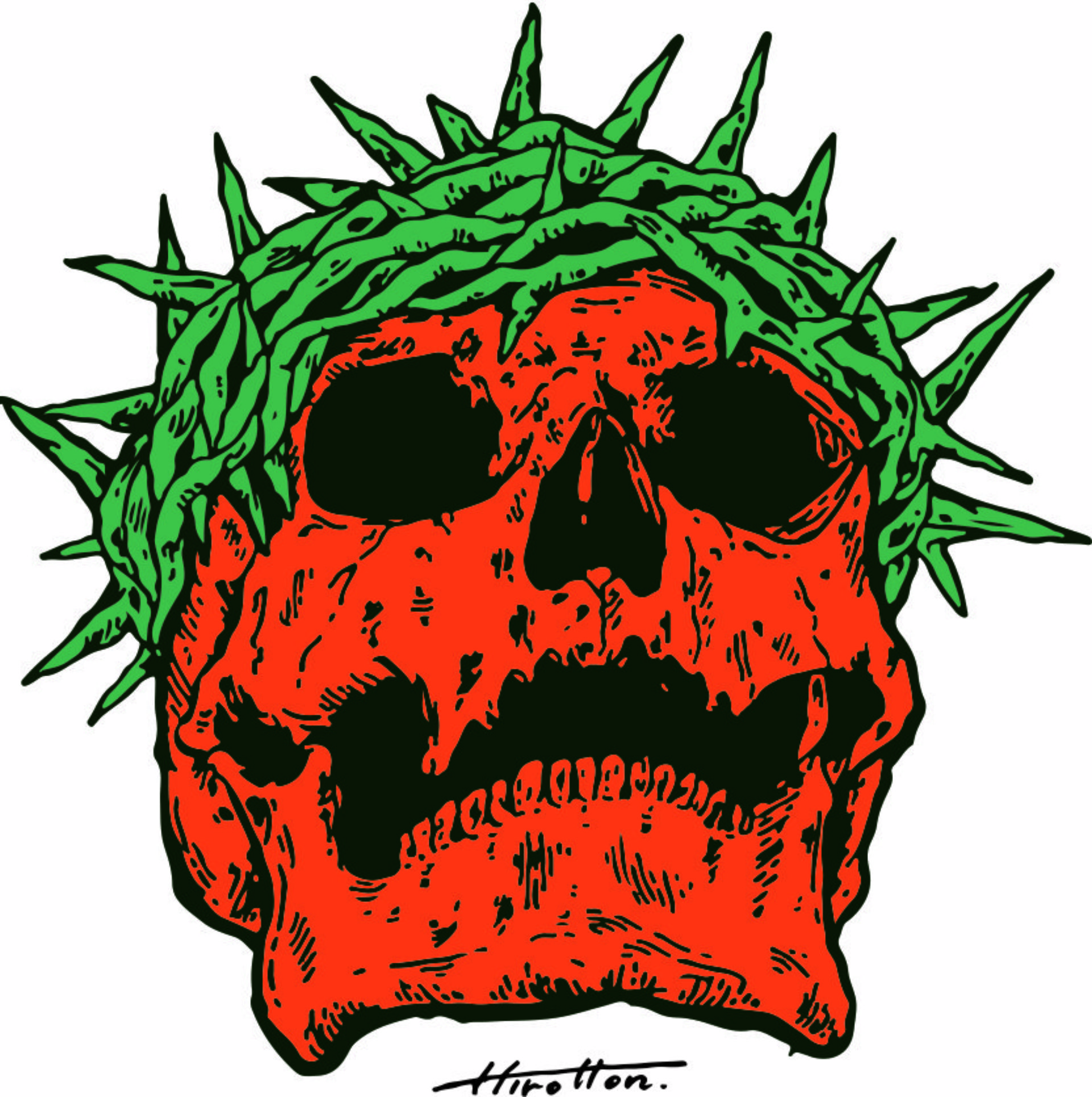
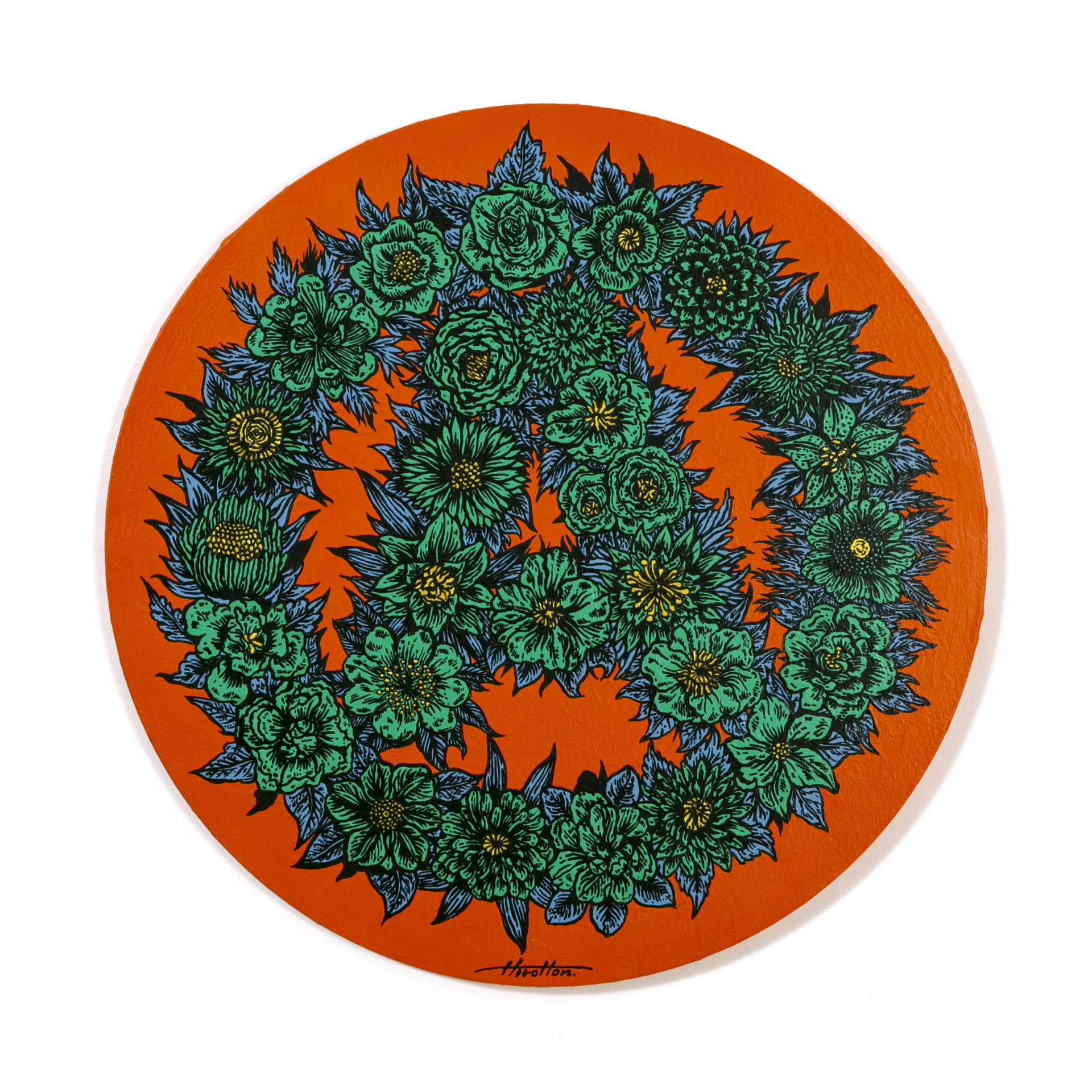
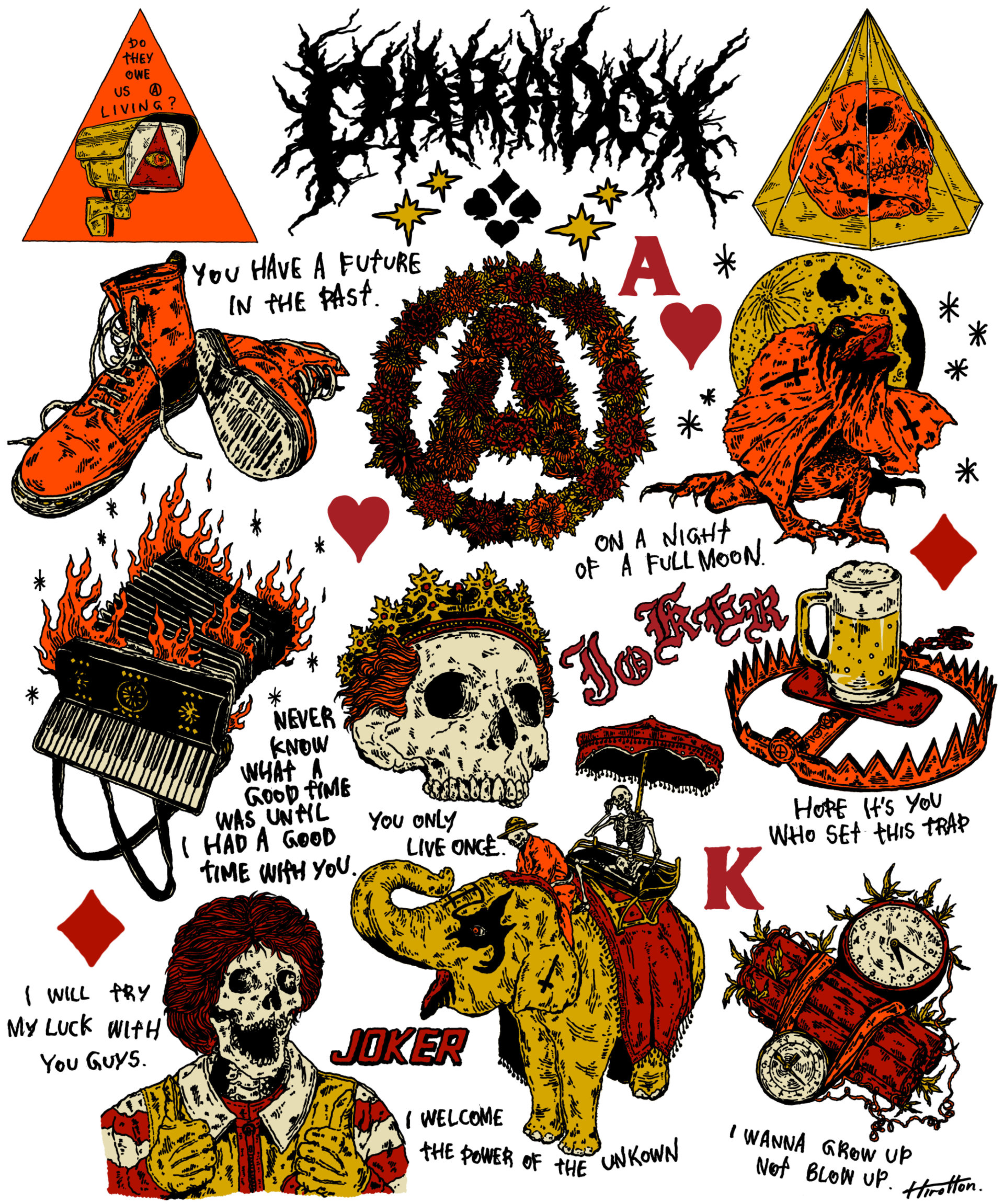
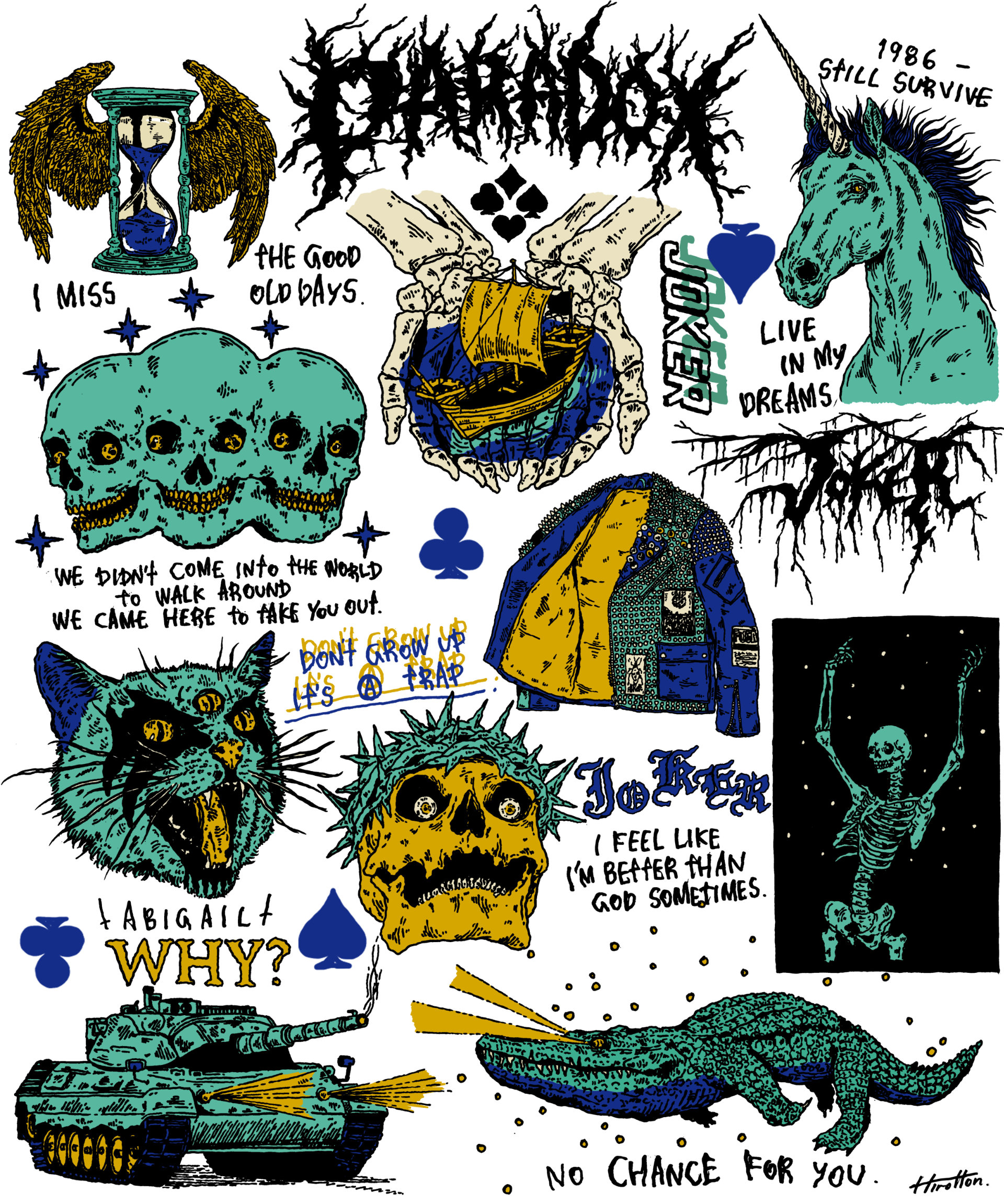
Hirotton cut his teeth as an artist in the streets of Osaka and went on to distill his work in London, like so much fine gin. While his punk rock roots still endure in his paintings and drawings, they also reveal a magical world that’s all his own. His art and influence have brought him all over the world but he still calls Japan his home. We visited him in his Tokyo studio to discuss everything from the loss of his father, to UFOs and the art of CRASS.
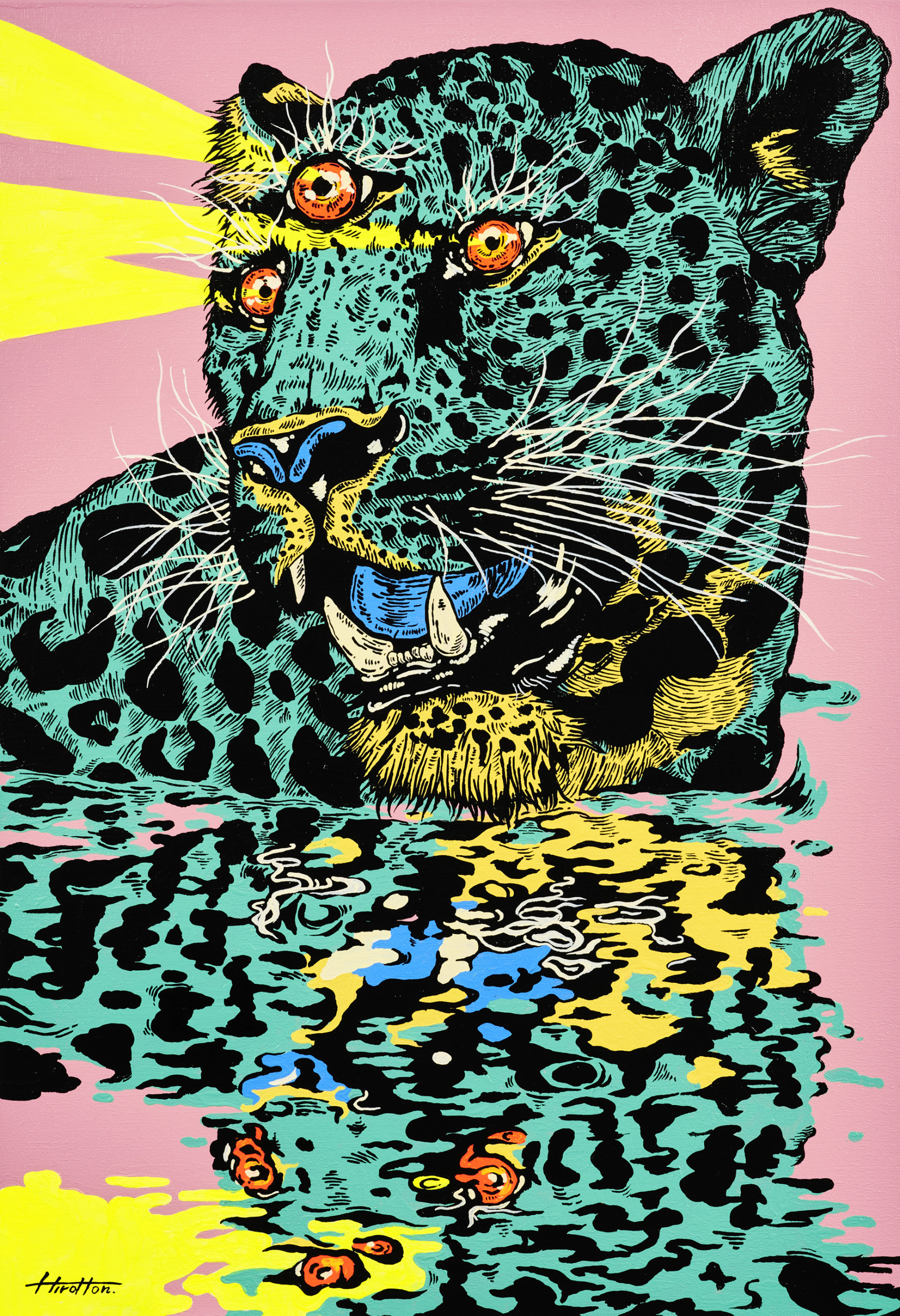
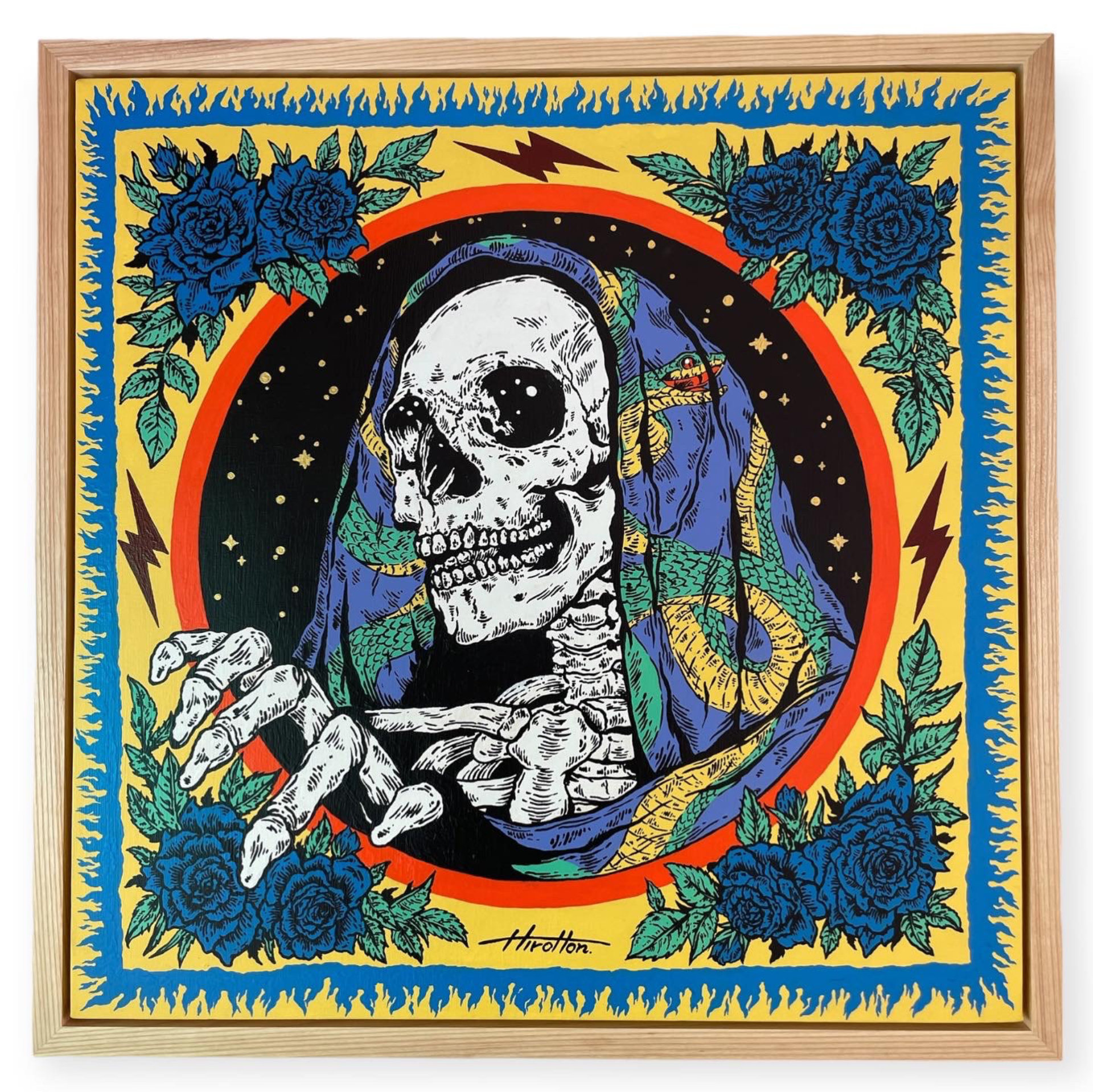
You sometimes paint traditionally dark subject matter using a bright color palette. Was there a particular era or artist that inspired that?
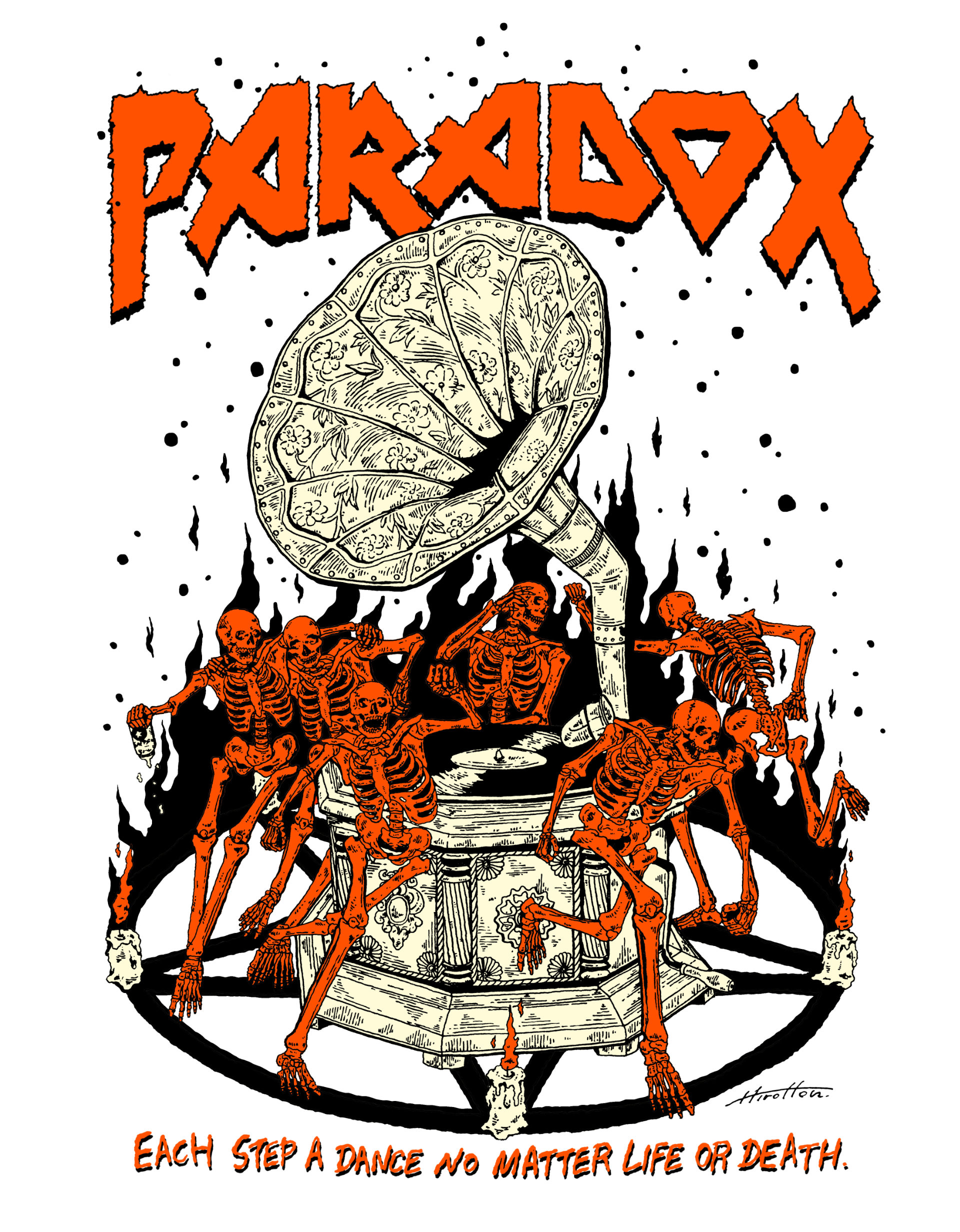
The bright colors happen naturally; I don’t consciously try to contrast dark themes. Using neon may be influenced by punk flyers or album covers. In terms of theme, I was really influenced by Gee Vaucher’s artwork for CRASS — it carried strong messages, but always with a sharp sense of irony. When I was in London, I even visited Dial House to meet her and hear her stories firsthand.
Do you feel instinctively compelled to create art?
I’ve felt that impulse throughout my life. Creating helps me release stress and just feel balanced.
What was your family life like growing up? Were your parents supportive of the direction you chose?
My father loved DIY — he made all sorts of furniture and took me fishing and catching insects. My mother painted watercolors as a hobby. Both of them influenced me a lot, and I naturally loved drawing and making things from a young age.
That said, my father didn’t support me living as an artist for a long time. He was from a traditional generation and probably wanted me to have a stable job. But over time, as he saw my exhibitions and collaborations with brands he knew, he gradually understood and supported me. Eventually, he even wore my T-shirts. My father passed away from cancer this February, but I’m truly grateful for him.
We are so sorry to hear about the loss of your father. Losing a parent is such a difficult experience. Have you used your art to help process that grief at all?
Honestly, I don’t think I’ve really processed my father’s passing yet. So I haven’t expressed that through my artwork so far. Maybe I will someday, maybe I won’t — I’m not sure.
It must have felt amazing to gain your father’s support of your career in the end.
Yeah, my dad and I clashed a lot when I was a teenager, but deep down I always respected him. In a way, getting his recognition was always a goal of mine. So when I finally did, it really meant a lot. Now that he’s gone, that goal isn’t there anymore, but I just want to keep working in a way that he’d still be proud of.
How did your time in Osaka shape you as a person?
I was born and raised in Shizuoka, and moved to Osaka at 18 to attend art school. Living in Osaka as a teenager was incredibly stimulating — I don’t think I’d have the lifestyle I do now without that experience.
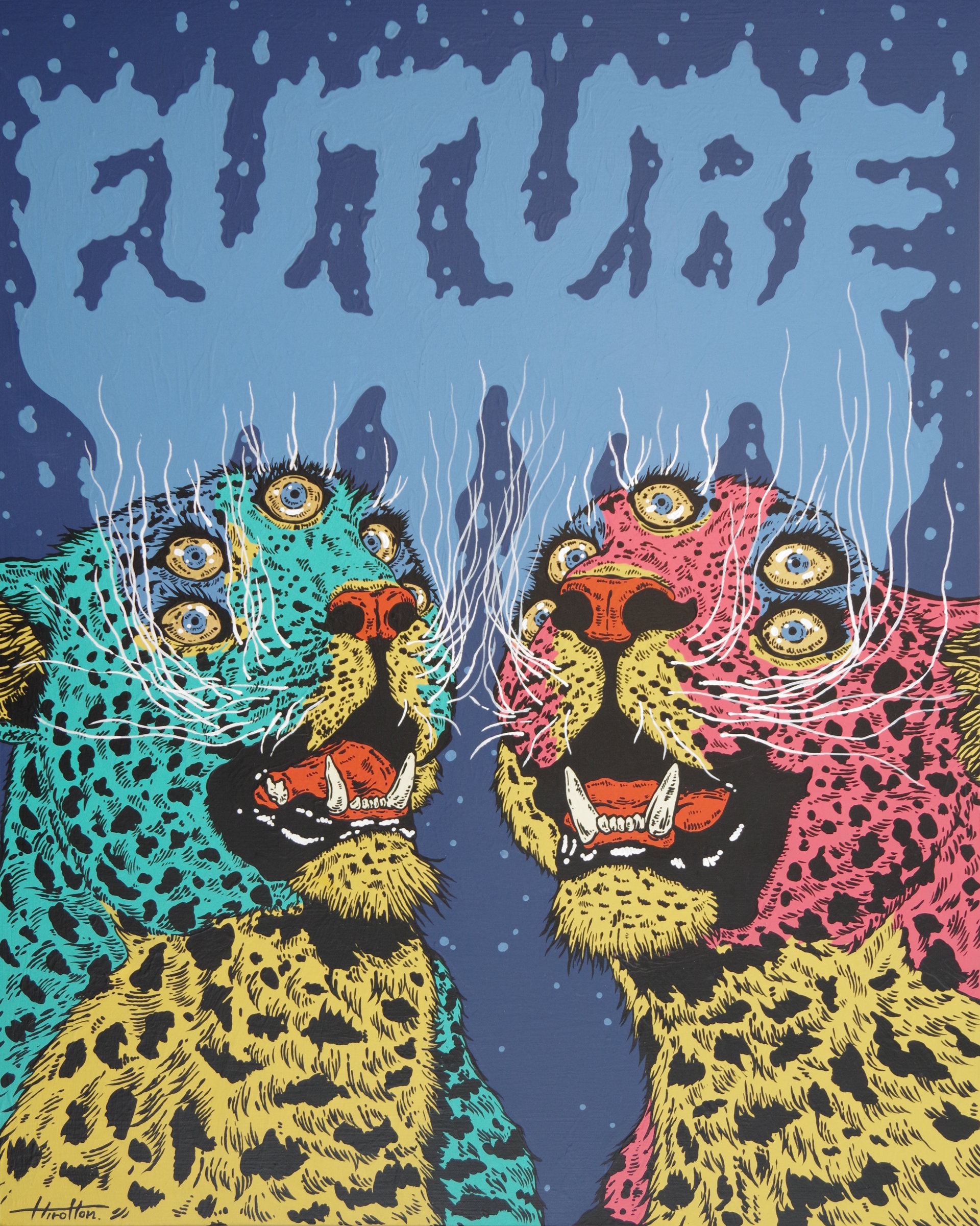
Triangle Park is one of the most unique places I’ve ever been. It must have been incredible and formative to spend so much time there with the Osaka Daggers. What is it like on a typical night there?
I knew about Chopper from magazines, he was one of my heroes. One big reason I chose art school in Osaka was Triangle Park, haha. During my five years in Osaka, I went there almost every week.
Triangle Park had all kinds of people — skaters, punks, hip-hop heads, office workers, homeless people, even girls heading to clubs. It was always evolving. When I was there, even on weekdays, someone like Chopper or DAL (the handsome) was around. People would just gather in the evenings, drinking, skating, talking — there wasn’t a “typical night,” just constant energy, surprises, and small miracles. A lot of things happened there that I couldn’t even tell.
Through the Daggers, I could engage deeply with skateboarding. Without those days in Osaka, I probably wouldn’t have gone to London or started drawing the way I do now. In a sense, those experiences were a turning point in my life, which is why I tattooed the Daggers over my shoulder dislocation scar from Triangle Park.
When did you first meet Fos? Were he and Funeral French early influences on you?
I first met Fos at Triangle Park, probably around 2006 before I moved to London. I’ve loved Heroin graphics since I started skating, and Fos, French, and Craig were really influential. In Osaka, I was making furniture and objects with metal. After moving to London, I couldn’t weld anymore because the facilities weren’t available. Around that time, Craig and others were distributing zines with their artwork, which inspired me to start painting seriously.
Did England influence your style, personally or professionally?
Definitely. Living in London had a huge impact on me. Until then, I’d only ever lived in Japan, so moving there was a big culture shock that really opened up my world. Learning to speak English was also a big turning point for me. A few years back, I used to go regularly to Oceanside in the U.S. to paint murals with my friend BB Bastidas — but honestly, without my time in London and learning English, I don’t think I could have done that. I actually first met BB in London too. One of the most interesting things was making friends from all over the world and hearing what they think about life, art, everything. Just like my years in Osaka, my years in London shaped me. Without London, I wouldn’t be who I am today.
How was your work first published? How did that come about?
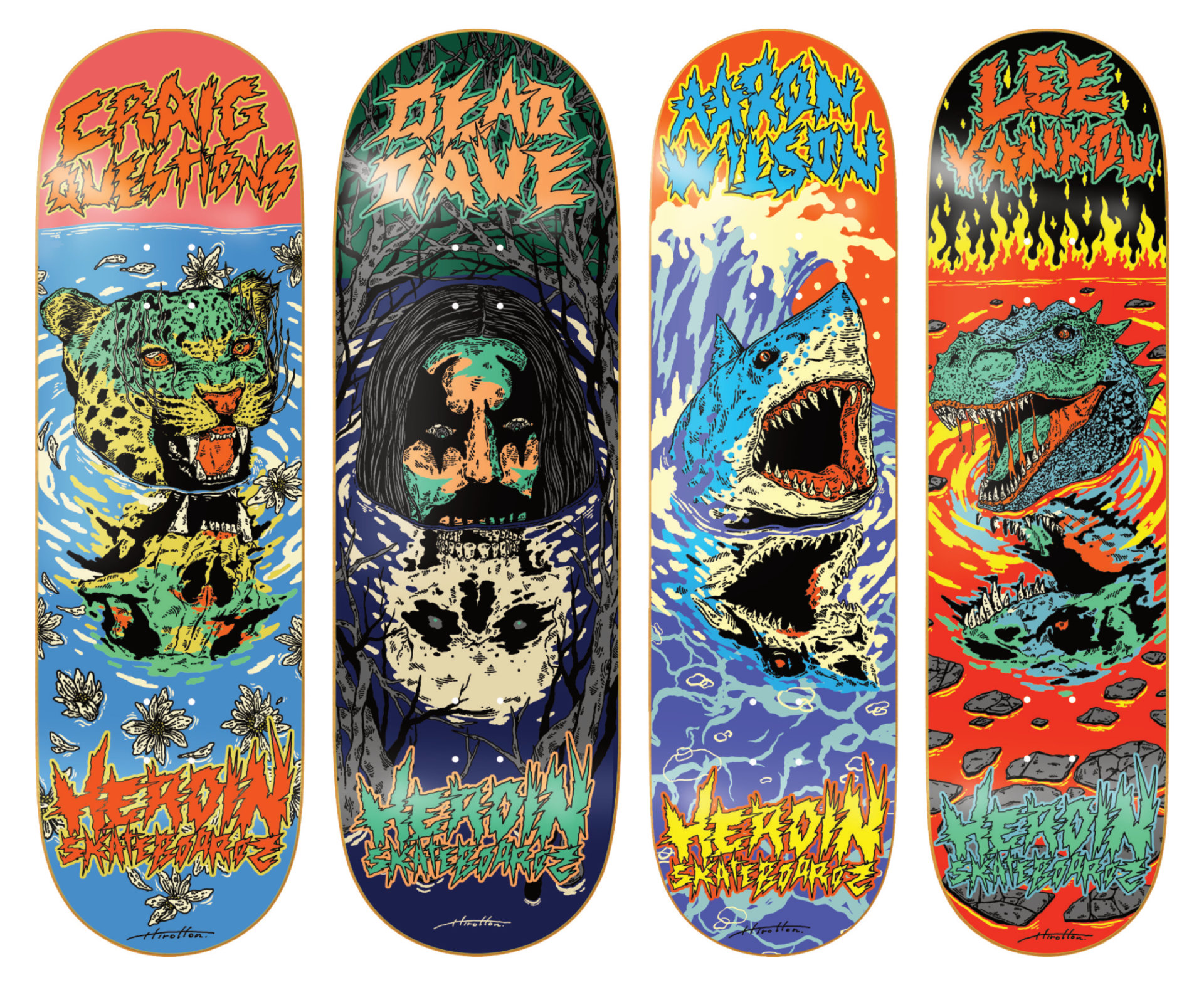
I had a couple of exhibitions in London around 2011, but I really started living as an artist after returning to Japan around 2014. My work probably began to gain recognition gradually, but in the skate world, I think my first public exposure was in 2016: My first board design for Heroin and the T-shirt design for Confusion Magazine. Being able to release my designs as actual skateboards was a dream come true, and I’ll never forget how excited I felt.
What challenges come with creating skateboard graphics for a brand like Heroin, and how much does the shape of the board affect your process?
When creating a skate graphic, the first thing I consider is the rider — their background, music taste, favorite food, and interests. From there, I think about how much of my style I can bring to it.
Regarding shape, Heroin decks are usually wide, so I get to go big with my artwork, which I’m stoked about. When I worked on symmetrical boards, I designed reflections as if on water, adapting to the shape.
Do you listen to music when you work? If so, what is your go-to right now?
I always listen to some kind of music when I’m working — hardcore punk, reggae, hip-hop, all sorts. Lately I’ve been into bands I’m close with, the kind I actually catch at gigs, like SAIGAN TERROR. They’re from Tokyo, and they’re so damn good.
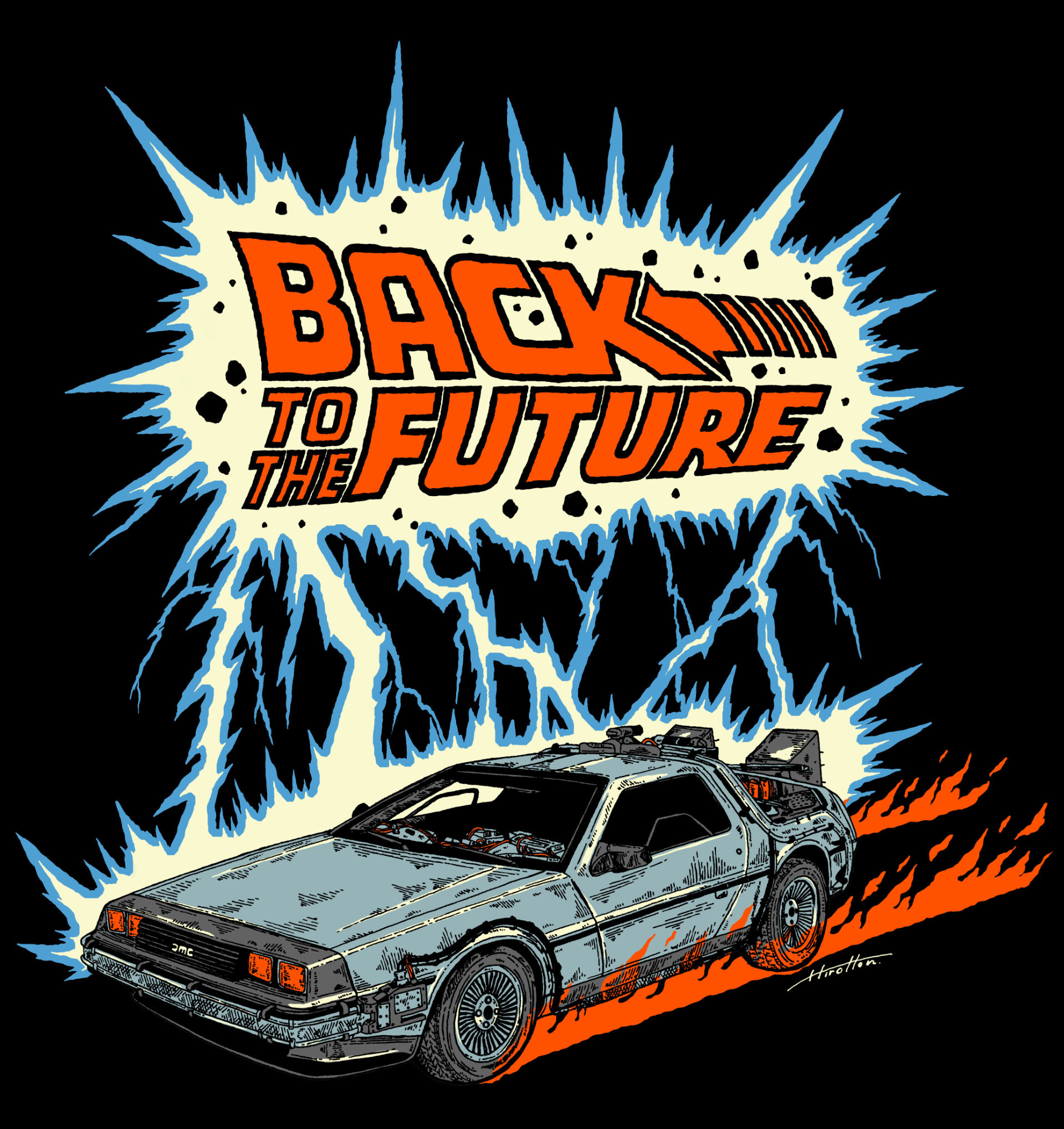
I think artists and skaters are closest to the street, full of grit, risk, and DIY spirit.
It seems like mythological creatures inspire you. Have you studied mythology? Where does that influence come from?
I haven’t formally studied mythology, but I’ve been interested in mythological creatures and UMAs since childhood. UFOs too. It’s still a strong interest.
Have you ever seen a UFO?
I’d say yes — if what I saw really was one. I can’t be 100% sure, but I believe it was. I’m 100% convinced they’re real.
I love the theory that UFOs are interdimensional and not intergalactic. Have you read about this?
Yeah, definitely. I’ve done a lot of reading about UFOs. This conversation is actually making me realize that
I’ve always been drawn to unexplained things — UFOs, cryptids, all that. There’s something about that unknown possibility that excites me.
It’s kind of like when I get the chance to paint a huge wall, bigger than anything I’ve done before. There’s fear and uncertainty, but also this rush of excitement. It feels really similar.
Your work has found its way to large murals and small canvases alike, do you prefer one to the other?
I like both for different reasons. Usually I’m working on smaller pieces, but when I get to do a mural it’s something else. It takes days. There’s pressure, but the payoff is massive — and painting something that big just feels incredible.
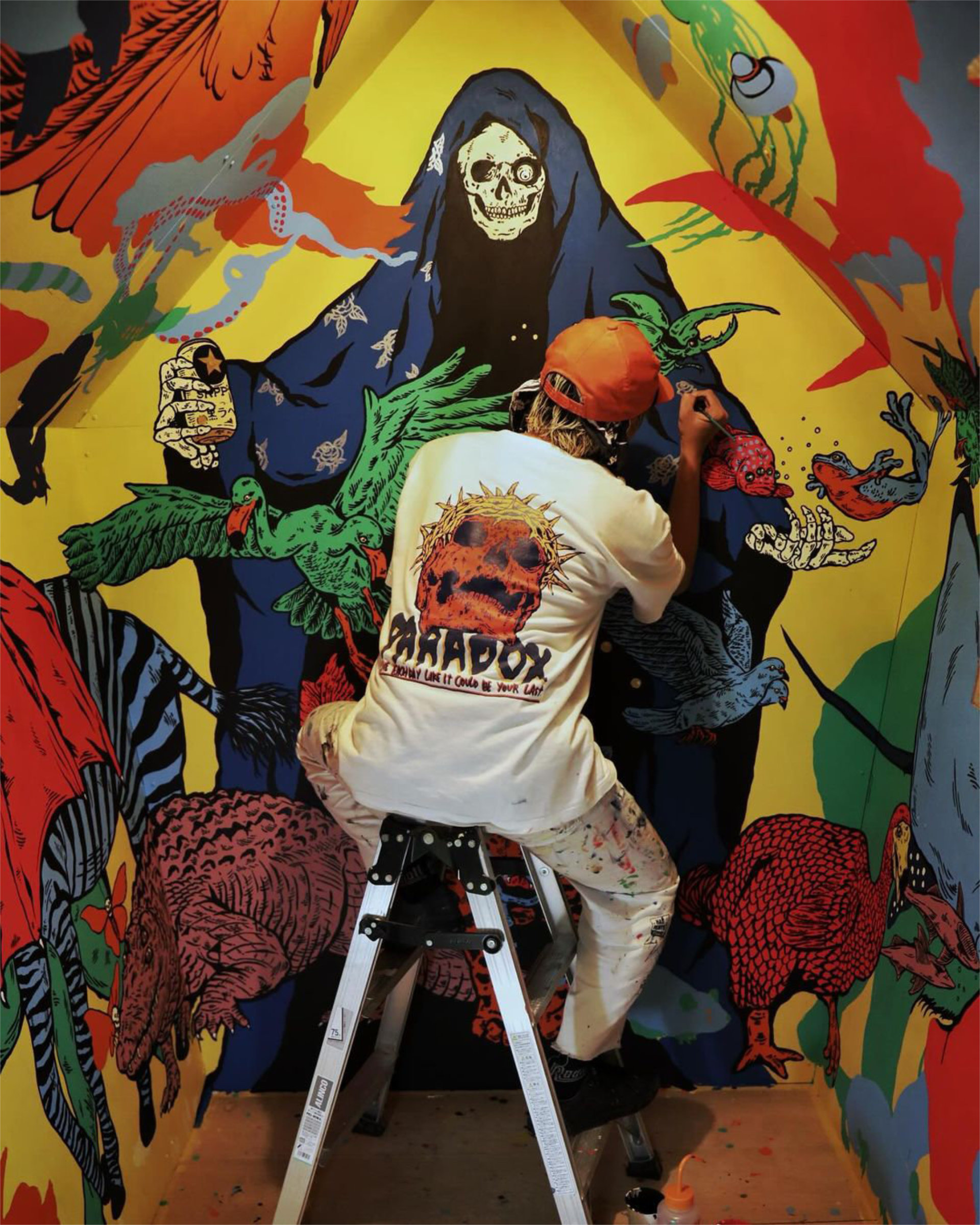
You’ve collaborated with an eclectic list of brands (Universal Studios, Heroin Skateboards, Vans, Puma, Dickies, etc.). Do you approach those collaborations the same way you do your solo work? How difficult is it to find balance between creative freedom and brand partnerships in general?
I don’t think too much about it. I focus on how much of my style I can put into the collaboration. Ideally, it should be immediately recognizable as my artwork, just like a memorable skater or style.
We see a lot of brands collaborating with artists these days. Do you feel it’s because artists are able to connect with audiences in a way most brands simply cannot?
I’m not sure, but I think artists and skaters are closest to the street, full of grit, risk, and DIY spirit. Brands probably want to incorporate that.
Influences aside, your work clearly stands on its own legs. How long did it take for you to develop your style? What was that process like for you?
Honestly, I’ve just been grinding every single day, painting as much as I possibly could. I’ve put in a huge amount of hours, more than most, and that gave me confidence. Through that process, of course, I faced a lot of struggles and had to really look inward. At some point — though I can’t say exactly when — my style just started to form naturally. And I know it’ll keep evolving. It’s hard to see my own work objectively, so it feels great to hear you say that.
What advice do you have for artists still trying to develop their own unique voice?
It’s like skating — you need the technical skills, sure, but the most important thing is to dig deep and figure out your own style. Taking that time to face yourself, to explore and experiment, that’s what eventually connects everything together and helps you grow!
What do you believe the purpose of life is, if there is one?
I’m not sure what the goal is, but I want to stay in the process forever.
When the great Hirotton passes from this world, how do you want to be remembered?
I don’t really care, hahaha.
Share
You might also like ...

Zara Kand: Dream World
Zara Kand alchemizes grief into portraits of dream-like beauty infused with Jungian symbolism.

Tommy Mitchell: If You Dream, Life Will Pinch You
Tommy Mitchell has mastered the humble ballpoint pen over the past few decades, while continuing to push his work into new frontiers.

Various Artists: Shadow Work
Healing the Jungian shadow-self through dark art. Curated by Diana M. Ahuixa.

Jerry Hsu: A Vague Hope
Our dear friend and filmmaker Christopher Blauvelt sits down with revered skateboarder and photographer Jerry Hsu. Their dialogue conjures up a bouquet of fresh film canisters, spilled coffee in a used book store, and hot wet asphalt.