Gwar: The World’s Most Infamous Art Collective
- Interview by Sawa
- Published:
- In Features
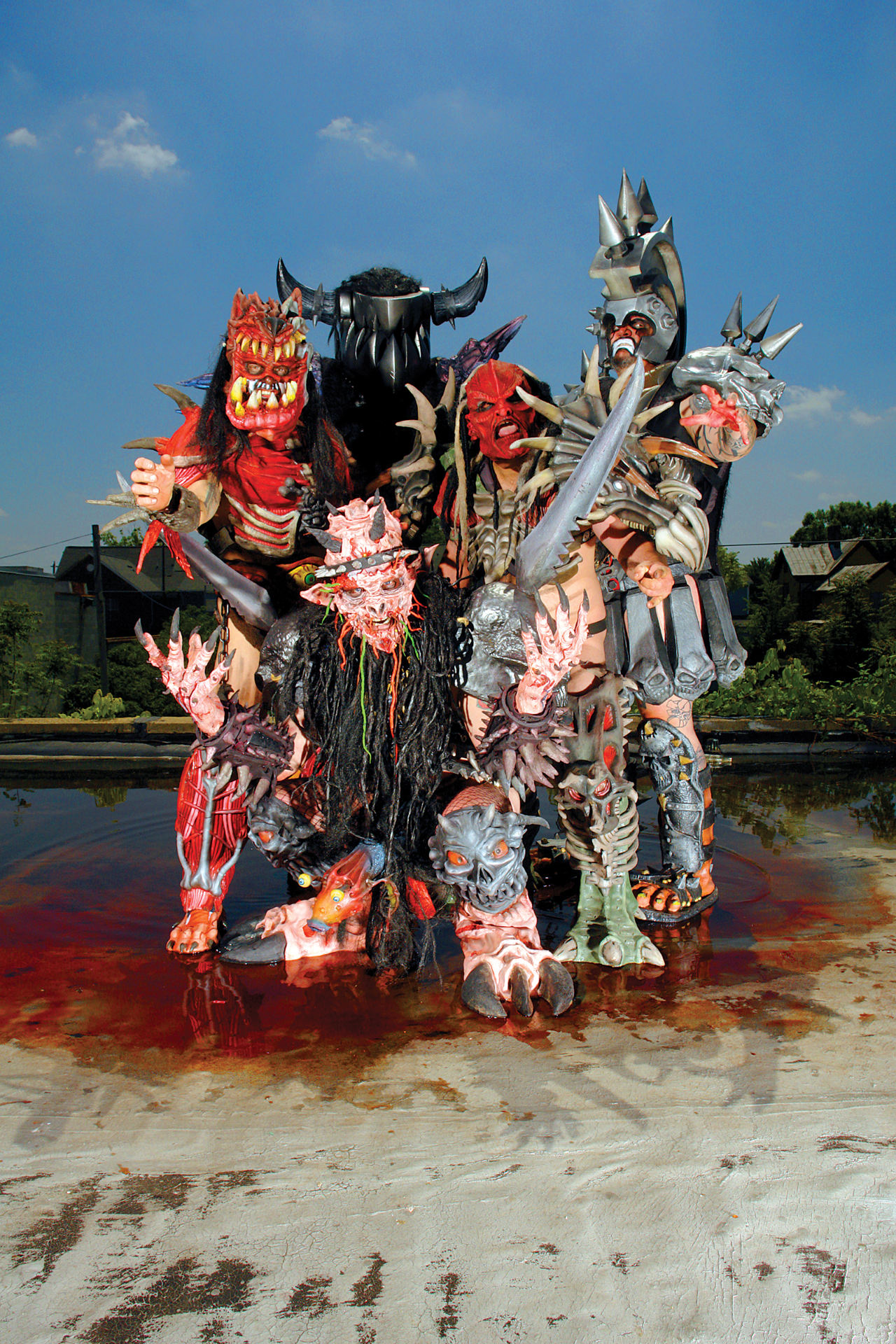
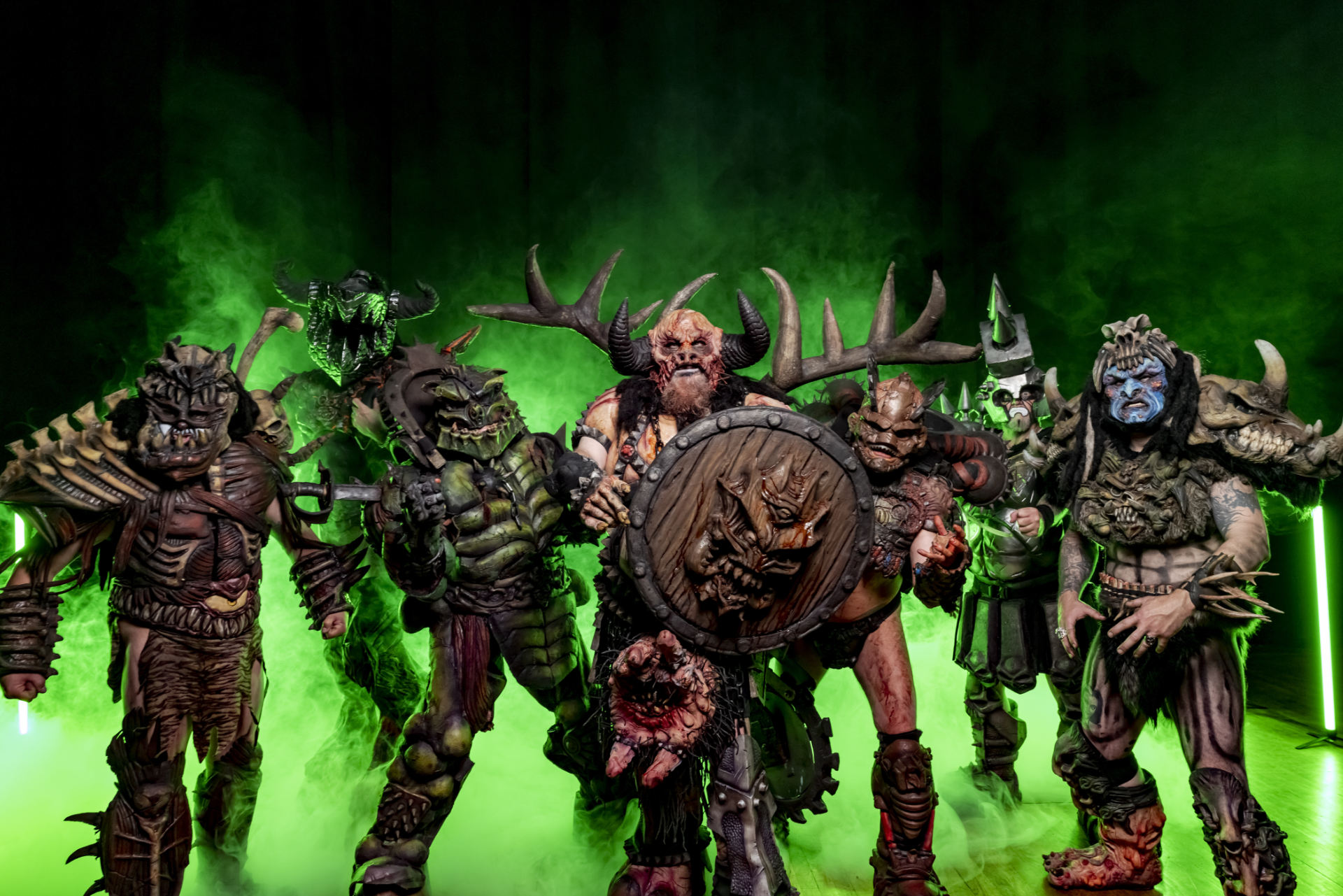
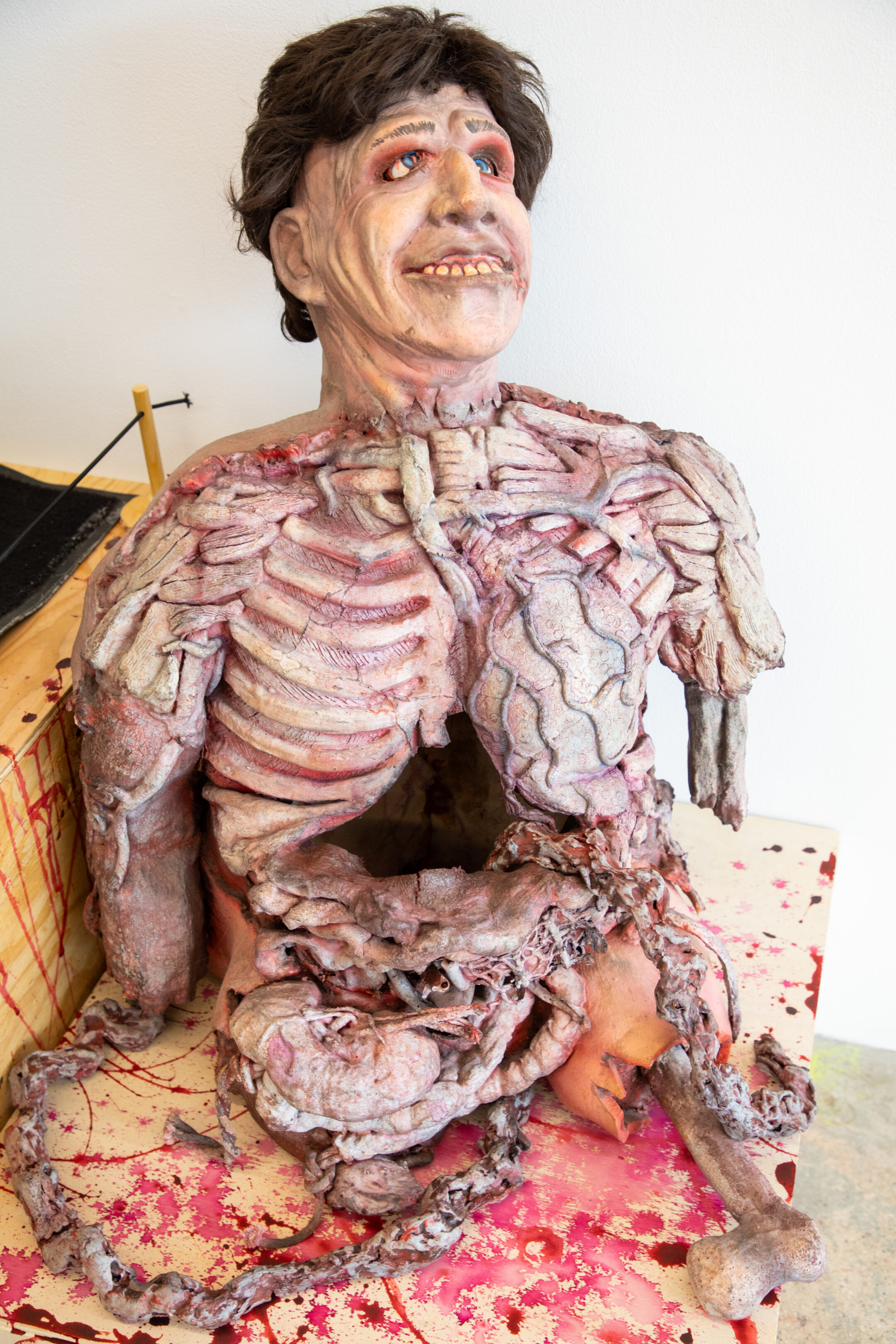
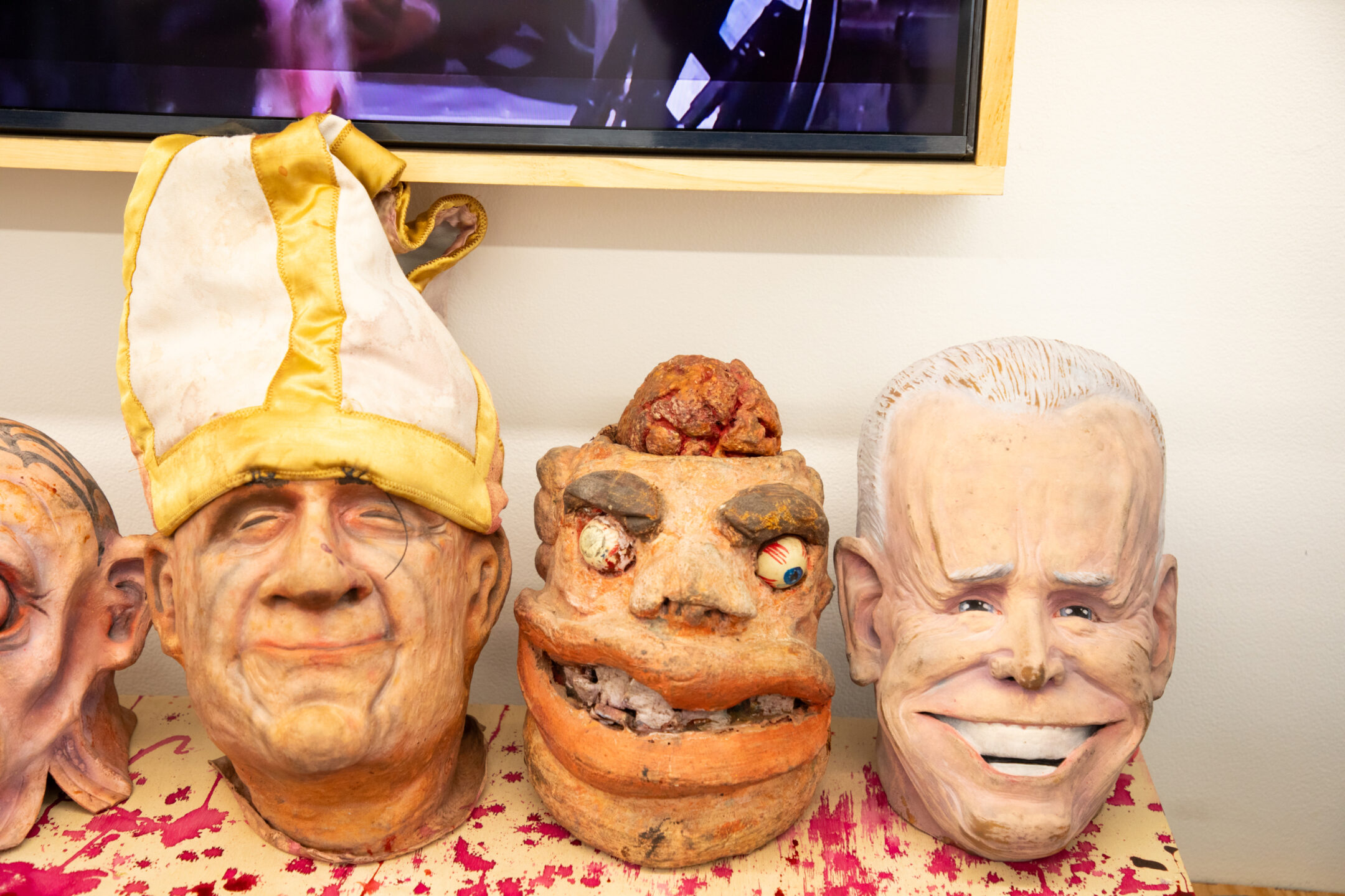
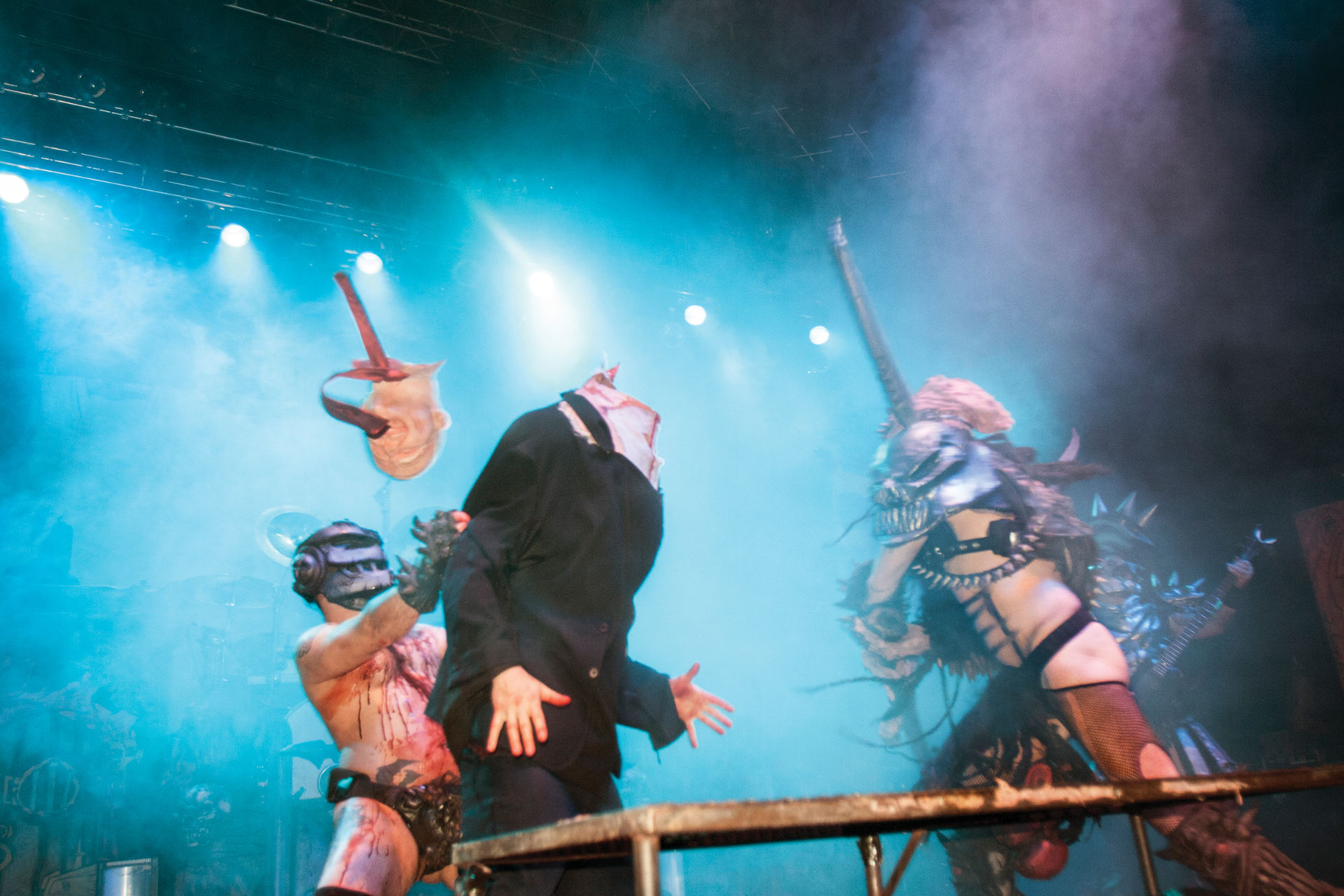
Going to a GWAR concert is like watching a Dungeons & Dragons campaign go completely berserk: intergalactic beasts decapitating pop stars and politicians, spewing Tarantino amounts of blood onto the audience, all while managing to perform heavy metal theatrics in elaborate head-to-toe, homemade costumes.
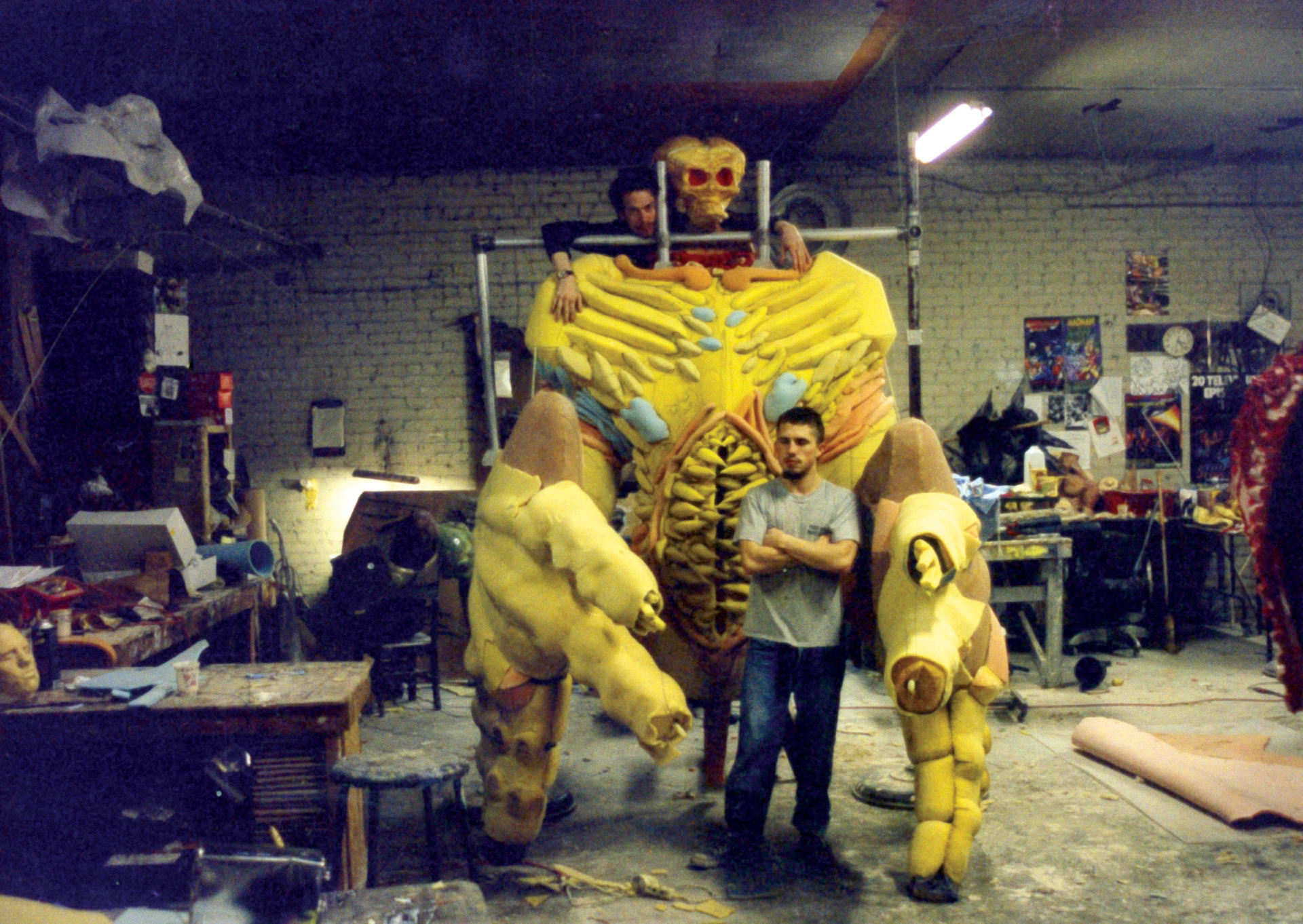
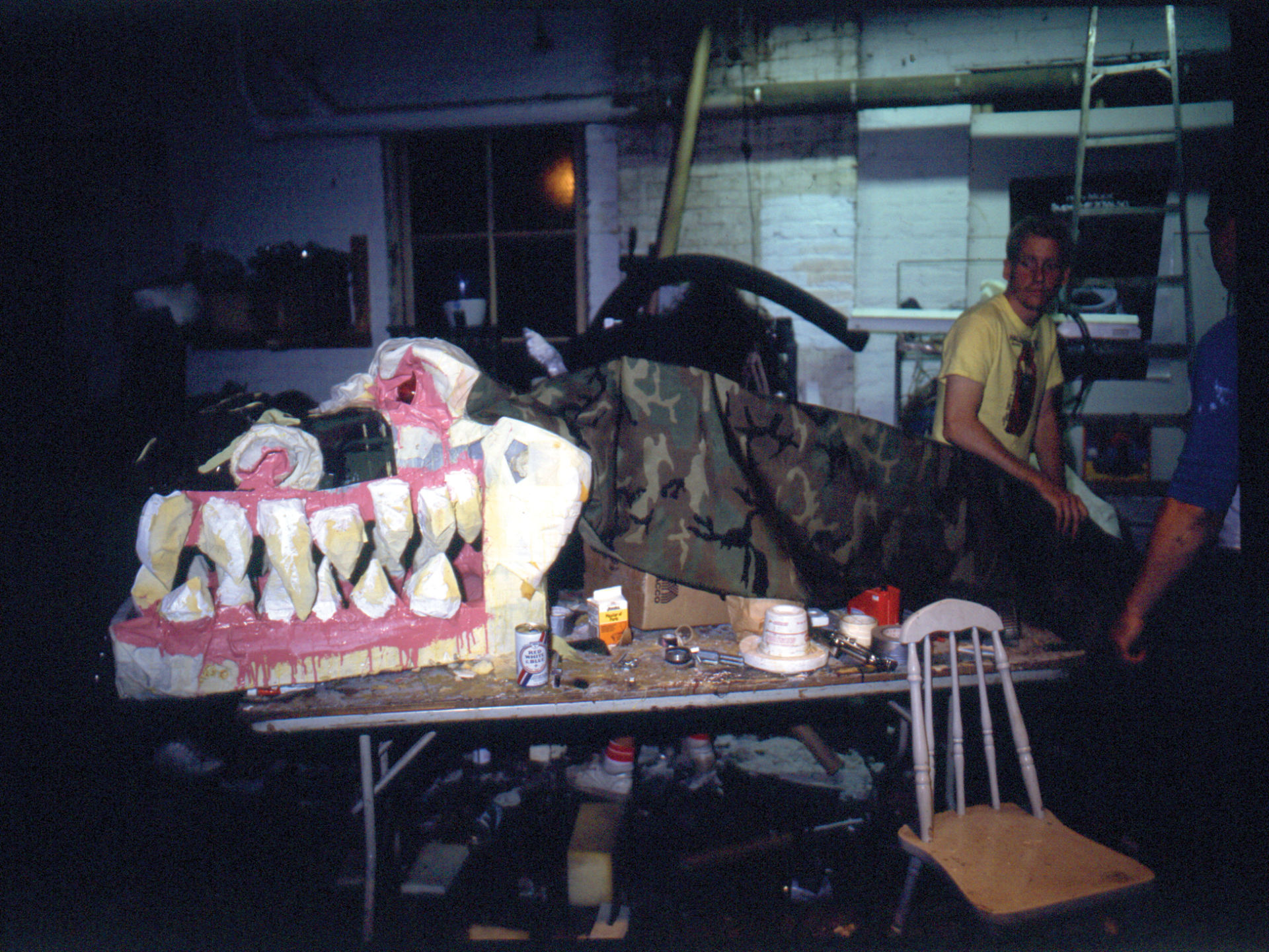
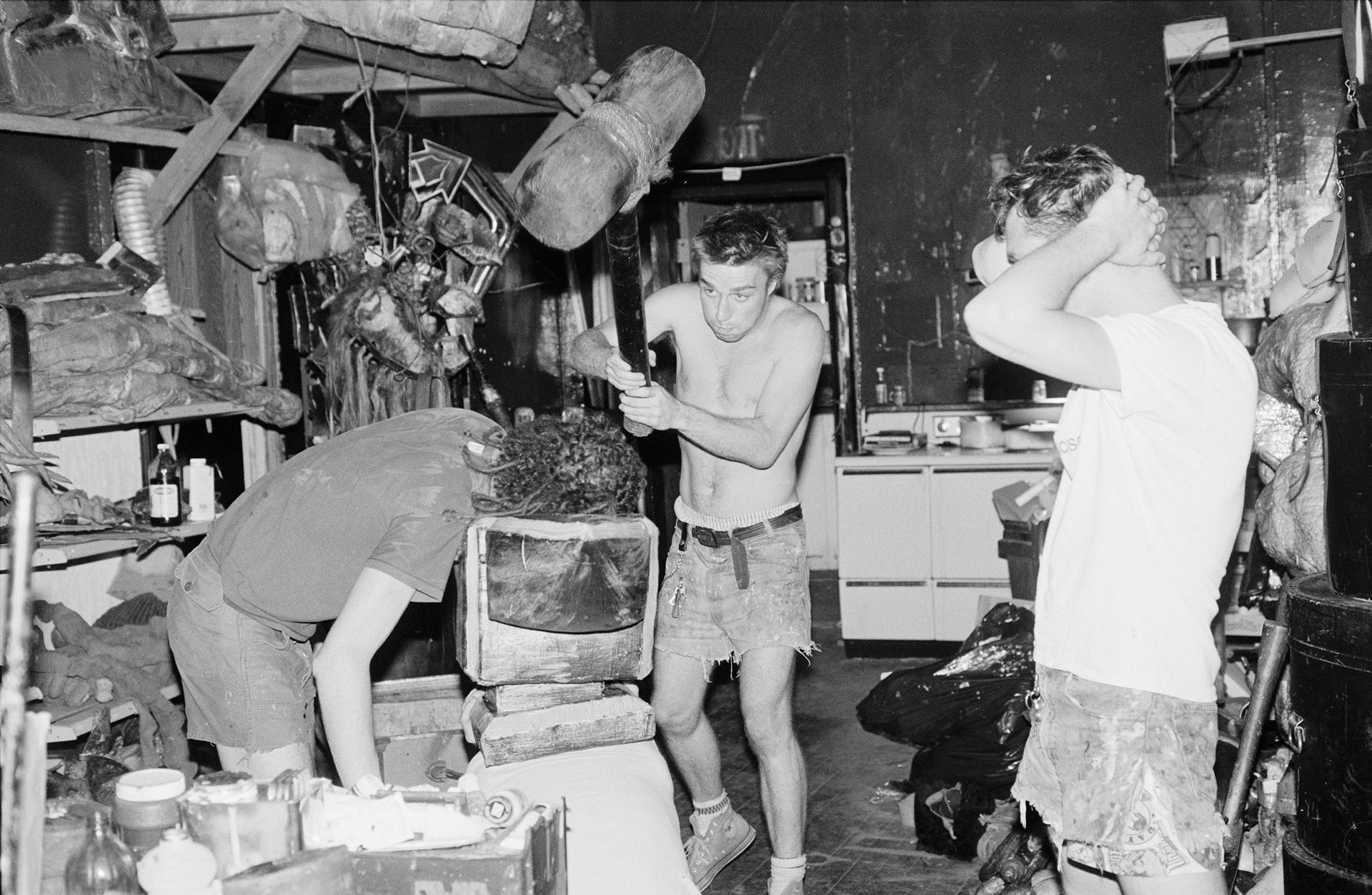
What began as mere art school antics in a humble old dairy building in Richmond, VA, evolved into decades of full-blown, blood-soaked absurdist sci-fi mythology with a cult following. GWAR’s former band member and archivist Bob Gorman and gallery curator Roger Gastman delve into the fantastical, bloody GWAR-verse in the wake of the LET THERE BE GWAR exhibit at Beyond the Streets Gallery in LA.

Art Bar: Where were your first seeds as an artist planted?
Hard to say. But my parents, my dad especially, used “drawing in a sketchbook” as a parenting strategy. He’d just give me a blank sketchbook, and I would copy The Illustrated Birds of North America; I would go through the book and copy all the birds I thought were cool onto my sketchbook. That’s the earliest I remember. We used to take a lot of road trips, and so I’d sit in the back of the car drawing, just trying to kill time.
How’d you eventually find your way into art school?
I dropped out of high school – I was working as an apprentice or something at a tattoo shop, but I needed to make more money, so I went to work at Hollywood Video. I hated that. So, I decided I would try and get into art school somewhere. I didn’t know if I wanted to be an artist necessarily, but I knew I was good at drawing. So I got my GED, and at the same time, I applied to one art school: Otis. They let me in, never checked for my GED, whether I had it or not – it didn’t seem to be an issue.
In what ways did art school change your perspective on school?
I would say that art school was kind of the first time I went to school and I felt comfortable, or good at something. I dropped out of high school, and elementary through middle – it was all just a series of failures and anxiety. I really didn’t like it. I was lucky at Otis to have a good group of teachers, especially once I got into the studio art program. Those friends and peers are still the most important people in my life.
After art school, what was the move?
I graduated from Otis in 2007, and moved to Berlin later that year. I lived there with my girlfriend, Holly, from 2007 to 2009.
Moving from Southern California to a foreign country with a lover sounds like every post-art school grad’s dream – how did Berlin influence you, creatively?
We were making art. We were living in this really cheap apartment, making art, painting murals and stuff. People would open a bar and just have us paint the whole outside of the bar. Berlin is covered in graffiti. We weren’t graffiti artists, but they would just have us do murals. We were working in the apartment, and then eventually, most of what we were doing in Berlin was not productive art making. Just mostly partying, and yeah. Getting into trouble.
SAWA: I know you have a love of print and archiving which carries over into this show, the book, and this collection of GWAR artifacts.
ROGER: I love making print. I’ve made probably over 150 books at this point, and published two magazines. We reprinted Let There be GWAR, which is this show. And then we created a new book, Mind Control Monthly.
There’s something so fantastic and amazing about being able to hold everything, see it, revisit it, and not be looking at it on a screen.
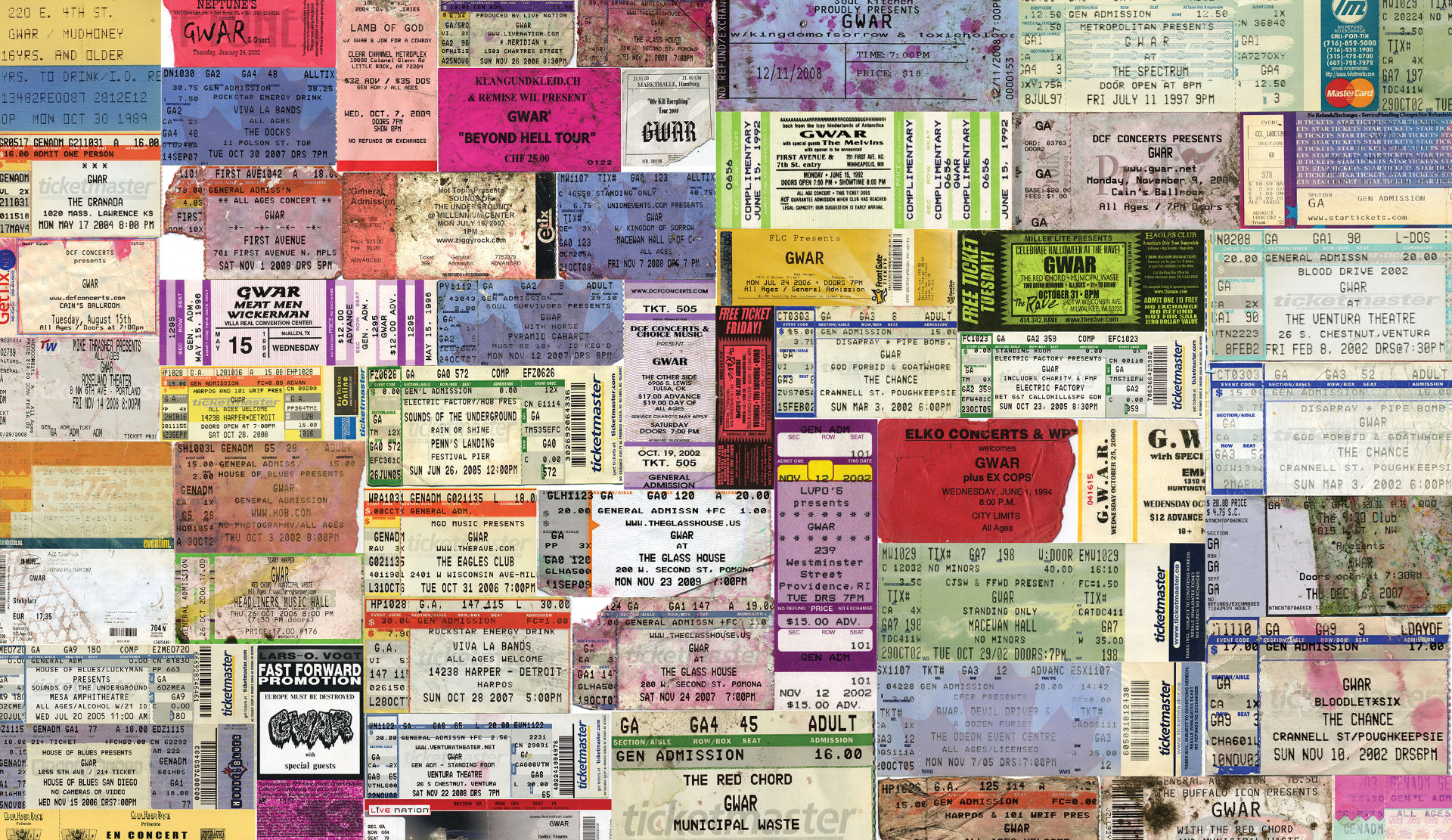
BOB: We had our own in-house zine called “Mind Control Monthly” for about ten years. We started out publishing regularly and then it sort of trailed off. But we sold it to our diehard fans. If you never got a copy and you try and buy one on eBay now, they go for a lot of money. We reprinted it as a trade paperback. It’s the first time you can get all twenty-nine issues in thirty years.
I love books and I’m a hoarder of flyers and anything that’s about an event that I went to. Before I met Roger, I had four of his books already. So that’s why we work really well together because we both like the same kinds of things, especially documenting under-appreciated subcultures.
What was it like working together to create this show?
ROGER: I love and appreciate someone that has as much of a problem with collecting, hoarding, archiving as I do. And someone who is hoarding and collecting things that I appreciate and love, which I would never have access to. To be able to work with it, come in, touch it, have mutual respect and trust to figure out what the story is. It was fantastic.
BOB: Roger and I worked together really well on curating the book. I have the stuff, he’s got the eye; he can tell me what people respond to and what they want. For me, it’s all the same. It’s my collection. I’ve been saving history since I’ve been in the band, and so to me it’s either all great or all just whatever. I’m just saving everything.
So we knew we worked well together and that this is an extension of that, but it’s in a different context. It’s a gallery, so what’s the most important thing? Because we can’t put everything in here. What are people gonna respond to? What should we do? Let’s tell this story. Let’s talk about the fans a little bit. Let’s talk about the spew, let’s talk about the founders, let’s talk about the live show. And then this is just, you know, forty years of costume artistry for the most part.
SAWA: I know you have a love of print and archiving which carries over into this show, the book, and this collection of GWAR artifacts.
ROGER: I love making print. I’ve made probably over 150 books at this point, and published two magazines. We reprinted Let There be GWAR, which is this show. And then we created a new book, Mind Control Monthly.
There’s something so fantastic and amazing about being able to hold everything, see it, revisit it, and not be looking at it on a screen.
BOB: We had our own in-house zine called “Mind Control Monthly” for about ten years. We started out publishing regularly and then it sort of trailed off. But we sold it to our diehard fans. If you never got a copy and you try and buy one on eBay now, they go for a lot of money. We reprinted it as a trade paperback. It’s the first time you can get all twenty-nine issues in thirty years.
I love books and I’m a hoarder of flyers and anything that’s about an event that I went to. Before I met Roger, I had four of his books already. So that’s why we work really well together because we both like the same kinds of things, especially documenting under-appreciated subcultures.
What was it like working together to create this show?
ROGER: I love and appreciate someone that has as much of a problem with collecting, hoarding, archiving as I do. And someone who is hoarding and collecting things that I appreciate and love, which I would never have access to. To be able to work with it, come in, touch it, have mutual respect and trust to figure out what the story is. It was fantastic.
BOB: Roger and I worked together really well on curating the book. I have the stuff, he’s got the eye; he can tell me what people respond to and what they want. For me, it’s all the same. It’s my collection. I’ve been saving history since I’ve been in the band, and so to me it’s either all great or all just whatever. I’m just saving everything.
So we knew we worked well together and that this is an extension of that, but it’s in a different context. It’s a gallery, so what’s the most important thing? Because we can’t put everything in here. What are people gonna respond to? What should we do? Let’s tell this story. Let’s talk about the fans a little bit. Let’s talk about the spew, let’s talk about the founders, let’s talk about the live show. And then this is just, you know, forty years of costume artistry for the most part.

“GWAR deals with the world by just killing things.”
Roger, you are originally known for collecting, archiving, curating a lot of graffiti and street culture works. How did you end up going from graffiti to GWAR?
ROGER: Punk and hardcore has always been a huge, huge piece of my life. I got into graffiti through punk rock and hardcore when I was really young. Me and a lot of my friends that were a little bit older were going to punk rock shows, hardcore shows in the Washington DC area. And they all wrote graffiti. So it just seemed like that’s something you do. So we started writing graffiti and that turned into my love and passion of archiving it and telling those stories, realizing people were doing so much more through graffiti and street art, and the outreach and the branching out. But I still always loved punk rock. I still always loved hardcore and I tried to bring those two genres into so much of the work we were doing. And again, Beyond the Streets has really continued to evolve into more than just graffiti and street artists. We’ve gone into other subcultures, music, fashion. And we’ve really been able to weave the stories together and show how they fit. And GWAR, you know, being a fan since I was very young, it was an offshoot of all things Beyond. It’s the ultimate subculture band.
Beyond the Streets has also shown with the Gorilla Girls and some other activist artists. And with GWAR, even though they’re very theatrical and shock-rock, they do include social commentary.
BOB: Absolutely. That’s a huge part of it. It’s our job to make fun of everything, and a healthy society can laugh at itself. An unhealthy society takes itself too seriously and can’t. And so we’re making fun of everybody, regardless of how you feel about it. Everyone can laugh at themselves. And so GWAR deals with the world by just killing things. It can be political, but it’s apolitical because we’re killing everyone equally. If you’re in the limelight, we’re out to destroy you or make fun of you or bring you down a notch.
What can you say about the importance of art to either A) create an alternate world that people can escape to, or B) have something serious to say about what’s going on.
BOB: I think for us it is escapism. I think there’s a cathartic release. When Dave got arrested, people were saying that this is obscene, negative and bad. And you know, I’ve always thought the exact opposite. We’re a cathartic release that’s healthy and good. If you see the president killed and as an audience you’re bathed in his blood, you’re less likely to go out and be violent. You’re like, “Oh, thank God someone did it for me.” It’s harmless and we do it every night because we’re not telling anyone to kill anyone. It’s just our job and you just get to enjoy it.
Share
You might also like ...

Zara Kand: Dream World
Zara Kand alchemizes grief into portraits of dream-like beauty infused with Jungian symbolism.

Tommy Mitchell: If You Dream, Life Will Pinch You
Tommy Mitchell has mastered the humble ballpoint pen over the past few decades, while continuing to push his work into new frontiers.

Hirotton: A Future in the Past
Hirotton cut his teeth as an artist in the streets of Osaka and went on to distill his work in London, like so much fine gin. While his punk rock roots still endure in his paintings and drawings, they also reveal a magical world that’s all his own.

Various Artists: Shadow Work
Healing the Jungian shadow-self through dark art. Curated by Diana M. Ahuixa.