Anthony Acosta: Learn to See
- Interview by Ira Alfred Ingram and Sawa
- Published:
- In Features
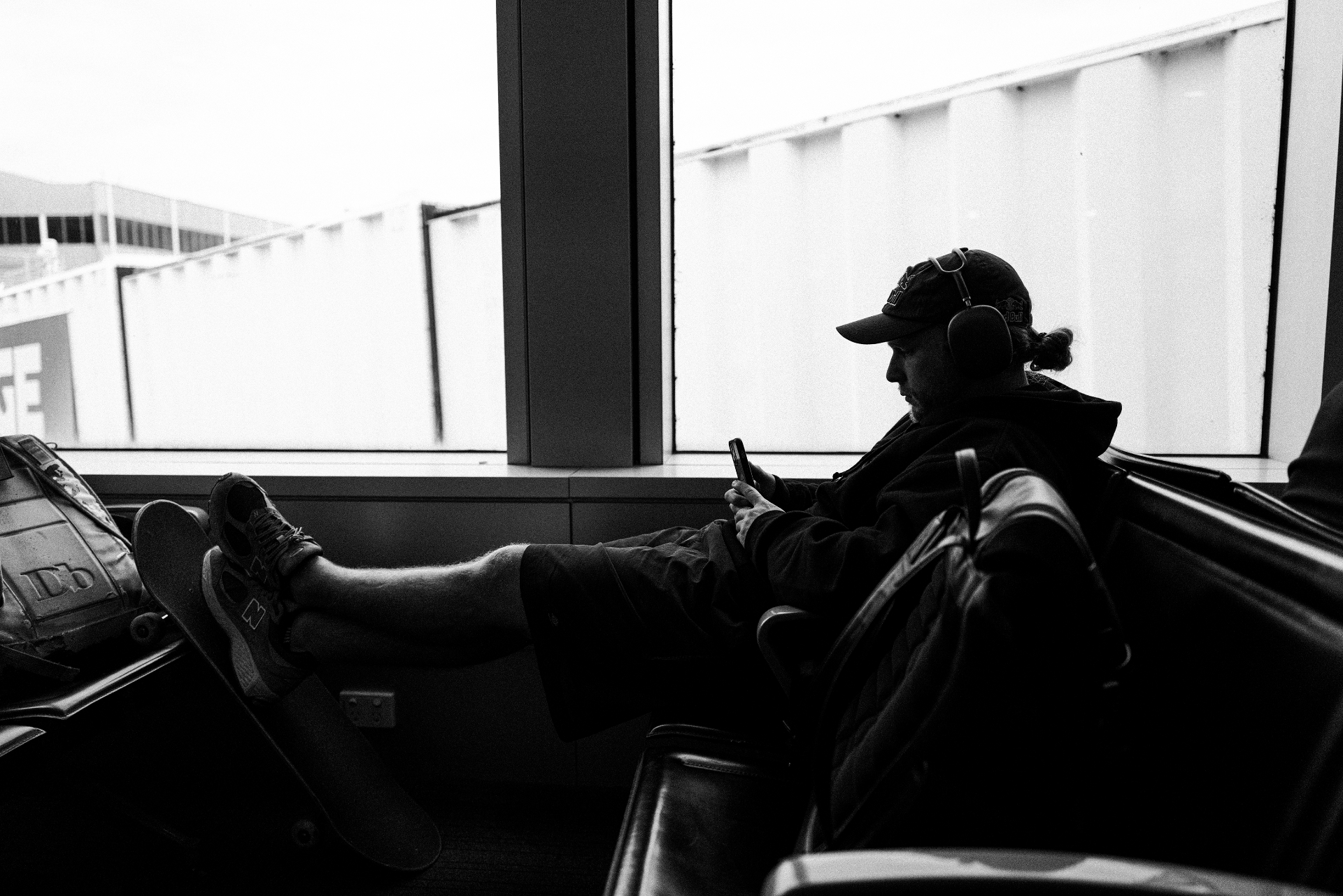
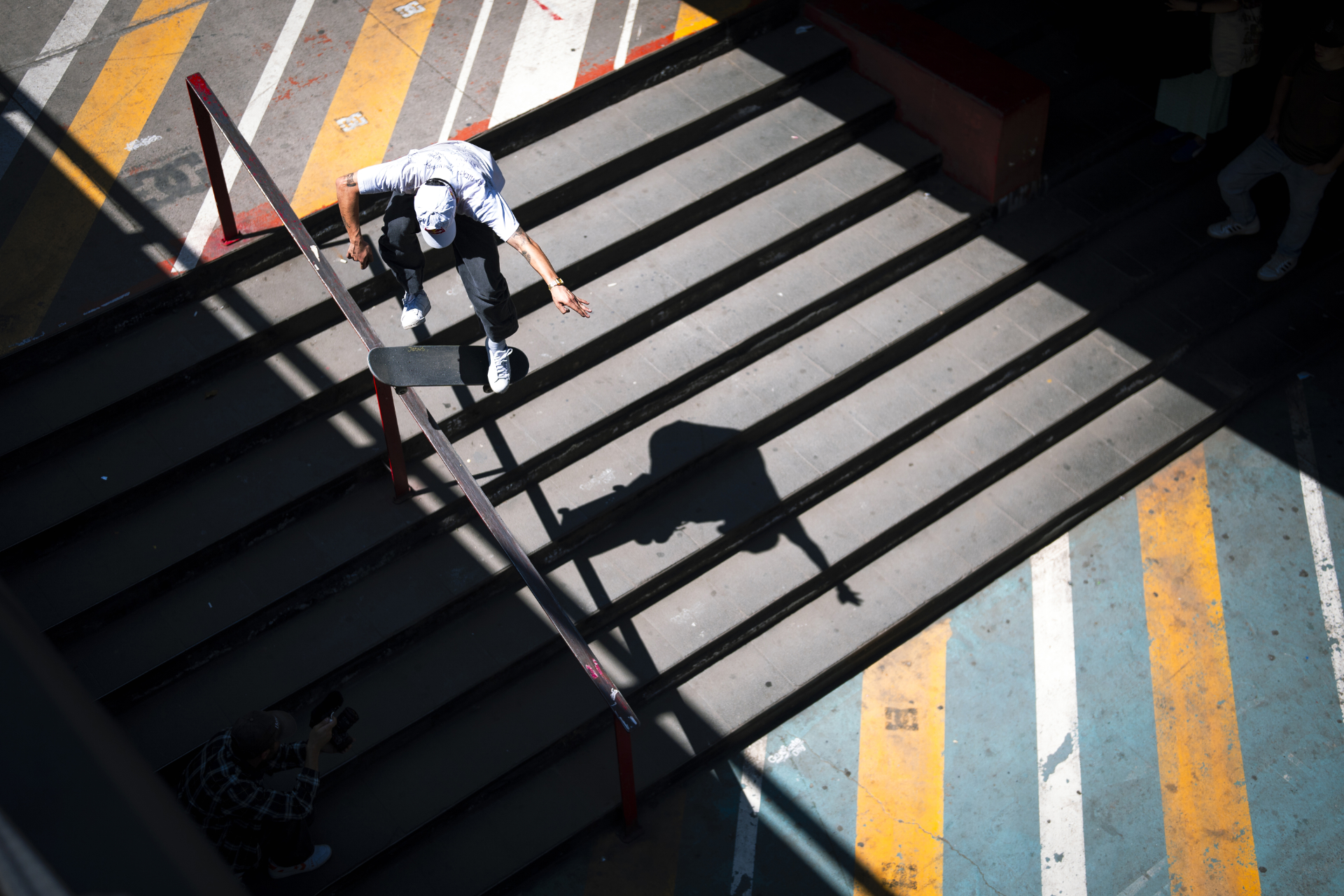
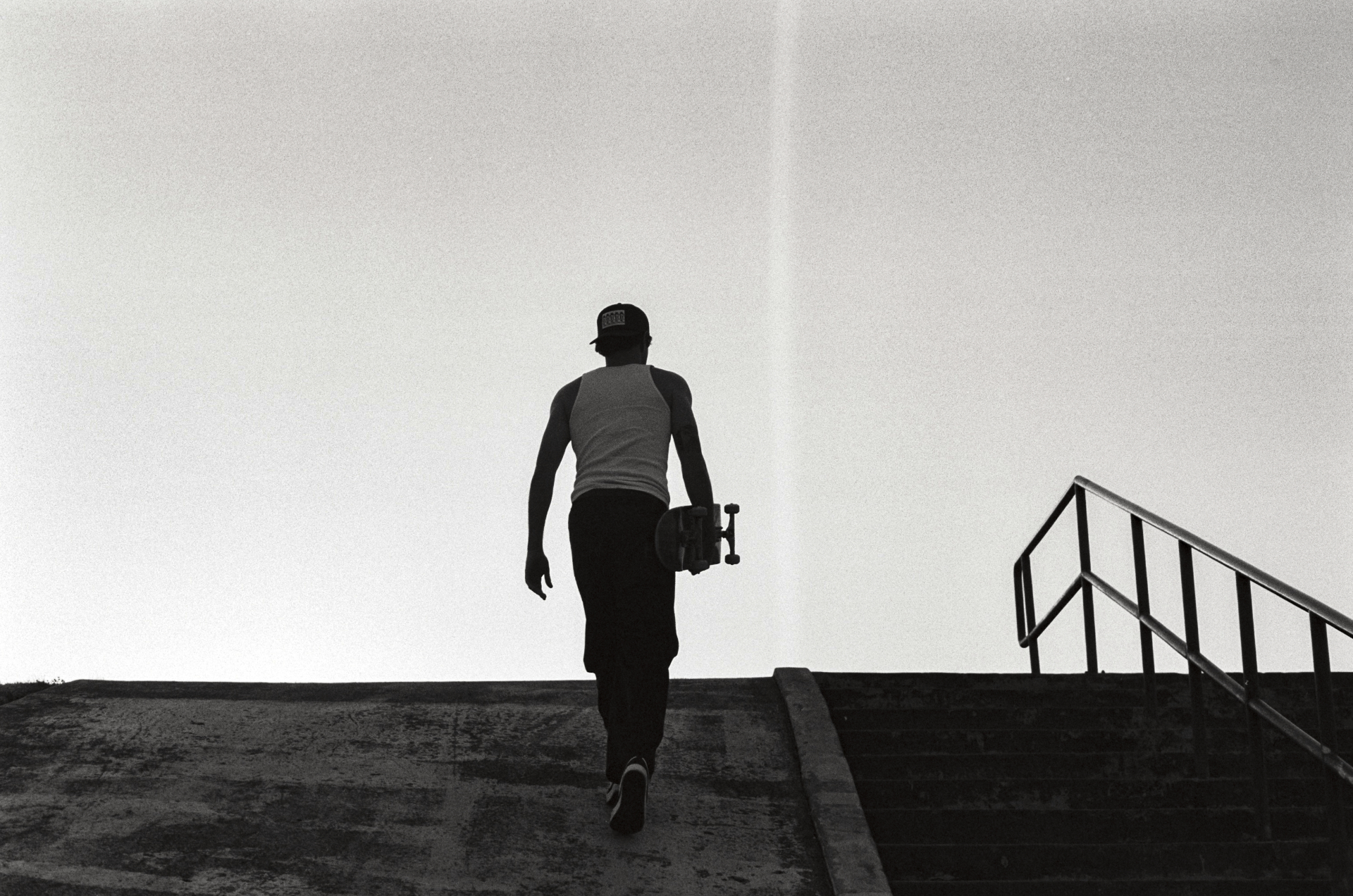
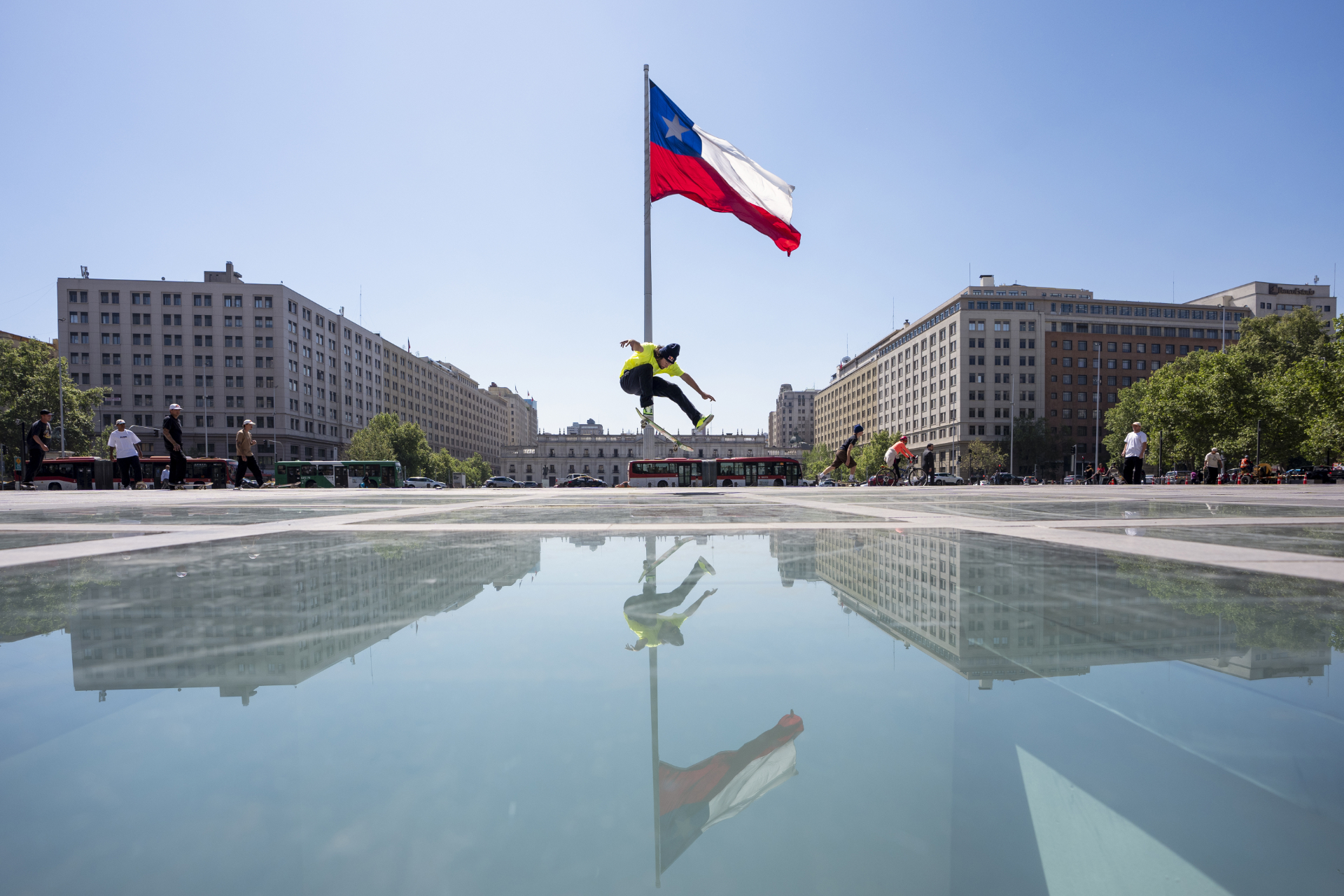
Anthony Acosta knows the devil’s in the details. His command of shape, color, framing, and perspective give him a unique approach to skate photography that has elevated it beyond pure documentation into a legitimate form of artistic expression. He sees the subject as a part of the greater landscape, telling a larger story than just the trick he’s capturing.

Art Bar: How long have you been a photographer?
Anthony Acosta: Man…I’ve been a photographer professionally since 2004. But I’ve loved photography since I was a little kid. We always had point and shoots, and I always thought taking pictures was cool but in our family it was an expense, and we didn’t really have access to cameras or video cameras. So growing up with other skaters who had cameras and video cameras – skateboarding goes hand in hand with documentation – I realized, “Wait, this is something I actually love.” 2004 is when I jumped into the deep end.
So many artists and specifically filmmakers started in skateboarding. What do you think it is about the skateboarding mentality that nurtures creatives?
You know, I think about that a lot. There are a lot of skateboarders who end up being filmmakers and photographers. I think it’s that we love skateboarding so much, we have this responsibility to do it justice. That we care so much about how it’s perceived that we’re gonna learn to make this look the way we think it should look. And I think people who feel that passion, whether it’s for music or movies or whatever, they just want to do what they love justice.

I feel like you have a special eye. You’ll see frames that I wouldn’t have seen. And you’re also finding these really artistic ways to express it and it pisses me off that I don’t think that way.
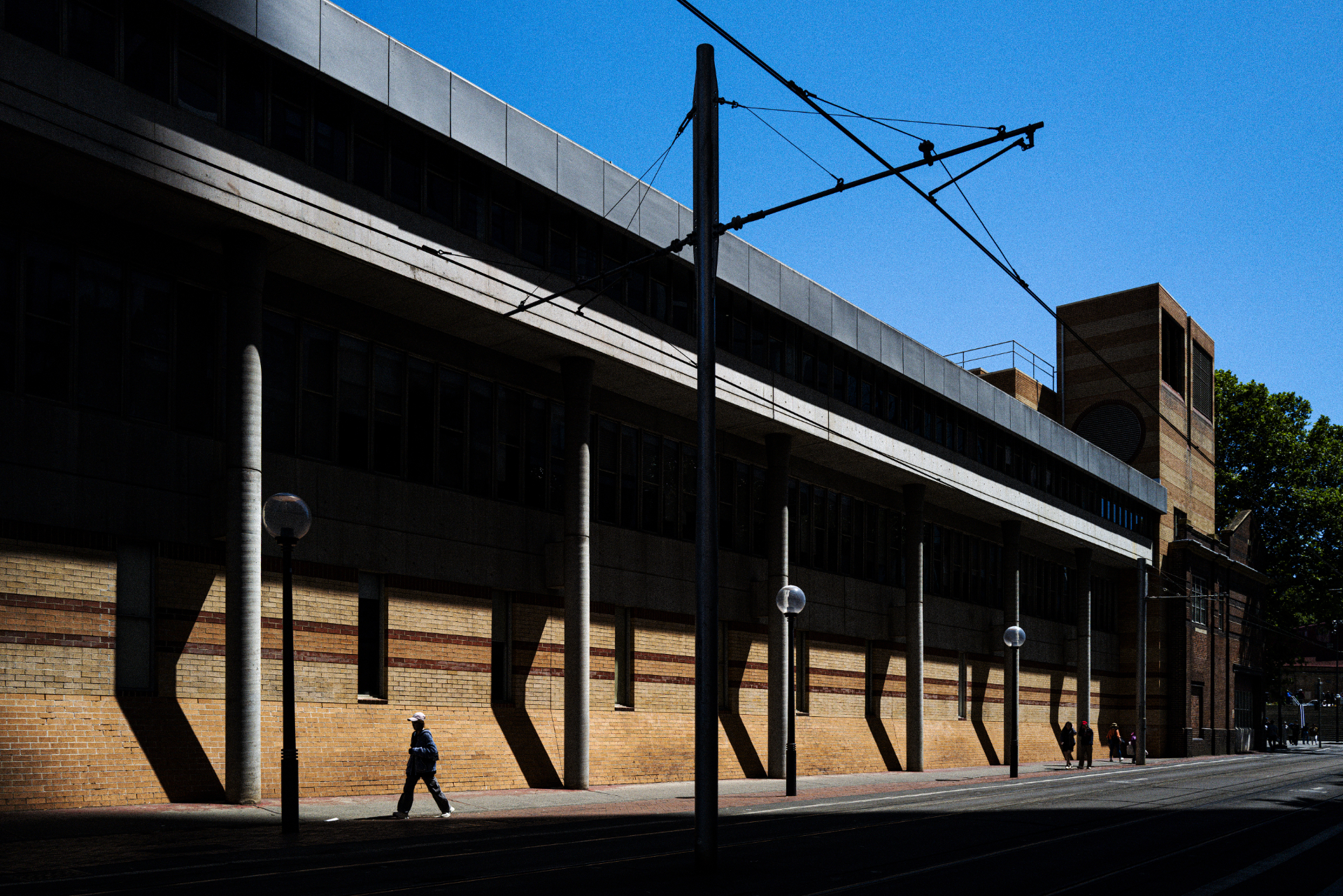
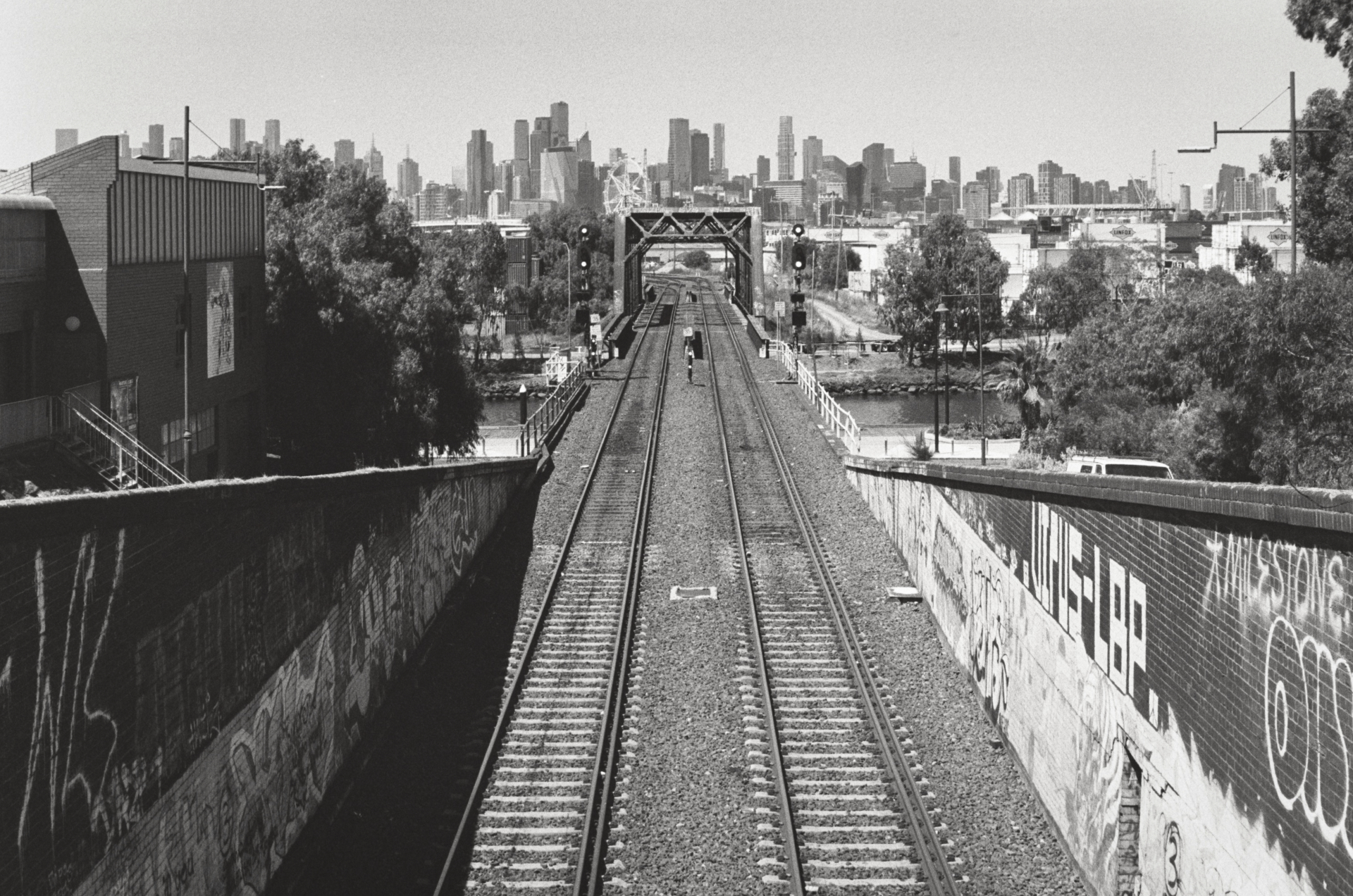
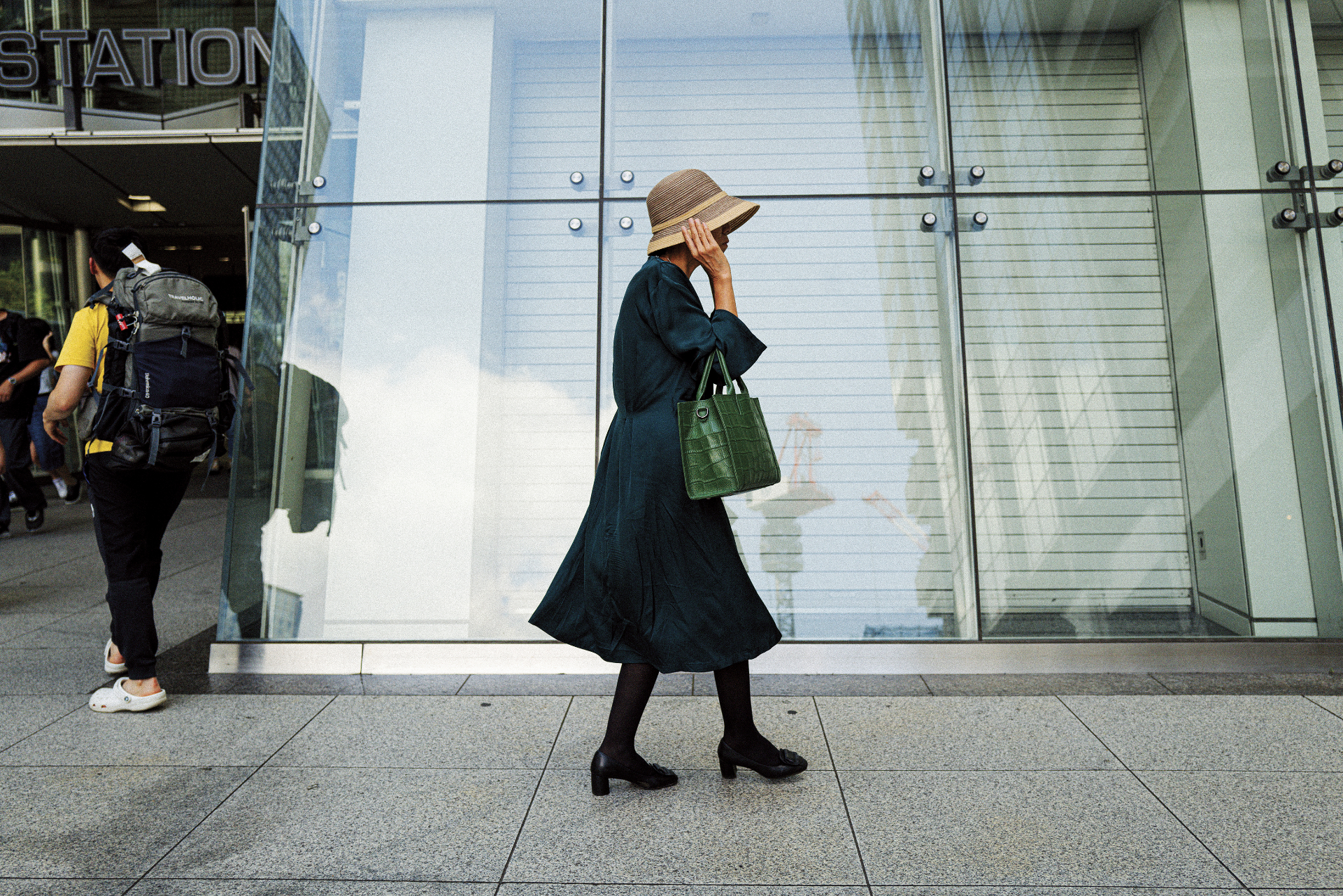
[Laughs] I think it’s about training your eye to see things that maybe other people might not. I find that in the street photography I follow, I’m often thinking, “That’s so obvious,” but I wouldn’t have seen it. And I feel the same way you do, like, it’s frustrating ‘cause it’s right in front of me if I go outside and walk around. You have to train yourself to see. And that’s honestly what this book was. It’s all stuff that I shot while on skate trips. I would wake up in the morning and go walk around just to try and look, learn to see, see things and ask myself, “Oh what can be a cool photo? And why?” It’s the colors, it’s the texture, it’s a reflection. It’s a weird shape that matches with the color and, I don’t know, I just started doing that to train my eye so I can maybe try to incorporate it in some of the skate photos I take. The book was also just a challenge for me to get out of my own skate photo-skate photo-portrait routine and to see what each place had that I thought was interesting. Just going out looking is what gets me excited and that’s why, in a lot of my skate photos, the skate subject is kind of small. A lot of my photos that excite me are more environmentally focused, and I think that’s also what I love about traveling because there’s just so much out there that you can incorporate to tell a story.
I love how you capture the more mundane moments of the trips you go on. Why is it important to you to document that aspect of a trip?
It’s the stuff that you just normally won’t see in a Thrasher magazine or anything. I don’t know, to me that’s the beauty in a lot of this and I like to show people that side too of it. It’s human. It humanizes things. And a lot of these photos never go anywhere. I have a million photos and it’s crazy ‘cause people only see 1% of everything. But it’s also kind of cool having stuff that no one knows about.
I have a million photos and it’s crazy ‘cause people only see 1% of everything. But it’s also kind of cool having stuff that no one knows about.
You incorporated a lot of those photos in this book right? Was that part of your motivation to print it?
Yeah, I mean in this day and age, it’s really hard to get pictures published in magazines. When I first started there were six major magazines that you could have photos for and now there’s just a couple. I think that’s been lost to this new generation – they think that you post a photo and that’s it. But when you have something that’s printed, maybe ten years from now, or a hundred years from now; when you’re gone, someone will look at it and try to get an idea of the story you’re trying to tell. And to me, I want to inspire these kids. You can do it on your own. You can make your own stuff, you could print it out. Even if it’s iPhone photos, print it because it might inspire the next person to make a photo book or a painting or whatever it is that they’re doing. That to me is what it’s about.
We’ve all captured people who we expected to be around for the rest of our lives and then, suddenly they’re gone and you’re left with these moments, right? How precious do those photos become when you lose a person?
Well it’s crazy, that’s when you realize how important photography really is. You’re actually capturing these fleeting moments of people who are in your life now who might not be there later. You know, whether it’s family or friends or people on skate trips. I mean, I was on one of my first Vans trips in 2007 with Van Westell. We were in Germany shooting. I might have had one of the last photos of him and he passed away on that trip. And now looking back on that, it means something more. A lot of photography means something different than when you shot it – ten years later, five years later, one year later. And there’s magic to that. Especially when people aren’t there anymore…you realize that you captured something special.

What is your outlook on DIY art?
“Do It Yourself” is pretty much everything. It’s how I got to where I’m at. I had friends to teach me how to load cameras and film and thankfully, you know, I had this curiosity to learn. But I think just from learning skateboarding, you learn you have to start with the hard work yourself. You have to get the shinners, you have to fall, you have to dust yourself off and keep trying. And it builds that grit that, if you can learn to apply it to other things in life, you learn no one’s really gonna do much for you. You could go to school and they could teach you the technical things, but, if you wanna learn how to light or how to compose or how to print in the dark room, it just takes you getting out there and figuring it out from scratch. And I think a lot of people are afraid to realize they have to do the hard work. But…that’s the magic of it all.
Share