Dark Art – Naya Kyoto
- Curation and interview by Diana M. Ahuixa
- Published:
- In Dark Art Feature
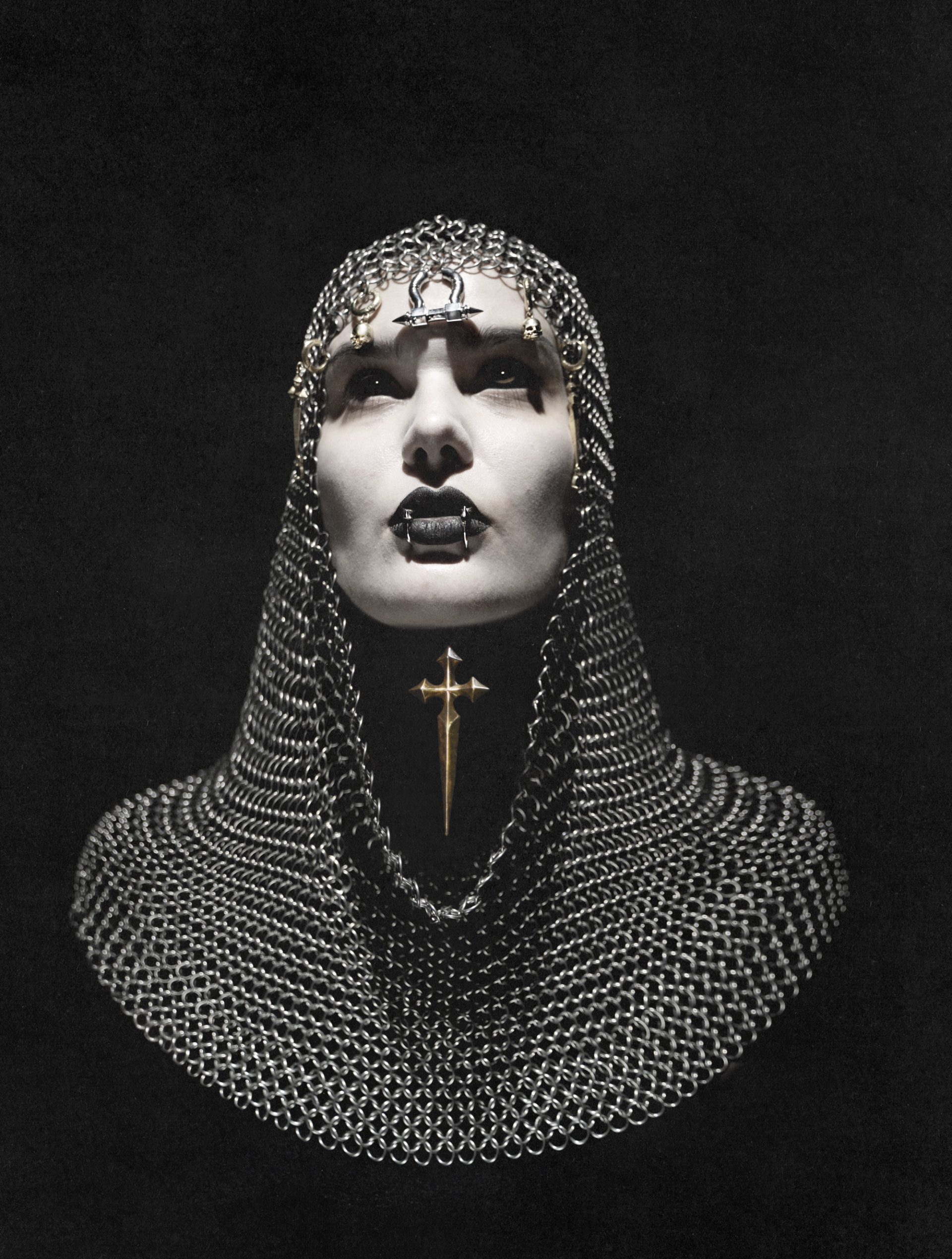
Having attended art school and university before specializing in photography, how do you think your background in traditional mediums like painting and printmaking still influences your visual compositions today?
First and foremost, my art education really simplifies my working process — especially when it comes to composition, working with light, and color. My background in painting and printmaking gave me a solid understanding of form, balance, and rhythm within an image. Even when I shoot spontaneously, I intuitively rely on principles I studied in an academic setting. It helps me make visual decisions more quickly and see the frame as a whole — more like a canvas than just a photograph.
Can you walk us through the journey of a new piece, from the initial idea to the final image? What new creative freedoms did digital tools give you, and how has this evolved your artistic vision?
I wouldn’t say I have a strict or clearly defined workflow — the process is often very individual and depends on whether it’s a commercial project or a personal one. Usually, I draw from my own archive of photographs — a large image bank I’ve built over time. From there, I assemble the final image. Sometimes it’s a nearly finished shot that only needs light editing, and other times it involves much more complex post-production. That’s where digital tools really help me enhance the atmosphere and push the visual effect further.
You’ve mentioned being inspired by the “darker aspects” of nature. How do you translate these natural elements into the supernatural feel of your work?
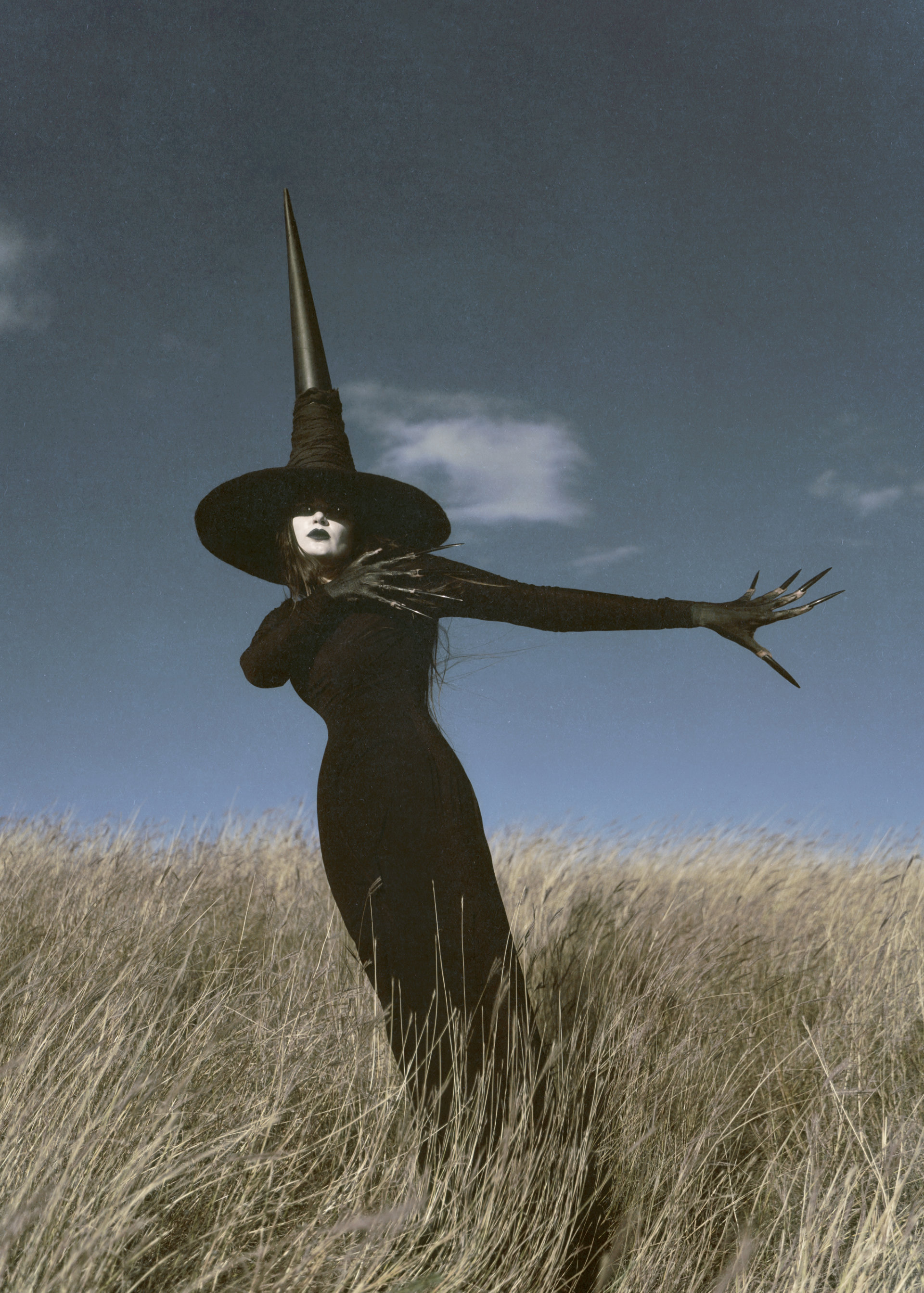
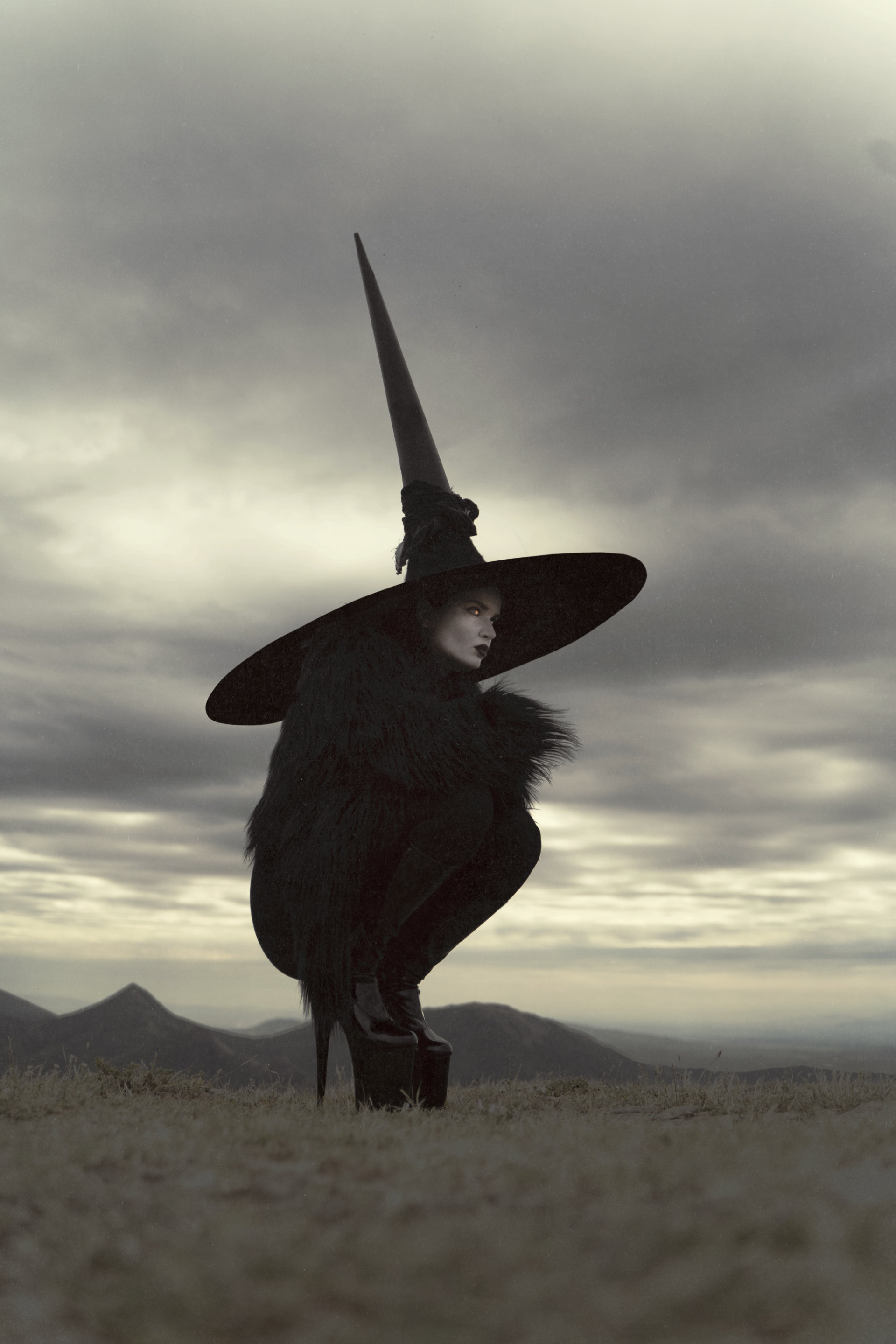
A lot of my work features intricate costumes — some I create myself, others come from collaborations with designers or brands. These elements bring a surreal, handcrafted quality to the images. The locations are just as important — I spend a lot of time scouting and reaching unique, often remote places. That sense of the “real” environment in the frame is essential — it keeps the image grounded, even when it drifts into the fantastical.
As for the darker aspects of nature, I’m drawn to moments of tension, isolation, and mystery found in natural landscapes. I translate those feelings into a supernatural atmosphere through lighting, color grading, and subtle surreal elements. It’s less about adding something fantastical and more about amplifying what’s already there — the quiet unease, the stillness before a storm, or the shadowy corners of a forest.
The moon and hands are recurring motifs in your photographs. What meaning does it hold for you, and what does it symbolize within your body of work?
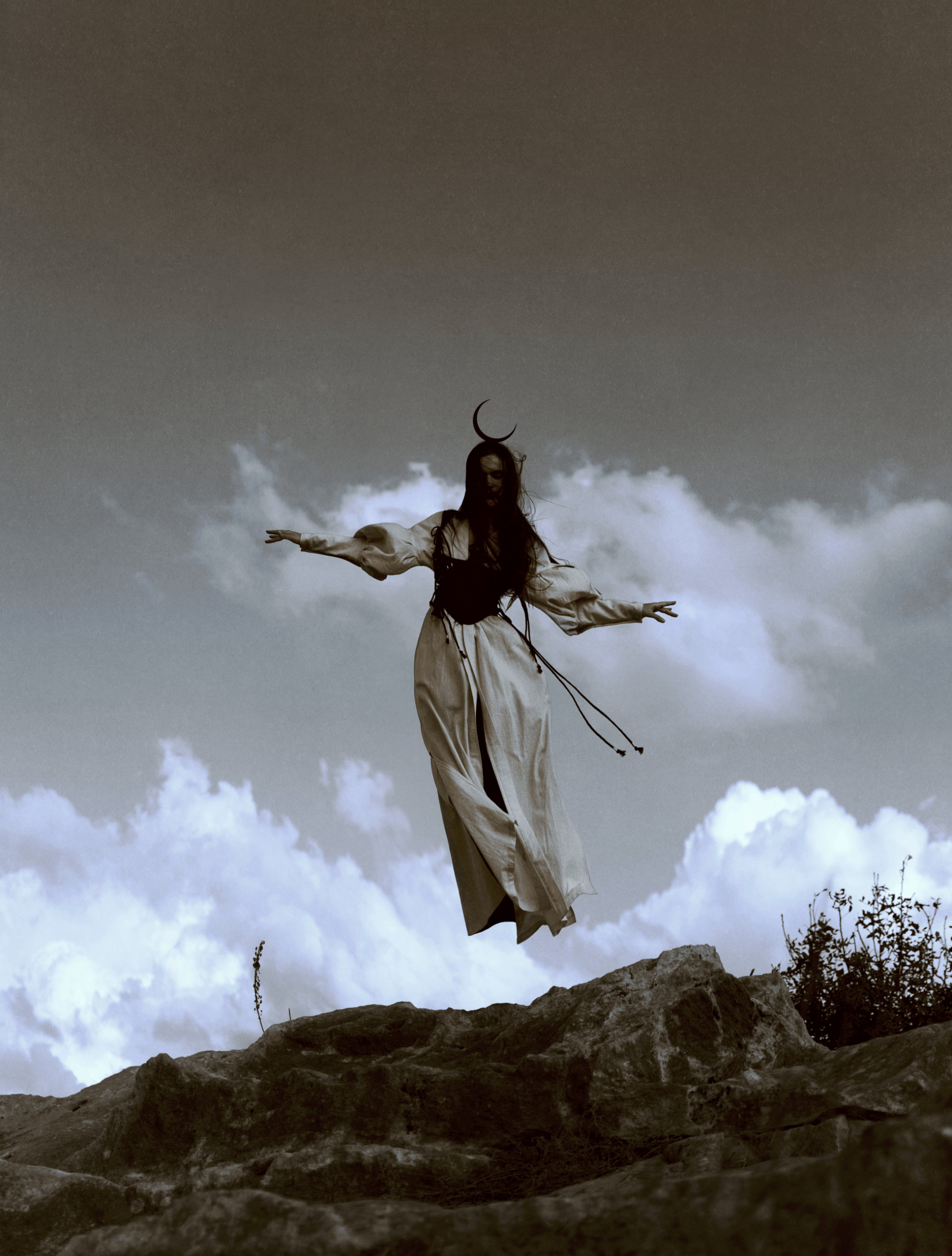
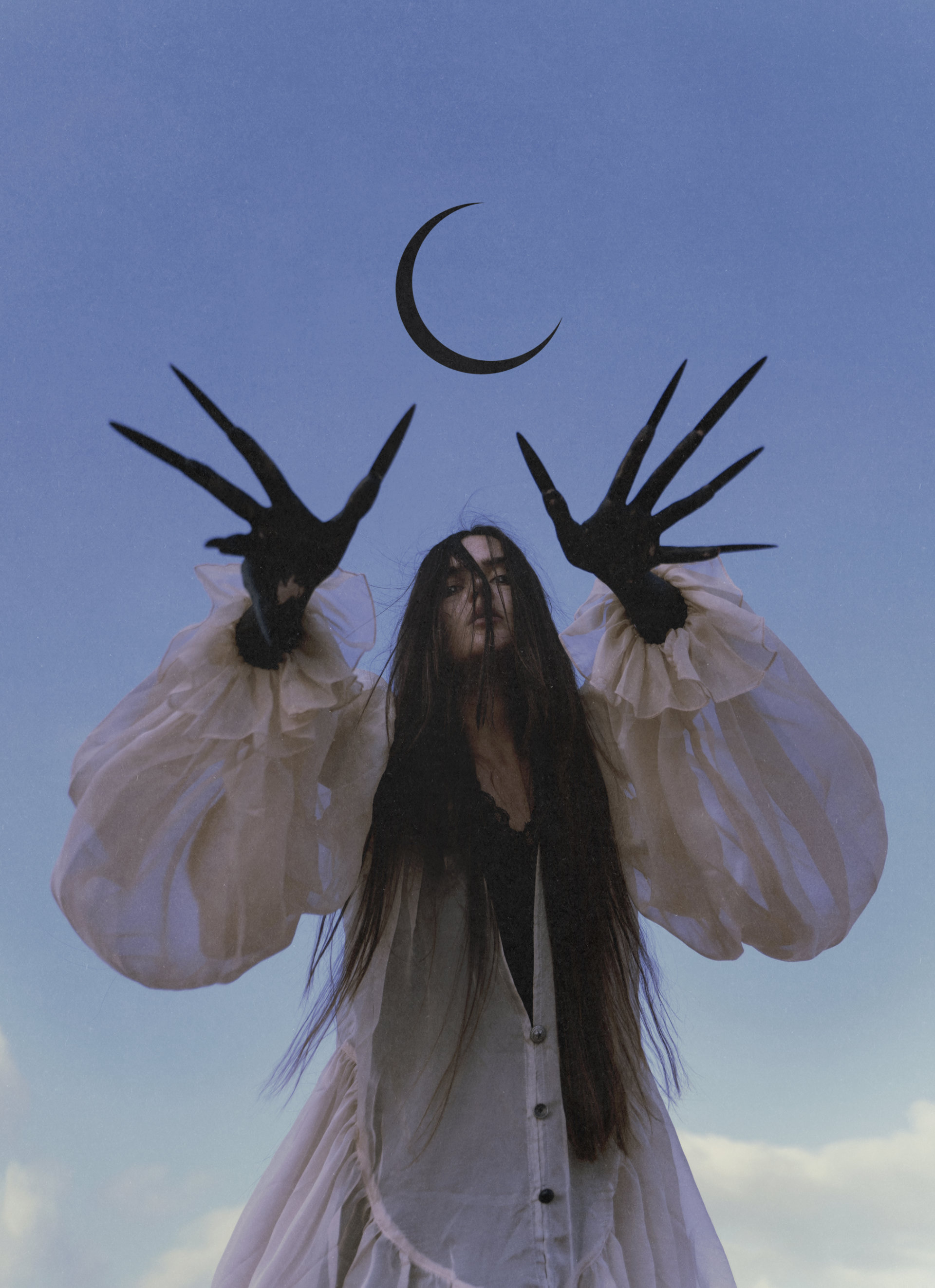
The moon and hands are symbols that have fascinated me since childhood. They are very close to me, much like my love for everything dark, mysterious, and Gothic. These motifs feel almost like old friends that help me express the moods and themes I’m deeply drawn to in my work.
Your subjects are strong and powerful and usually covered head to toe, very much exemplifying the female gaze. Is this a deliberate choice?
In most cases, I’m the model in my photographs, and often I prefer not to show my face. It helps keep the image more mysterious and shifts the focus toward the atmosphere and symbolism.
How do you decide what aspects of ritual from your daily life remain private and what is used in your work?
Not every photograph carries a deep personal meaning — some are created in an emotional moment, while others are simply visuals I’m drawn to and want to bring to life.
Creatively and commercially how has the proliferation of AI art impacted your career? How do you protect your style from AI users utilizing your works for their own commercialization?
That’s a very timely question. First of all, people have started asking me if my photographs are AI-generated, which is honestly quite upsetting. It shows how much the visual perception of art is shifting — and not always in a good way. My work has been used without my permission in AI promos, reworked, or replicated to look like mine. To be honest, it’s really difficult to protect yourself from that. Most of the time, it’s actually my audience who steps in to defend my art — and I’m incredibly grateful for their support.
The dark art genre sometimes exists outside of the mainstream art world. Has the intense and provocative nature of your work created any unique challenges for you in seeking gallery representation?
As for gallery representation — I’ll be honest, it’s very difficult for living artists working in the dark art genre to find proper representation. In general, making a living from your art these days is a serious challenge. I think there’s a certain element of luck involved when it comes to turning your creative work into a sustainable career.
Share
You might also like ...

Dark Art – Ariel de la Vega
Your drawings are noted for their use of a white line on a black surface. What is the significance of this inversion of traditional drawing,

Dark Art – The Lijilja
Your work is deeply personal. How did this style of performance develop for you? Were there mentors who shaped it? How did your mode of

Dark Art – Sven Harambasic
In an interview, you mentioned that you prefer to deal with “isolated, inner worlds” rather than wider social commentary. How do you find and explore

Dark Art – Samuel Araya
The dark art genre sometimes exists outside of the mainstream art world. Has the intense and provocative nature of your work created any unique challenges