Dark Art – Ariel de la Vega
- Curation and interviews by Diana M. Ahuixa
- Published:
- In Dark Art Feature
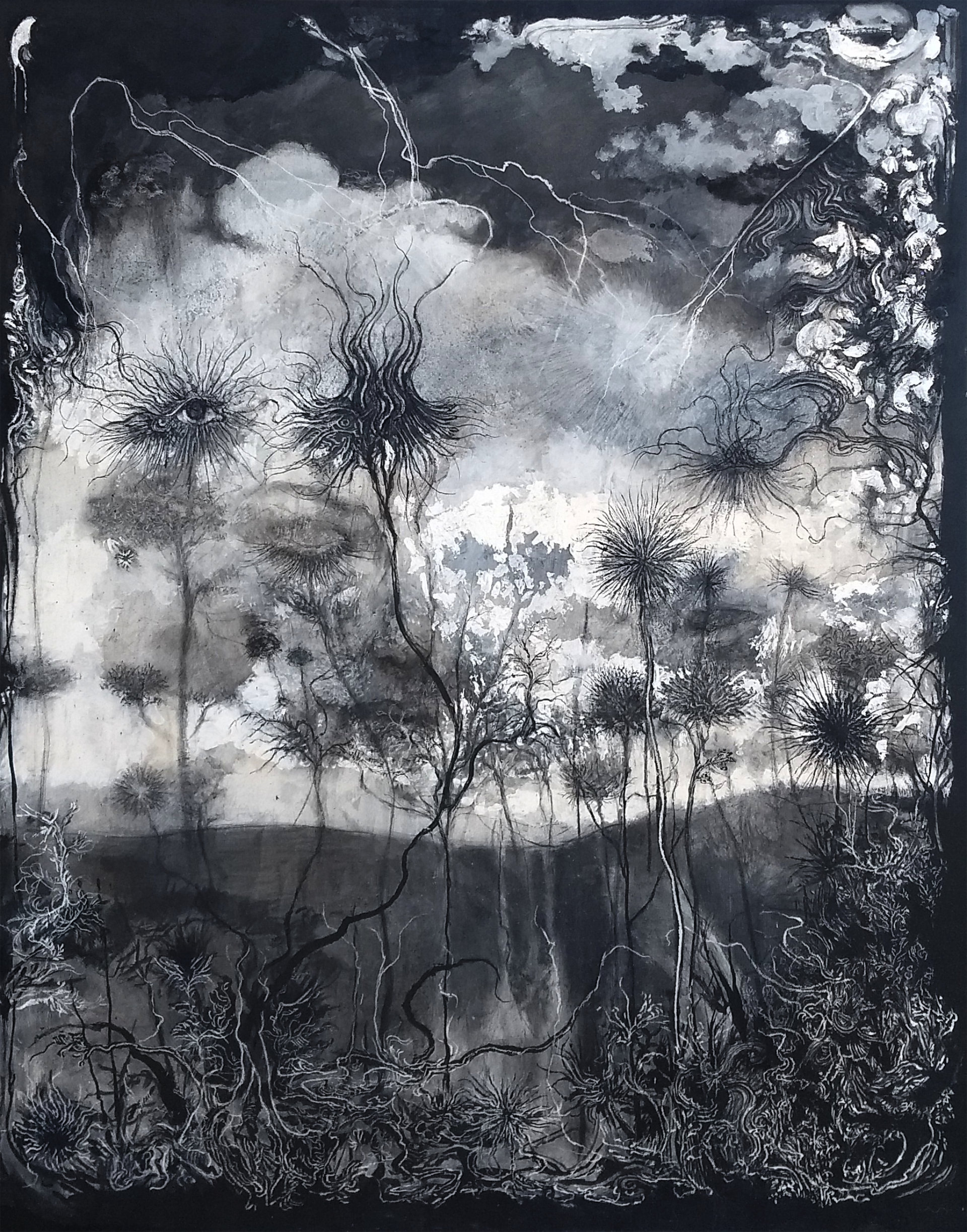
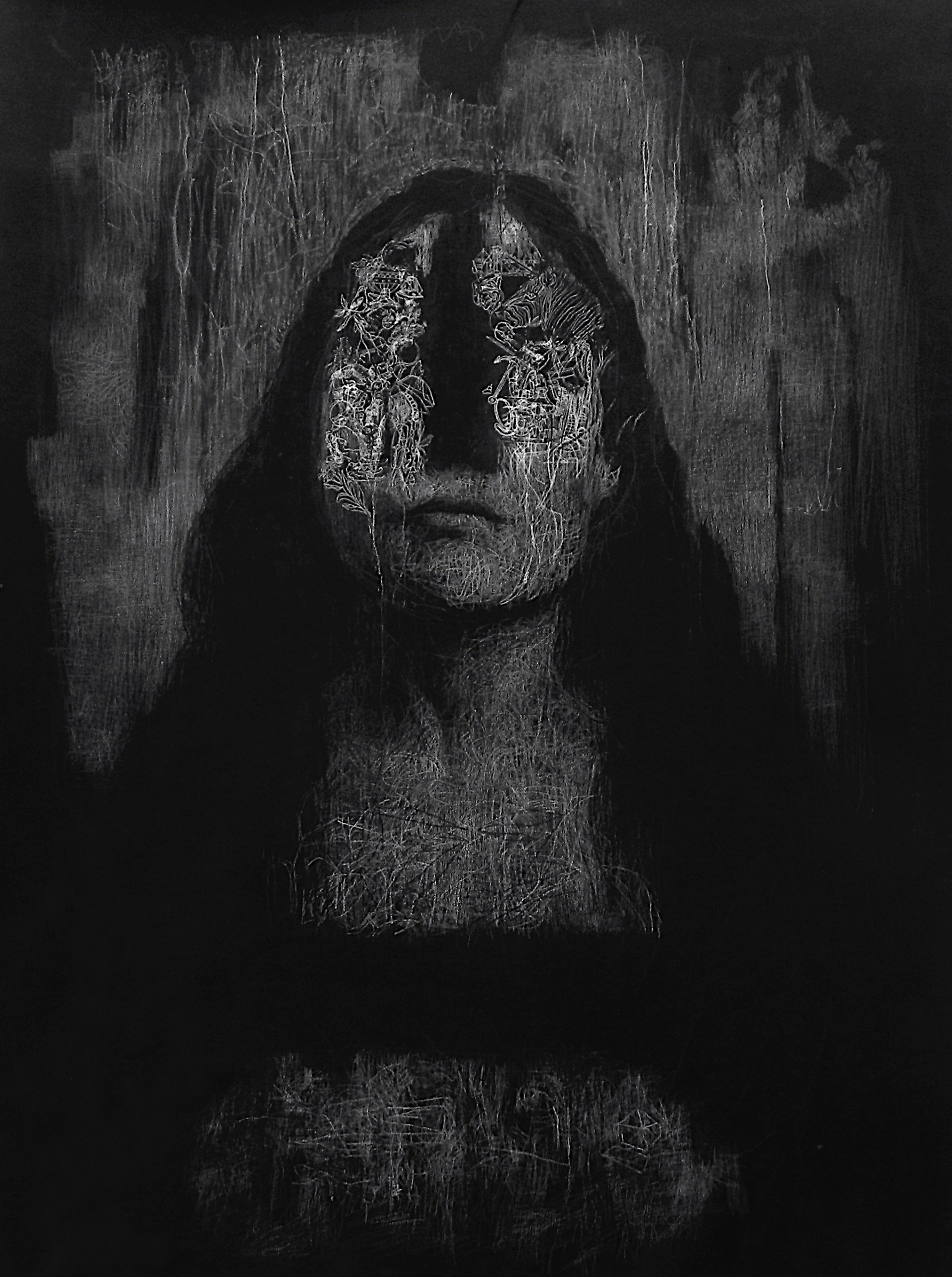
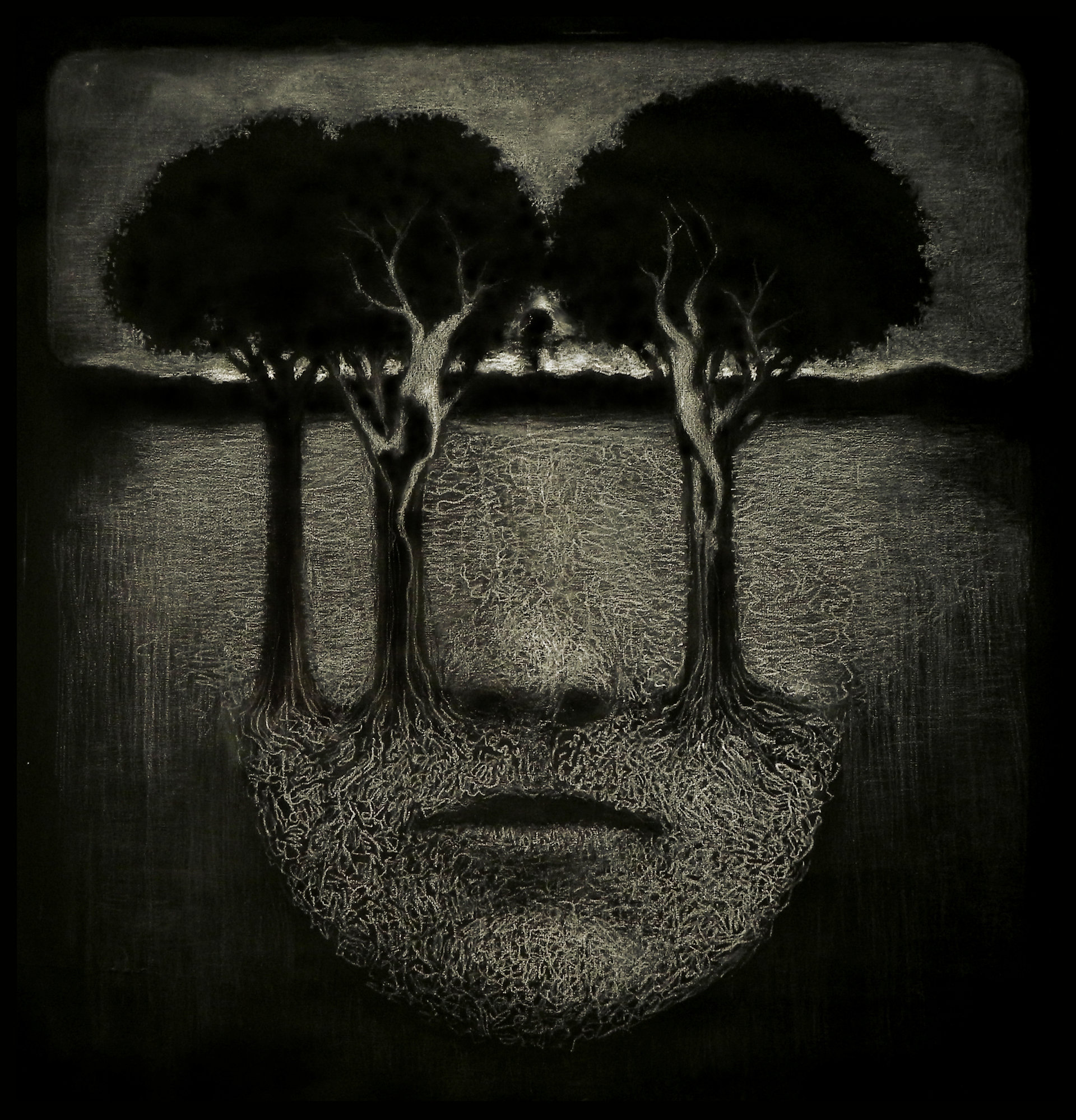
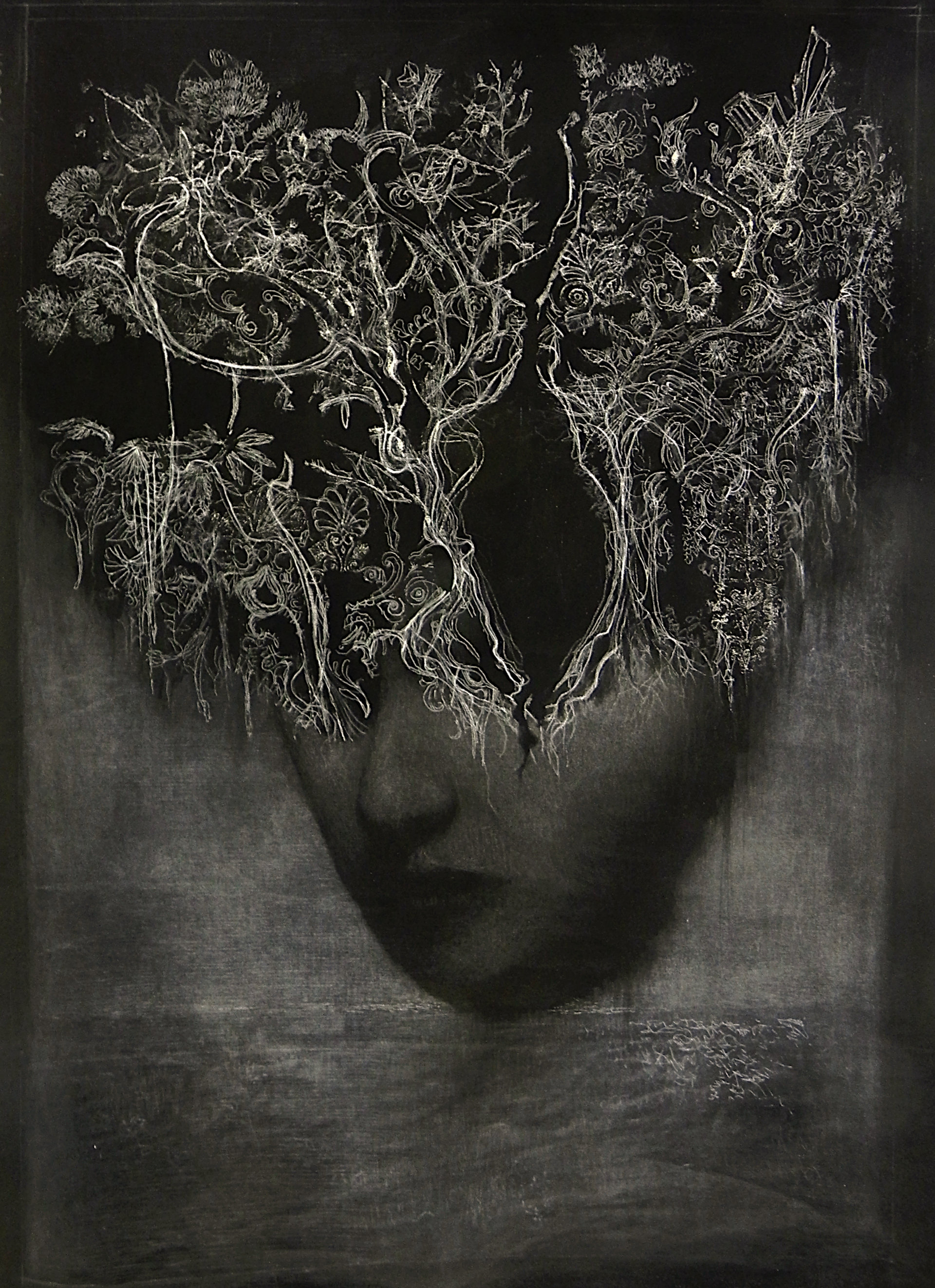
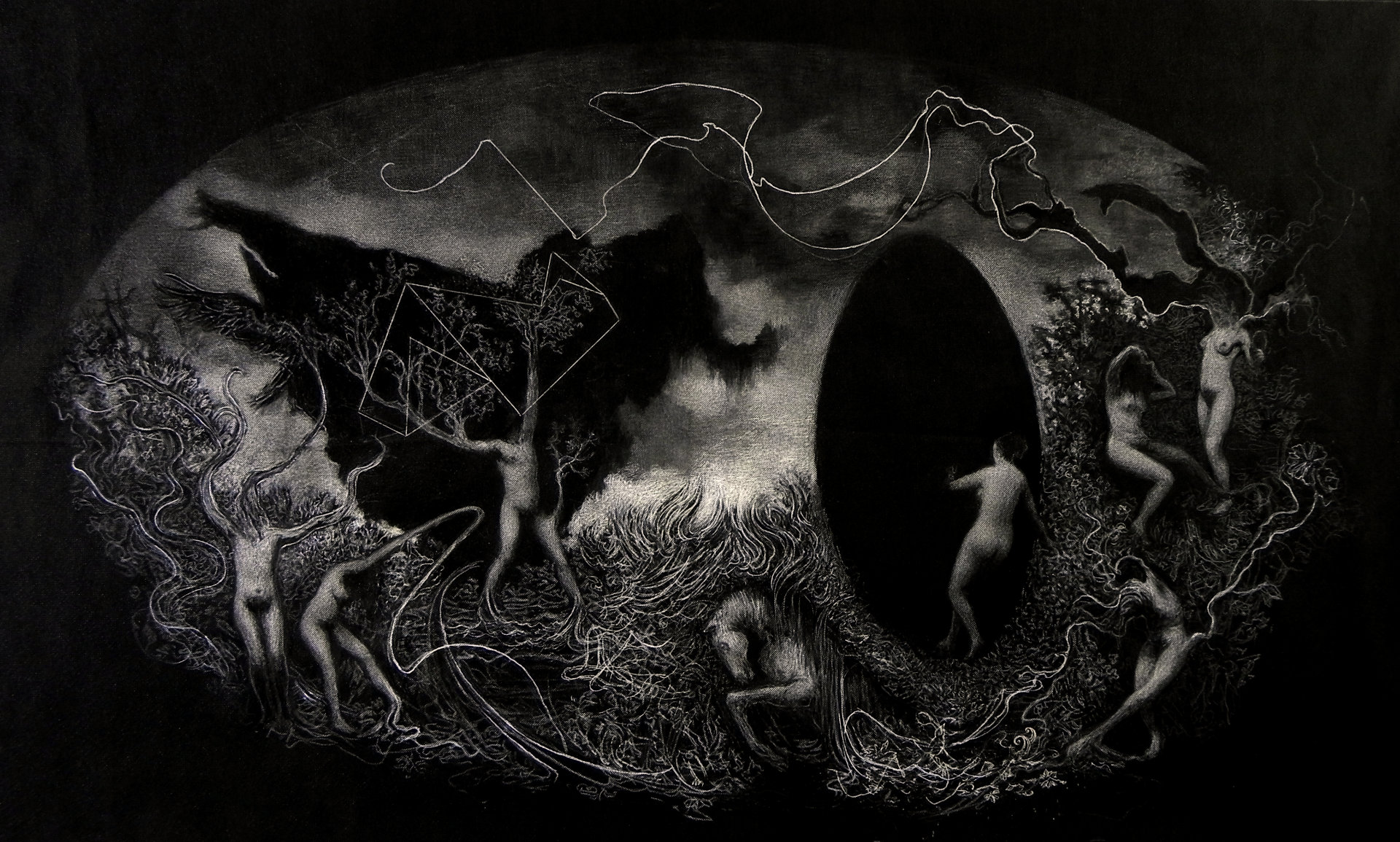
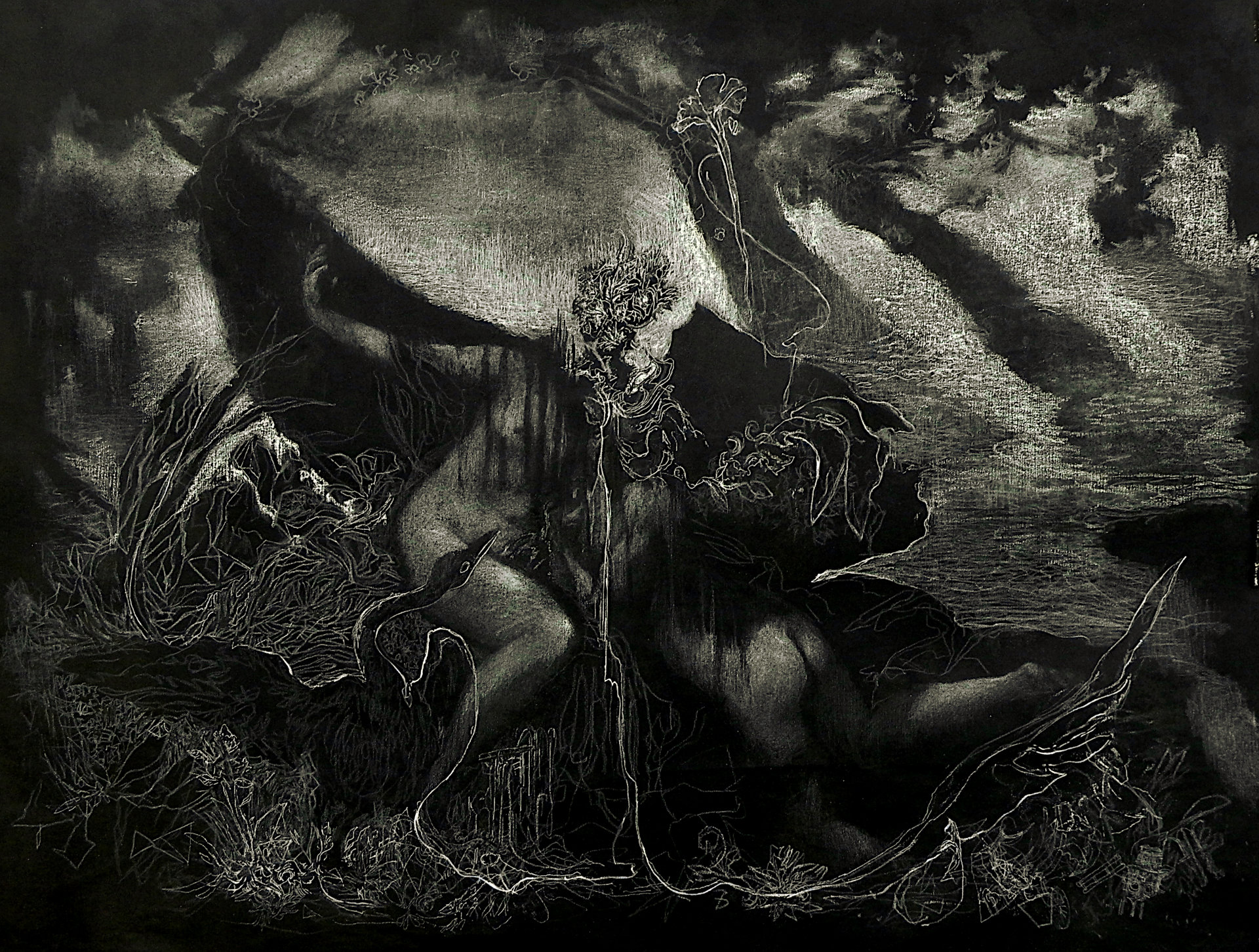
Your drawings are noted for their use of a white line on a black surface. What is the significance of this inversion of traditional drawing, where the light becomes the subject and the absence of light is the foundation?
I started working with dark, black surfaces 14 years ago. To me, starting with a white surface is like beginning with the obvious, with everything already known. The black space, on the other hand, seduces me with its mystery, its power, and its invitation into the unknown.
Some of the motivations that led me to work this way were: the sense of theatrical drama this setting brings to the work, the search for a visual metaphor to represent my fantastic existential vision across different planes of life, and the psychological drive that manifests between Thanatos and Eros. But most importantly, this approach allowed me to reflect on light as a physical manifestation.
I think of an immeasurable universe where darkness is almost everything and nothing at the same time, where abundant matter lacks a livable light. That timeless “dark truth,” that space, encompasses the largest percentage of what we recognize, and light is nothing more than a random phenomenon—a brief flash that bathes matter, reveals bodies, and gives us a fleeting moment of a dream.
Your artist statement describes your work as a “divine tragedy.” What is the philosophical or personal origin of this idea, and how do you believe suffering informs the beauty and power found in your art?”
Divine Tragedy” is a poetic expression. I adore poetry and believe its power of abstraction makes it the most beautiful artistic language. I work on my drawings with the idea of composingvisual poems. In them, I see darkness as a symbolic representation of truth and existence.
I consider my work an expression of positivity and luminosity. It’s crossed by a “lyrical breeze” that tells of emotions, of sorrows and joys that merge. It’s a space where there are no dualities or extremes; everything fuses and beats at the same time.
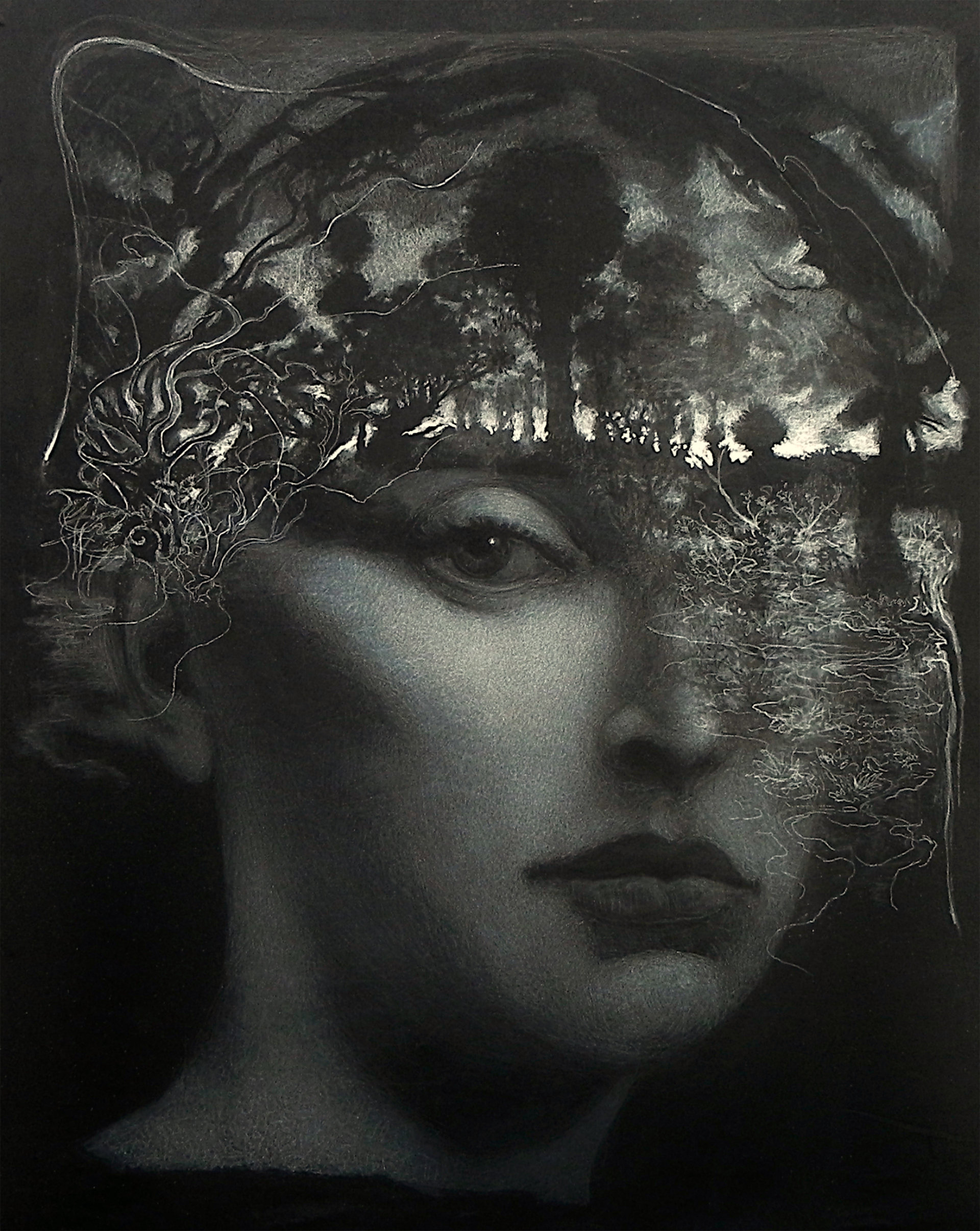
Having studied in Italy, did your time there and your exposure to European art history influence your artistic philosophy or style?
Italy and Europe gave me a profound look into the past of Western Latin art. I take references and make citations from other works in art history, not only Western but also Eastern. I draw on the traces of the past to build my contemporary, present vision.
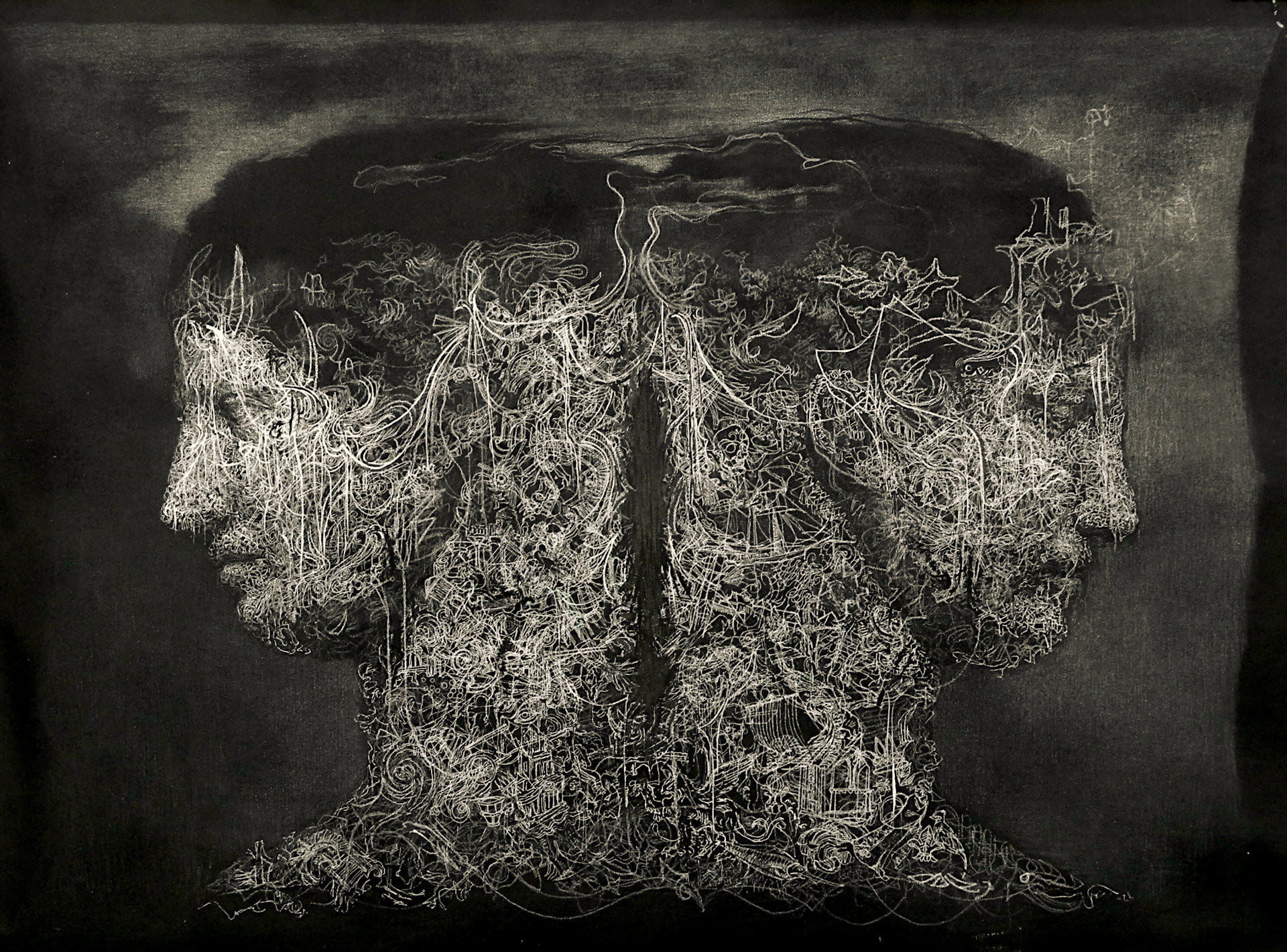
Unlike paint or charcoal, thread is a three-dimensional material. How does this sculptural quality of the thread influence your work, and does it change the way a viewer interacts with the piece?
In my opinion, the work is physical; all its components are three-dimensional. When I see an image of my work on digital media, I am only seeing a photograph of a body, just as with any person. The work is a living entity—corporeal, tangible, and sensory. It’s very important to me that the viewer encounters the materiality of my work. I consider materiality to be primordial in my pieces. The matter is what “speaks,” what tells us a story, and from it, the image it gives use merges as a consequence. The thread, the charcoal from my wood stove, and dry white clay are some of the materials I currently use. Many of these materials are handmade by me using my own formulas. This gives my work a powerful personal identity.
What challenges and freedoms do you find in working on a large scale?
The scale I work in is related to each idea or project. I believe that the monumental can be found beyond size. The size of the work has to be in accordance and make sense in relation to what is being expressed. I like to think that there can be monumental miniatures. Some of my works are made up of small linear drawings that overlap to form a fabric. In these works, I propose the idea of composing between the micro and the macro. For these pieces, I generally use large formats. The viewer must get close to discover small worlds or move away to see the whole.
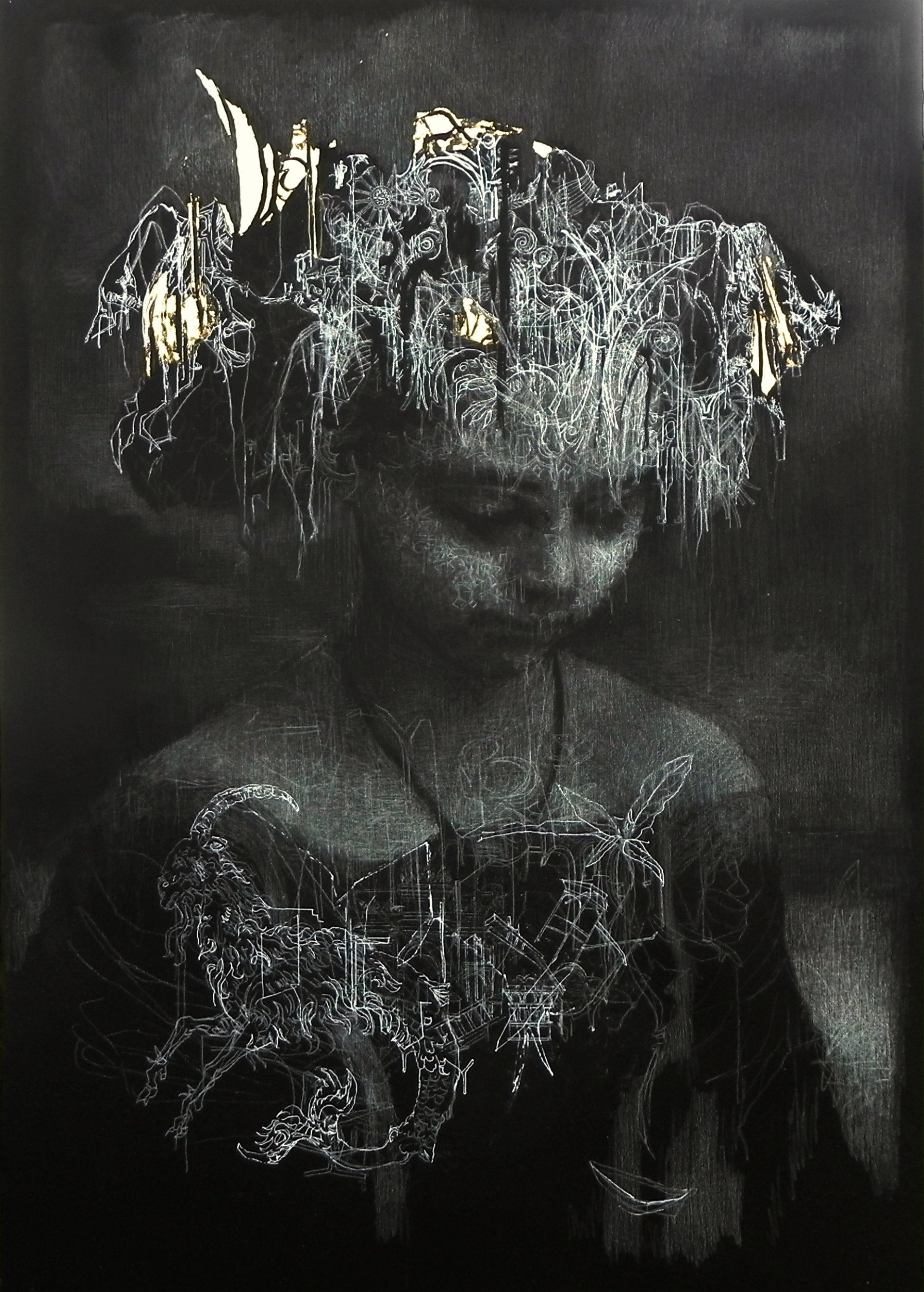
Does the darkness you create emerge from a specific narrative you are telling, or is it more of a direct, pure expression of an emotion or mood?
For me, darkness has no relationship with emotions or moods.
What is your perspective on the role of shadows and darkness in your art? Do you see it as a simple absence of light, a symbol of a void, or a space for introspection?
I start from the dark to imagine a timeless dimension, a space where different planes coexist and the world of symbols and dreams live together. It’s where my psyche, like a mirror oriented towards the internal void, reveals its images
What is a common misconception you’ve encountered about your work that you would like to address?
I believe there are no wrong ideas; each person forms their own opinion about what they see. However, I understand that due to cultural habits, viewers often relate my work to negative feelings or to worlds that are terrifying or disturbing. These ideas are far from what I feel and want to express.
How does your environment influence your art?
Since I moved to a rural area a few years ago, my work has been changing. My gaze turned toward the organic, botanical, and plant world. The morphology of plants and the topography of the landscape captivate me. My line was transformed into a connecting resource, like a rhizome, that unites portraits, scenes of bodies, and landscapes. I believe that as a species, we must reconstruct the symbolic fabric that connects us to the environment. My works express the need to fuse the human, introspective, dreamy, and often terrifying gaze with a generous and living world that welcomes and still tolerates us.
What upcoming projects or exhibitions are you currently working on?
Right now, I am working on a body of work for a future exhibition. I have not defined the location or when they will be exhibited. I am in no hurry and have no set goals; I enjoy the processes.
Share
You might also like ...

Dark Art – The Lijilja
Your work is deeply personal. How did this style of performance develop for you? Were there mentors who shaped it? How did your mode of

Dark Art – Sven Harambasic
In an interview, you mentioned that you prefer to deal with “isolated, inner worlds” rather than wider social commentary. How do you find and explore

Dark Art – Samuel Araya
The dark art genre sometimes exists outside of the mainstream art world. Has the intense and provocative nature of your work created any unique challenges

Dark Art – Obrazrat
It appears that your masks incorporate organic materials. What is the significance of using these elements, and how do they contrast with the more structured,