Tommy Mitchell: If You Dream, Life Will Pinch You
- Interview by Sawa
- Published:
- In Features
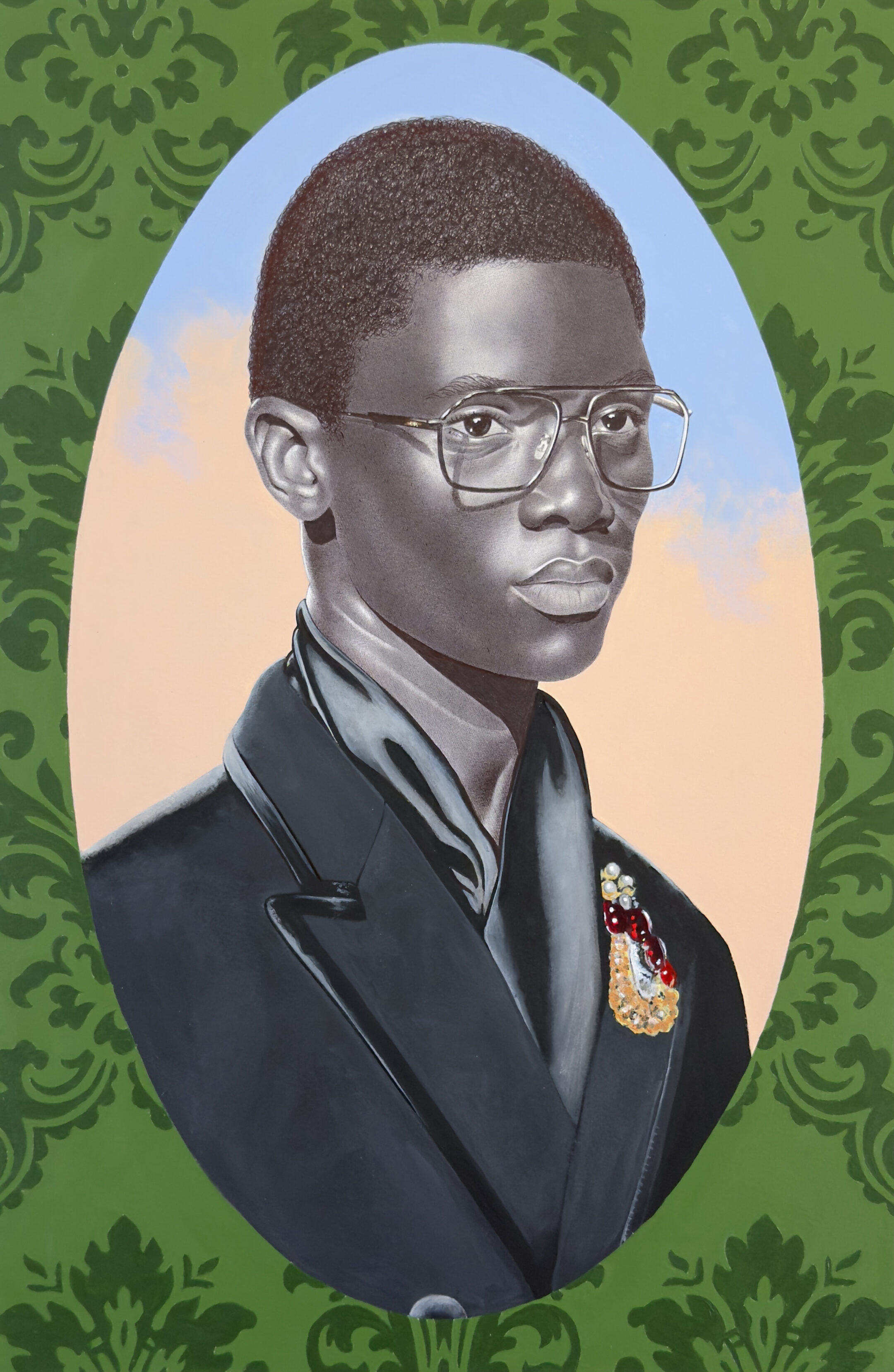
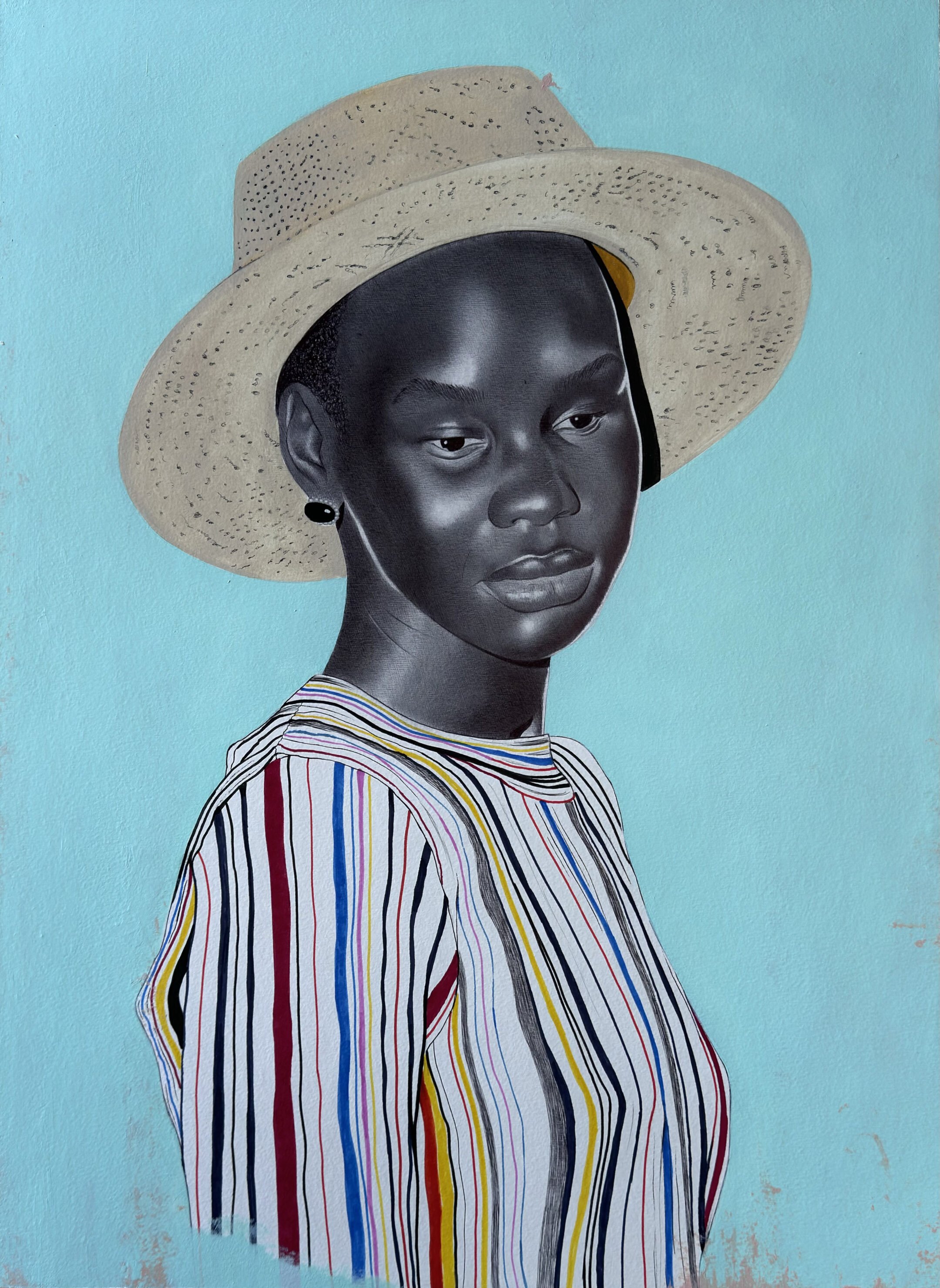
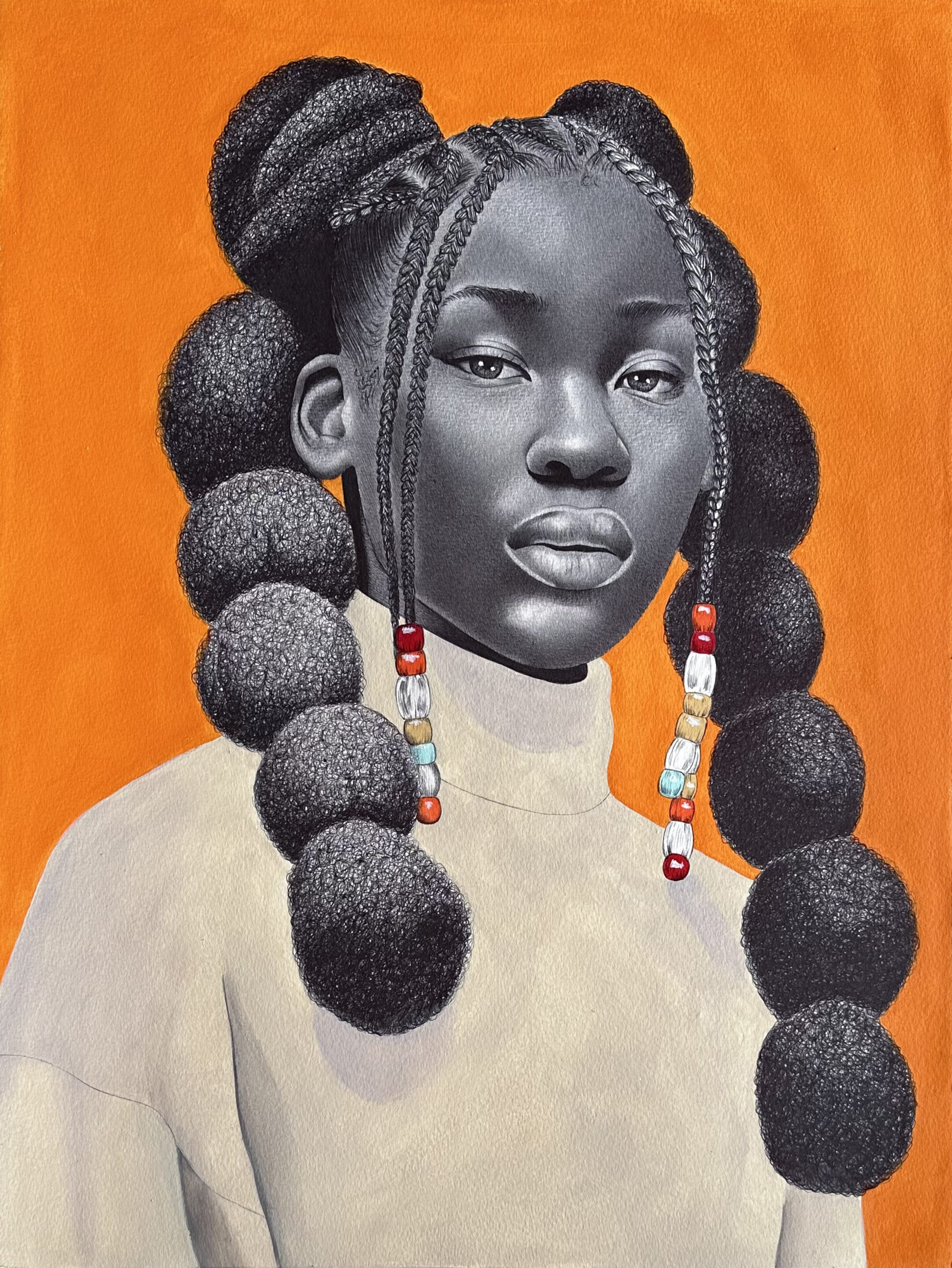
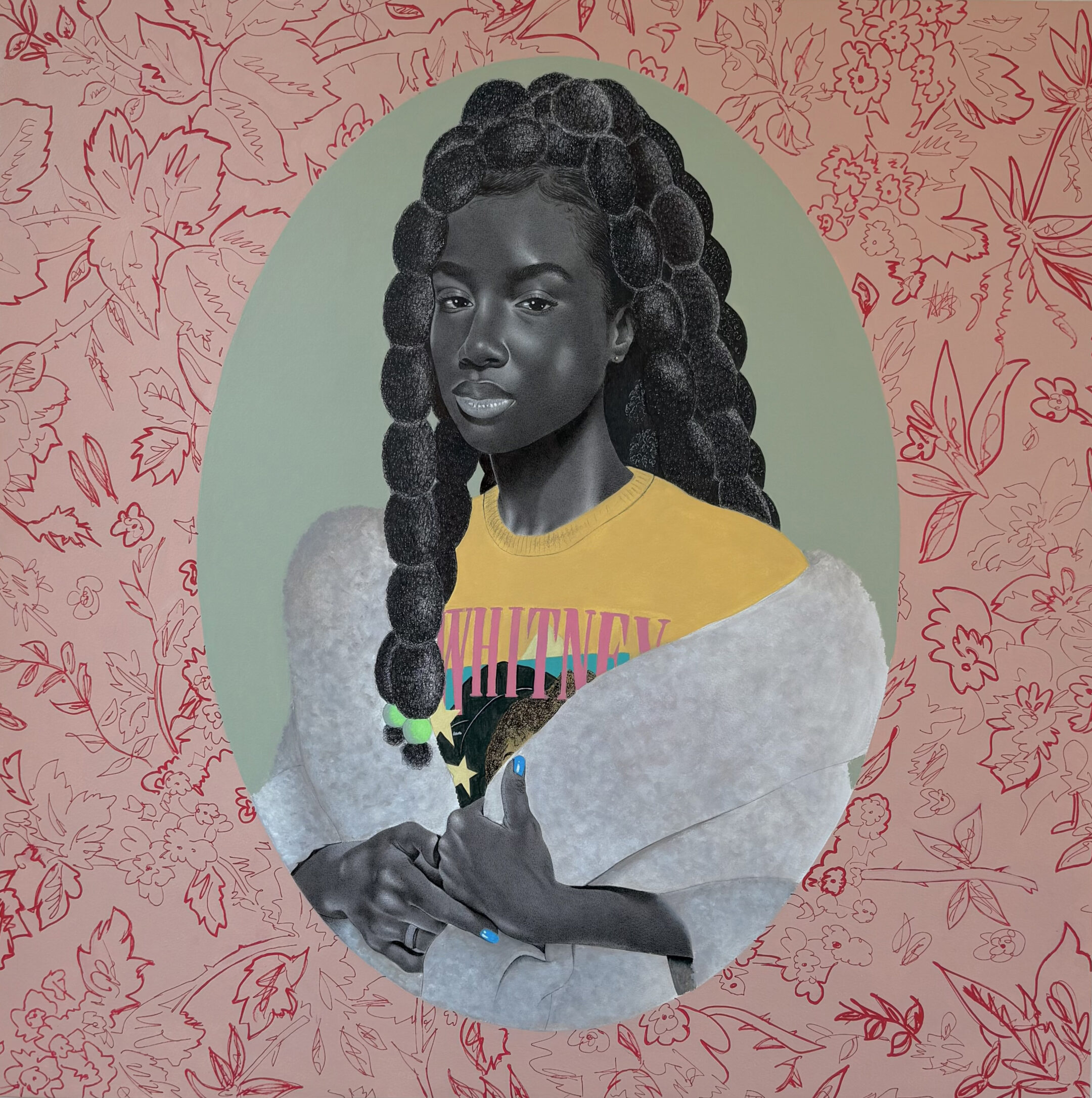
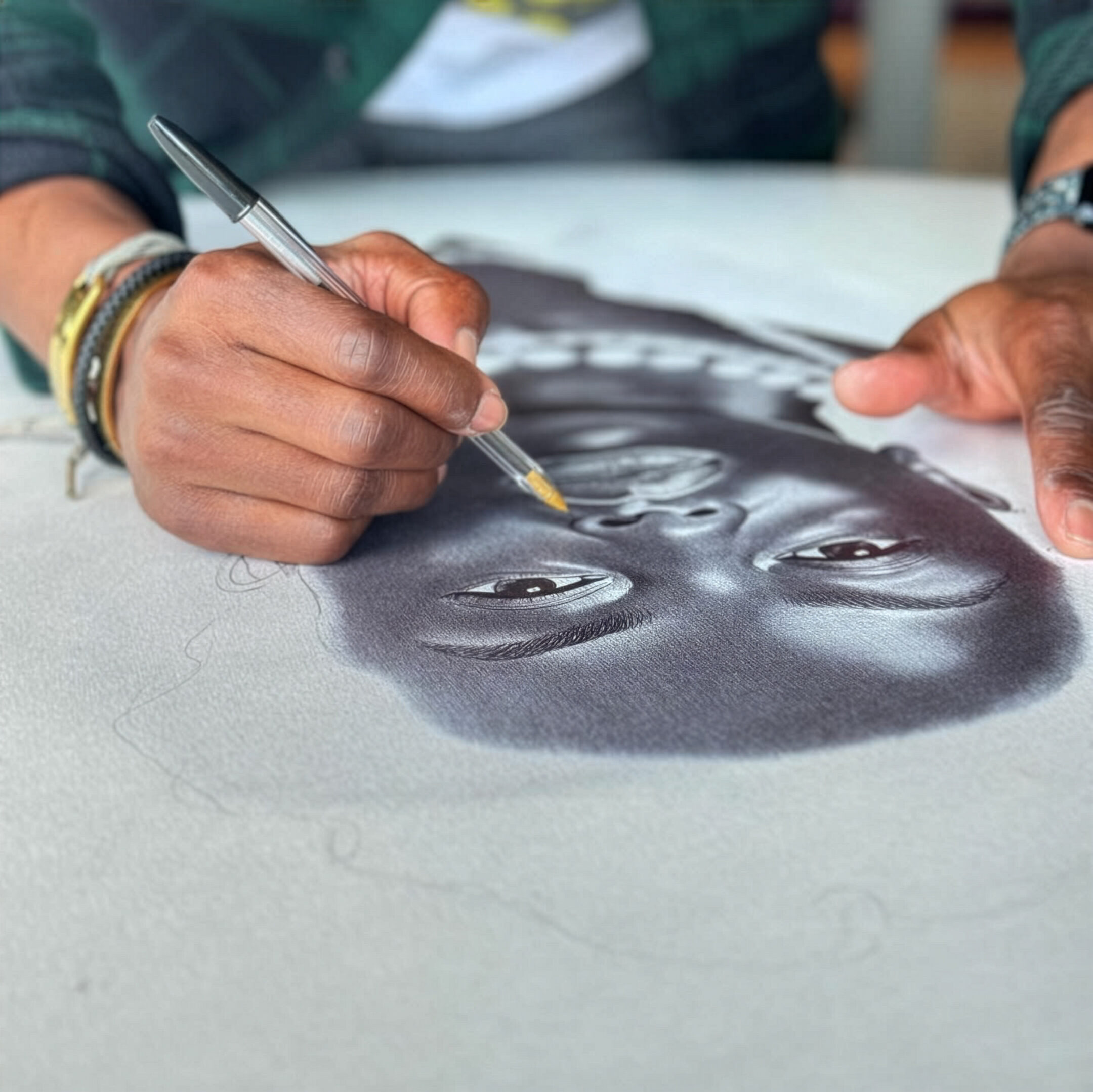
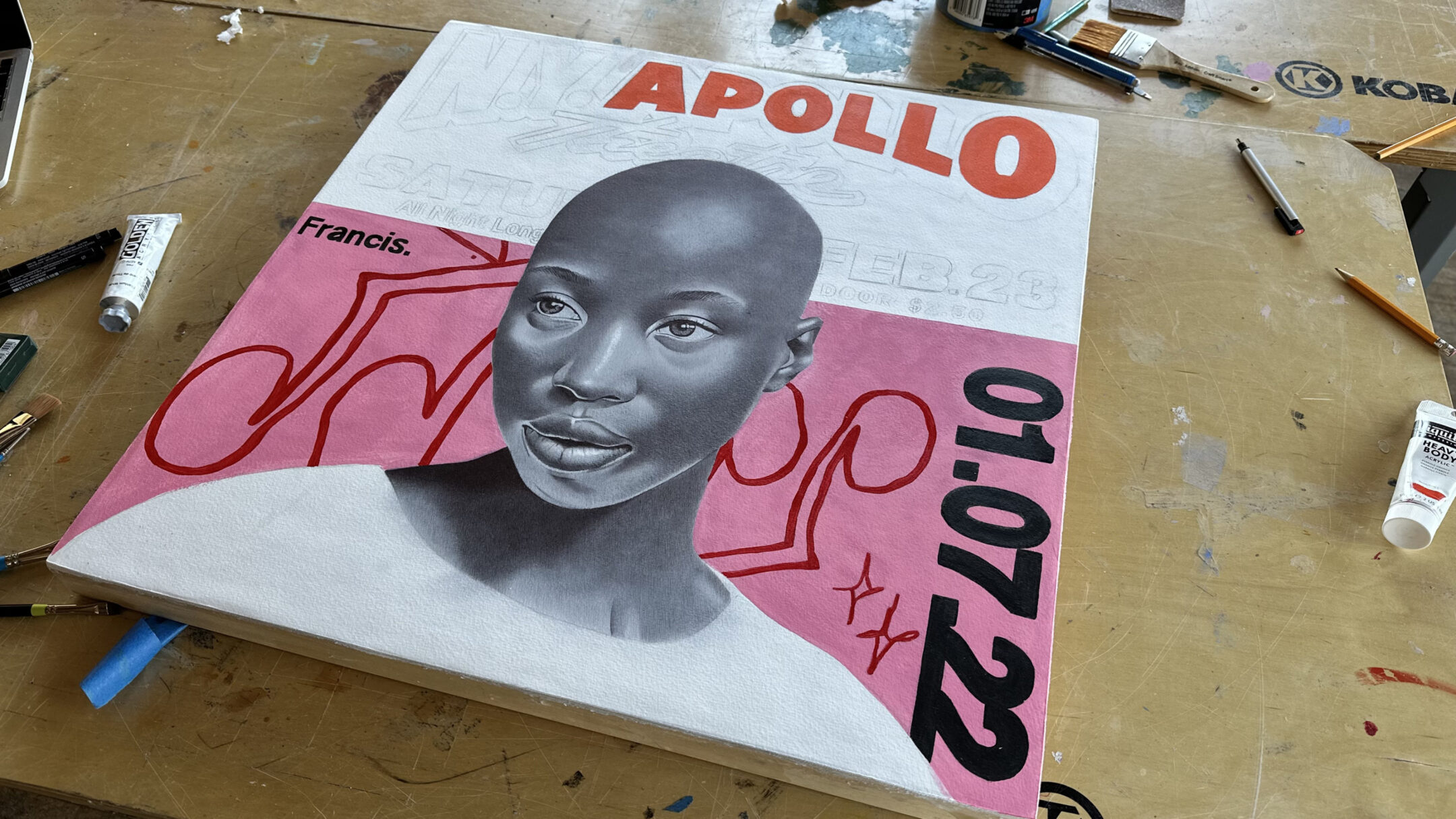
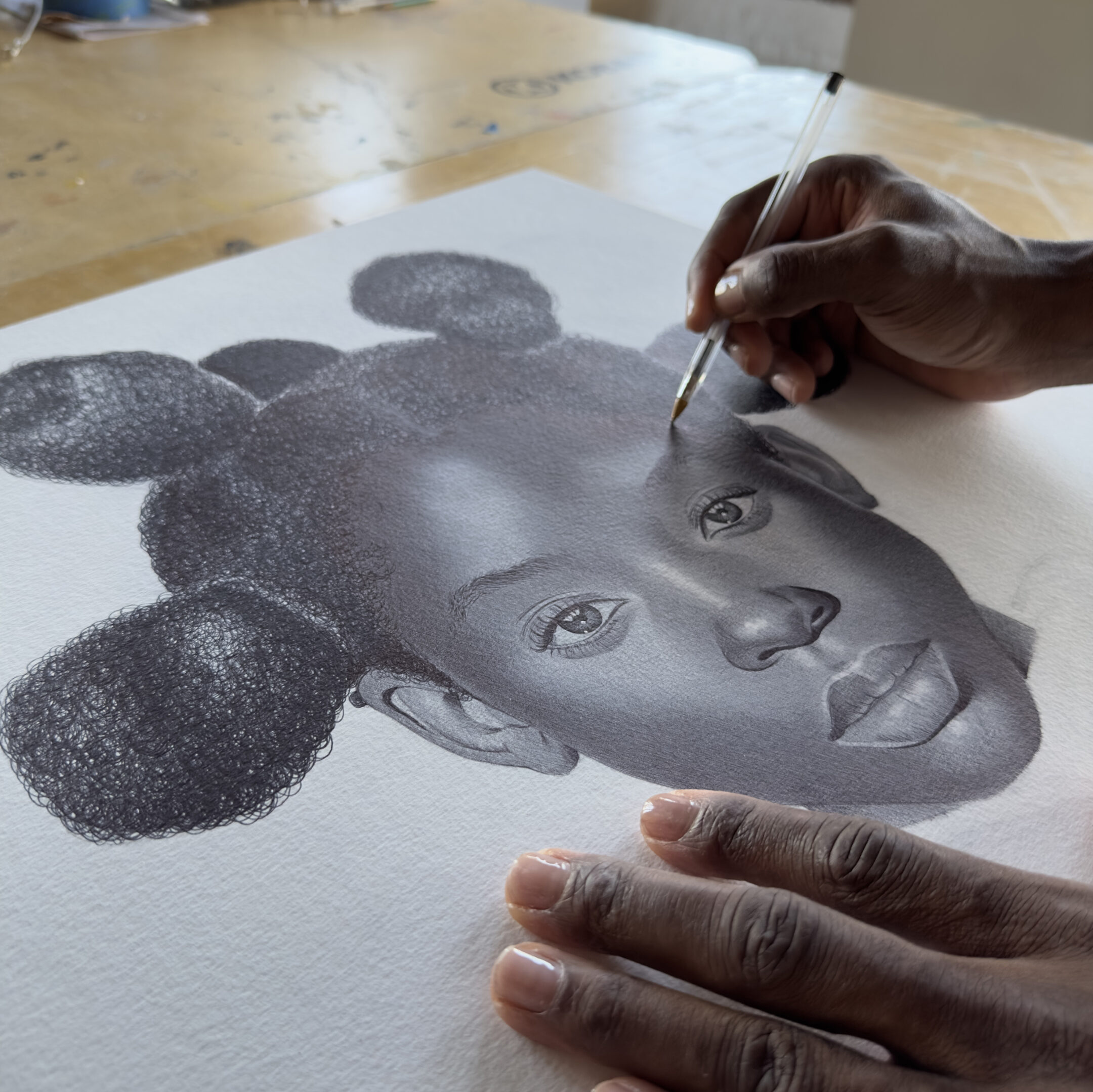
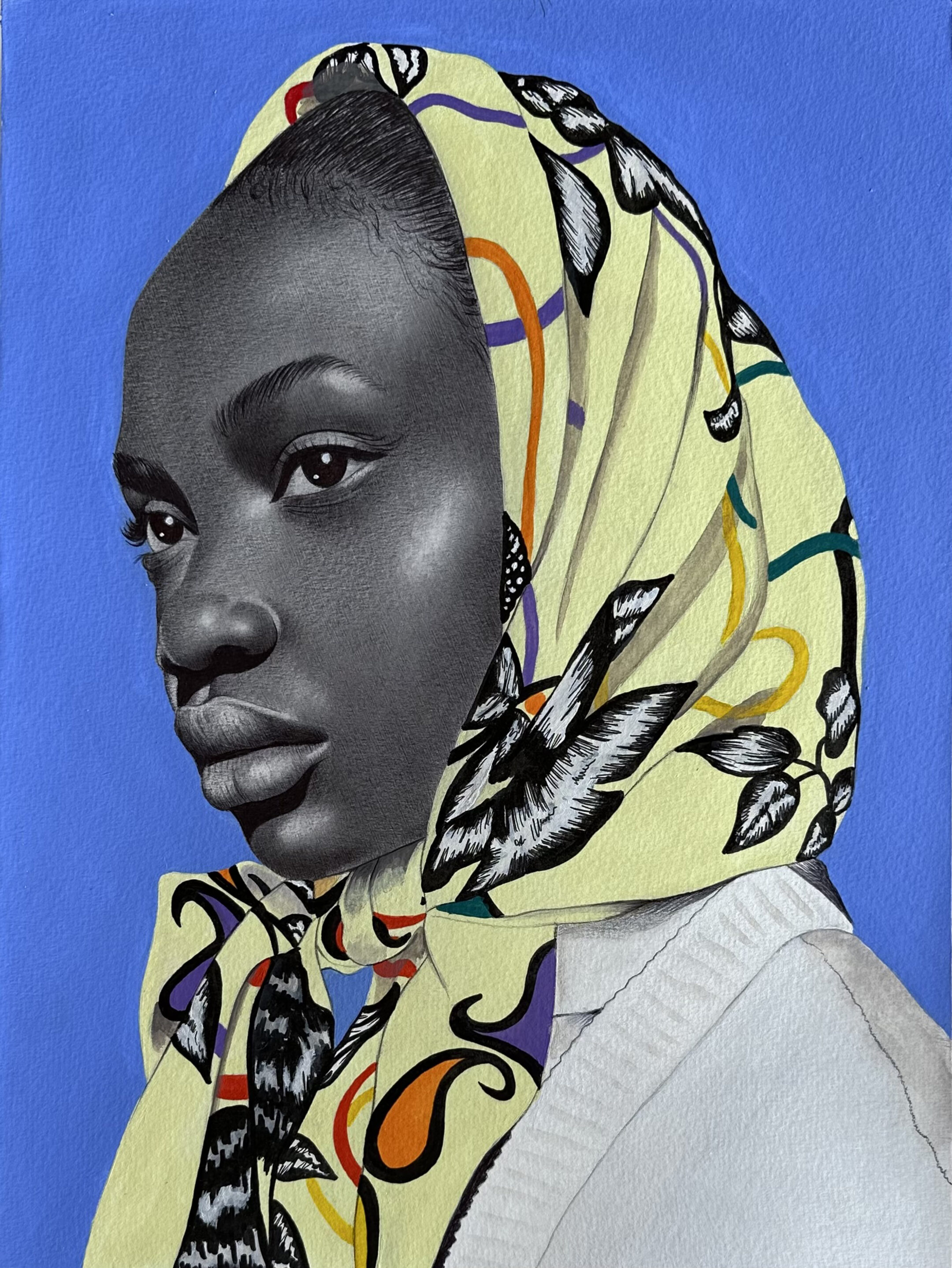
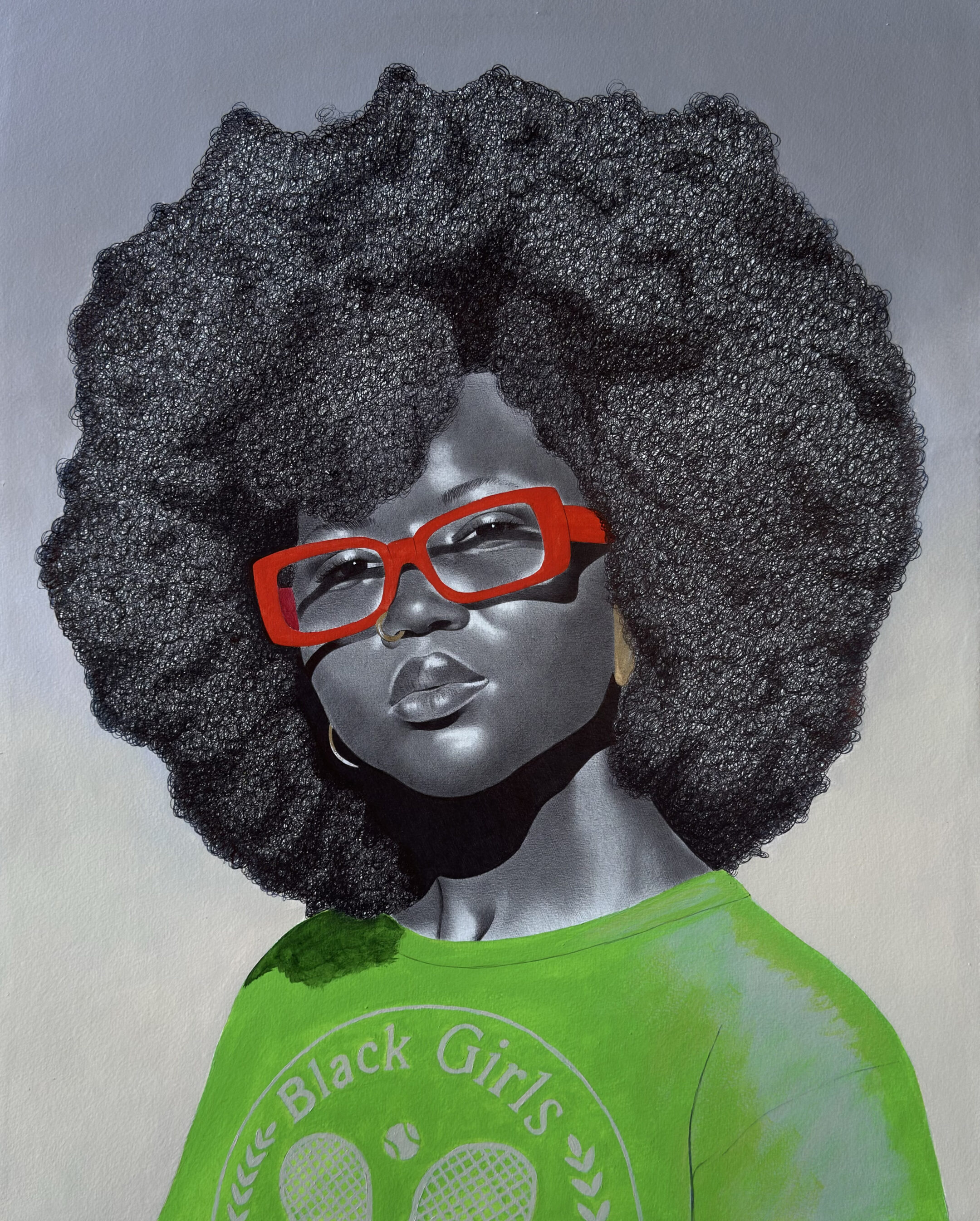
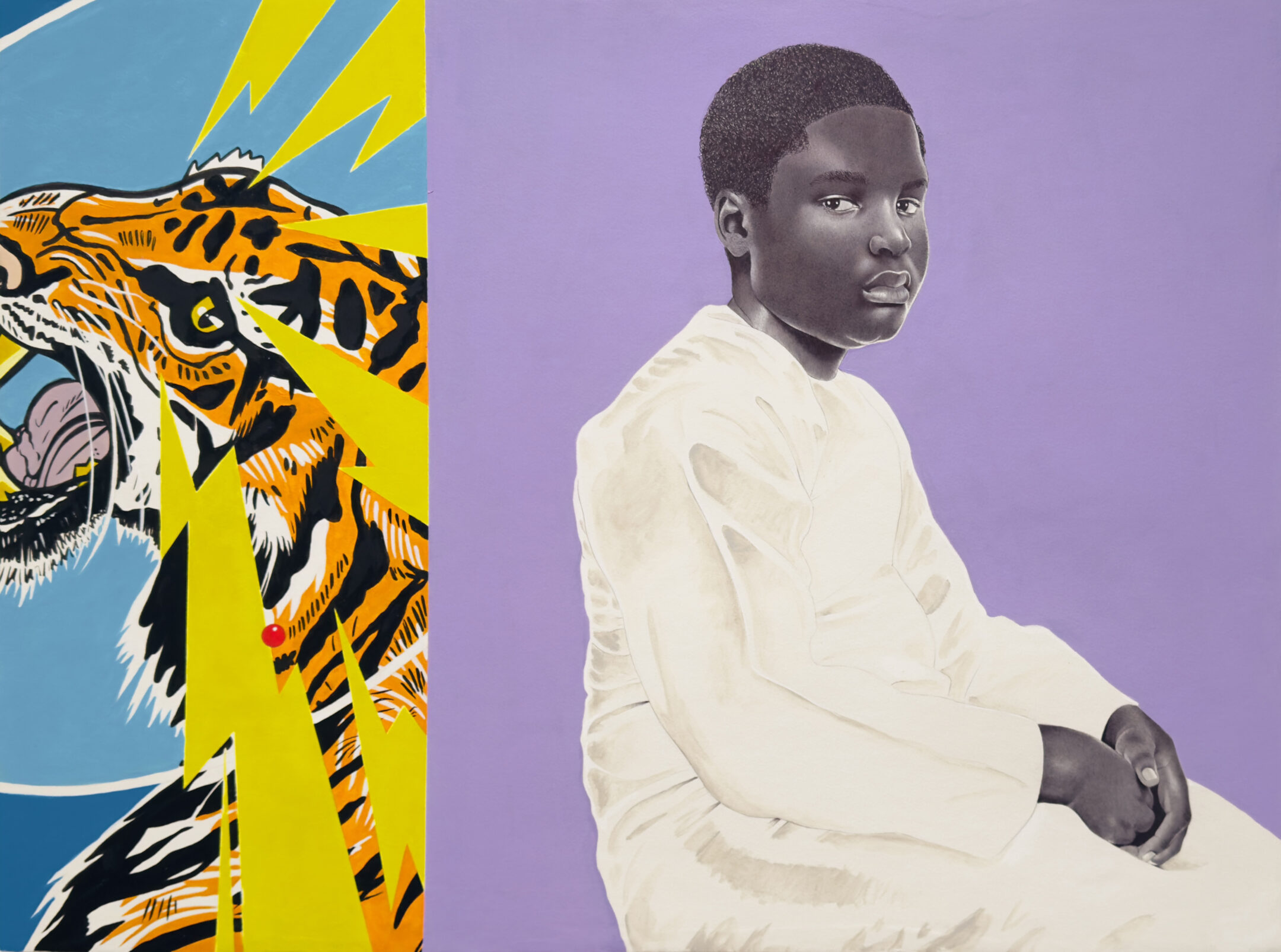
You can usually find at least two humans in any of Tommy Mitchell’s supremely humanistic portraits: the subject — impassive, stylish, self-possessed – and Mitchell himself, patient as a monk or a madman, sculpting rich, glossy skin tones into monumentality with the humble ballpoint pen. In his most recent work, Mitchell pushes further, juxtaposing his portraits with fragments of everyday design — wallpaper florals, hair-salon streaks, fabric patterns, graffiti, revolutionary graphics — inviting us to reflect on the worlds we build around us.
You told me on my way in, that you were almost done with a piece and had to start over?
TOMMY: Oh, my favorite part. Yes… I love talking about destroying work. You always gotta talk about the highs and the lows. The highs are high: I’m making work, it’s getting completed, it’s sold, it’s in someone’s home or collection.
But with the lows, it’s like I don’t like the tone, I don’t think the drawing looks where it needs to be. And there’s certain times where I know early on I don’t think I’m gonna finish something, but I’ll keep going just to see where it goes. Or I’ll finish it, paint it, look at it. Nope < . Gotta get rid of it.
I always think of the viewer. I believe they deserve more. It’s not about me. They deserve more. I wanna share this with you. And if you’re enjoying what I do, you deserve more. So I destroy a lot of work and it makes a lot of people upset. But again, I’m trying to become better at what I’m presenting through visualizing and executing whatever’s in my head. I want to execute it to a T. That way I don’t need to say anything, it’s just exactly how I envisioned it. So destroying works is one of my followers’ pet peeves. They’re like, “Oh my God, but it was so beautiful!”
Do you smash it, set it on fire, or?
TOMMY: So since I work with paper on panel, I’ll just scrape the paper off, sand it down, and then throw another piece of paper on it.
What called you to art?
TOMMY: I think for everyone it’s a voice. We always want to share things that are internal, things that we see. I also always think of a Seinfeld quote, who’s probably not that popular right now — but “Everyone’s funny, it’s just that some people make it a career.” And I think that to me is the same as art. Everyone draws, I just happen to keep going and try to make it a career. And thankfully that’s what I’m doing now.
When we’re young it’s so instinctive to draw, dance, create, but a lot of us lose that as we get older. How do we keep that part of us alive?
TOMMY: My mother taught for thirty-nine years. She was talking about one of her students and the student got reprimanded for dancing in the class. She told the other teacher that instead of reprimanding them, put them with the band, put them with the dance team, nurture that talent. So I feel the same, just nurture the talent. You’ll never know what these kids can do if you don’t nurture their ideas, their growth. So why not give ’em a chance?
You started with Bic ballpoint pens but are starting to paint as well. Why a ballpoint pen?
TOMMY: It’s one of my favorite stories. When I was in high school, I was a senior and there was vzthis freshman. I’m very competitive, too competitive, and I saw that she was really talented. I’m always trying to pick and learn from the people around me, and I saw that she was drawing so we just sparked up a conversation. She mentioned that her grandmother uses a ballpoint pen, that way she doesn’t make mistakes. For me it was an a-ha moment. Well, I don’t wanna make mistakes.
So fast forward, I’ve been using ballpoint pen now for, gosh, I’m 41, so 19 years. I’m chasing perfection essentially. And I just wanna keep adding new elements to my pen work, so I’ve added acrylic paint, watercolor, oil, whatever else to enhance my ink skillset. I’ve always said that I want my painting to open up doors for my drawing.
So now you have different mediums bringing dimension to your work. Beyond the visual, what are some thematic threads tying your work together?
TOMMY: I always make parallels. For me, I always think about Picasso, how he pivoted from one thing to another. I look at that for each show. I want to present something different, which could help and hurt me, if you’re a collector and want the old. If I’m big into street art, I want to add graffiti elements. If I’m big into illustration, I want to add illustration elements. I always try to let my imagination take its course. I want a full story of my journey; for people to see and think, “Okay, he started here, then he pivoted from that.” That to me is the Picasso mindset of doing something great then moving on to something else because you did it to death. You’ve squeezed the life out of this particular idea.
But it’s also telling other stories of Blacks and people of color and putting them in a position as the focal point. I go to these institutions, galleries, museums, and I’m amazed at the work, but there’s no one there that looks like me. So how can I tell my story, and my friend’s story, my family’s story, the Black story with my work as well? I’m trying to tell the story of all these ideas, but I also want to make sure that there’s a bigger message as well.
“Do you want money, success? Make what you think other people want. Do you want to do it for the love of the craft? Make what you wanna see out in the world.”
Is there a particular message that we can talk about?
TOMMY: Yes and no. There are times to be political, but I also want to have balance. There’s a lot going on right now and I don’t want to add any more stress. I wanna present something where you can take your mind off of that for a little bit. Then there’s other times I’m like, shit’s fucked up. I have to express this. There’s no reason why I can’t, or why I shouldn’t. After the passing of Tyree Nichols, I made a whole body of work based on that. I wanted to present Black men because these people are your brother, your neighbor, your friend, and your coworker. I wanted to humanize them — that this person is existing just like you are, you know?
I felt so saddened by the senseless violence that it called me to action. And then sometimes I’m like Warhol — I just wanna make something pretty.
That’s been coming up more lately because of the times that we are living in. There’s this mindset that it’s an artist’s duty to reflect it all. But it’s also exhausting if we’re already living it. Every artist absorbs everything, all the grief and rage. It’s important to make art that is also beautiful, transformational.
TOMMY: You gotta have balance. You know, you could do this all day, but that’s a lot to deal with and consume. I would wanna consume something that takes my mind off of things for a little bit. I’m still cognizant of all that’s going on, but for my mental health, let me chill off of that.
Any artistic practice is good for mental health, just the process of doing and creating something.
TOMMY: Yeah, I’ve done therapy, but I always feel like art for me is therapy. I’m a huge advocate of just sitting there, thinking and being still, absorbing everything that’s around me. And maybe asking myself questions, answering some questions, just to be able to communicate better — whether it be with my work, friends, or family. Art is one of those things I always look forward to, ’cause I always feel like I’m on autopilot.
It’s something that can help you be present. My mind’s always in ten million different places. And then there’s those moments in the process where I’m totally present.
TOMMY: Right. Everything shuts off. I have horse blinders on now ’cause I’m thinking about this. One of my favorite books is Outliers by Malcolm Gladwell. In the book he talks about the root of things. It kind of changed my level of thinking. Now I’m like, “Okay, I have this issue. What’s the root of the issue?” We have all this noise and clutter. Let me think of the root and then navigate from there to find clarity.
I call it the fuzz. The more I clear the fuzz, the more I have a direct channel for inspiration.
Before this interview you mentioned your mom a few times. Did she nurture you as an artist?
TOMMY: I always tell that story of her nurturing talent, and she practiced what she preached. She knew I was good at drawing. She put me in an art class. On my first day the teacher said we’re drawing trees. I said I don’t wanna draw trees. I wanna draw portraits at an elite level. But it was a learning experience because sometimes you need to draw other things to understand the thing that you’re trying to master. But she was always in my corner, telling me to draw, no matter what it is.
Every morning I would go to Barnes and Noble, I think they opened at eight or nine, and I’d be the first one there. I’d grab six or seven magazines and I would draw random things from them because I wanted to have more information in my artistic toolkit; if someone asked me to draw a tree, I could draw a tree, or a motorcycle. My mom’s teaching and her curiosity led me along my own journey of being curious, of asking myself, “What else can I do? What else can I learn?” And knowing that learning is a neverending process.
You’re self-taught, and undeniably persistent in your perfection. It appears that when you really love something, you’re driven by invisible forces to just keep going. How has the whole learning process been for you?
TOMMY: Everything that I’m doing in art, I learned from sport. You have teamwork, goal setting, discipline, and work ethic. I took those practices and I applied them to art. So as far as being self-taught, I’m one who’s just gonna figure it out. I probably wasn’t the best student because I don’t like this whole semester thing of only covering a few chapters. No, gimme the book now where I can learn all the information. I love just falling down a rabbit hole and grabbing information and then learning more about everything as I just keep falling and keep falling.
If I want to be good at something, I can go seek that information. And then the repetition part comes in — let me do it over and over and over until I achieve what I’m trying to present. At every artist talk, and in every conversation I have, I’m like, “Look, I got my MFA from YouTube.” The information’s readily available and it’s free. You just have to take the time out to seek it and make sure you’re seeking the right info.
Regardless of resources, everyone can be creative.
TOMMY: I’m glad you mentioned resources. One of the reasons I worked with pen and paper is because it’s cheap. Anyone can find a pen and paper around the house. Art can be a very exclusive thing but working with pen and paper is readily available. But then the exclusivity part comes in where people think they gotta spend money on brushes, paint, panels, and canvases to get started.
I always look at it like basketball versus golf or hockey. You show up with a basketball and nine times outta ten, there’s a hoop there. Hockey, you have to have the equipment, you gotta get ring time or ice time. I think what I’m doing is very inclusive and I’ve now gotten to a point where I can afford panels, paint, it looks more high-end.
I want kids to know anyone can do this as well. You can keep doing it until you want to pivot and do something different with it. But it can still have the foundation of inclusivity.
I’m seeing ballpoint pen work as a more respected medium now. It might even be a harder skillset to master than many other mediums. Let’s pay a bit of tribute to this pen process.
TOMMY: Gosh, shout out to Bic. For me, I’ve tried it all. Pencil, charcoal… it’s the pen for me every time. It’s the pen and just the depth that I can get. Early on people couldn’t believe it was a ballpoint pen. I actually want it to be an amazing piece of work at first glance, and once you understand it’s a ballpoint pen, I want that to be a double whammy.
I love making complex things look easy. That’s one of my favorite things to do. That’s why I love working with ink. It’s like, “Wait, something that we used to sign checks with you’re making masterpieces with.” It’s a tool that I wanted to make my life’s work with. This particular tool, because I felt like it was undervalued. However many pens you can think of right now, I have more than that.
So for someone who’s just starting up, how important is it to make work for yourself as opposed to what you think people wanna see? Or how important is that early process? How can you find the crack where the light leaks through, and peek in there?
TOMMY: Do you want money, success? Make what you think other people want. Do you want to do it for the love of the craft? Make what you wanna see out in the world. I feel like I make what I wanna see out in the world that can be marketed and sold, if that makes any sense.
I believe in having a North Star. If you look up to someone, follow their path and then veer off and follow your own. Because then you have information about their process you can pull from. They worked eight hours a day. They read these books. I’m always like, “What were they listening to? Where did they study? Where did they go?” I need that information to absorb, to help me on my journey.
I do think that when you are making something that is authentic people will resonate with it more.
TOMMY: When you make something from your gut, from your heart, no one can take that away from you because it came from a very genuine place.
What are you looking for? You gotta ask yourself certain questions. Just make, make, make, that’s it. Just make, keep making. And when you’re done making, make more, because that’s when you find out who you are.
It doesn’t matter if they understand, as long as I understand. I understand the journey I’m going on, and it’s a very lonely one. But once you get to where you’re trying to go, then some people will be like, “Oh, I see, I get it now.” It’s a very strenuous journey. You gotta know yourself along the way to see if you can handle it or not.
The art life is a marathon, not a sprint. And you have to truly love it to stick with it.
TOMMY: I’m obsessed.
Share
You might also like ...

Gwar: The World’s Most Infamous Art Collective
GWAR’s archivist Bob Gorman and gallery curator Roger Gastman delve into the fantastical, bloody GWAR-verse.

Zara Kand: Dream World
Zara Kand alchemizes grief into portraits of dream-like beauty infused with Jungian symbolism.

Hirotton: A Future in the Past
Hirotton cut his teeth as an artist in the streets of Osaka and went on to distill his work in London, like so much fine gin. While his punk rock roots still endure in his paintings and drawings, they also reveal a magical world that’s all his own.

Various Artists: Shadow Work
Healing the Jungian shadow-self through dark art. Curated by Diana M. Ahuixa.