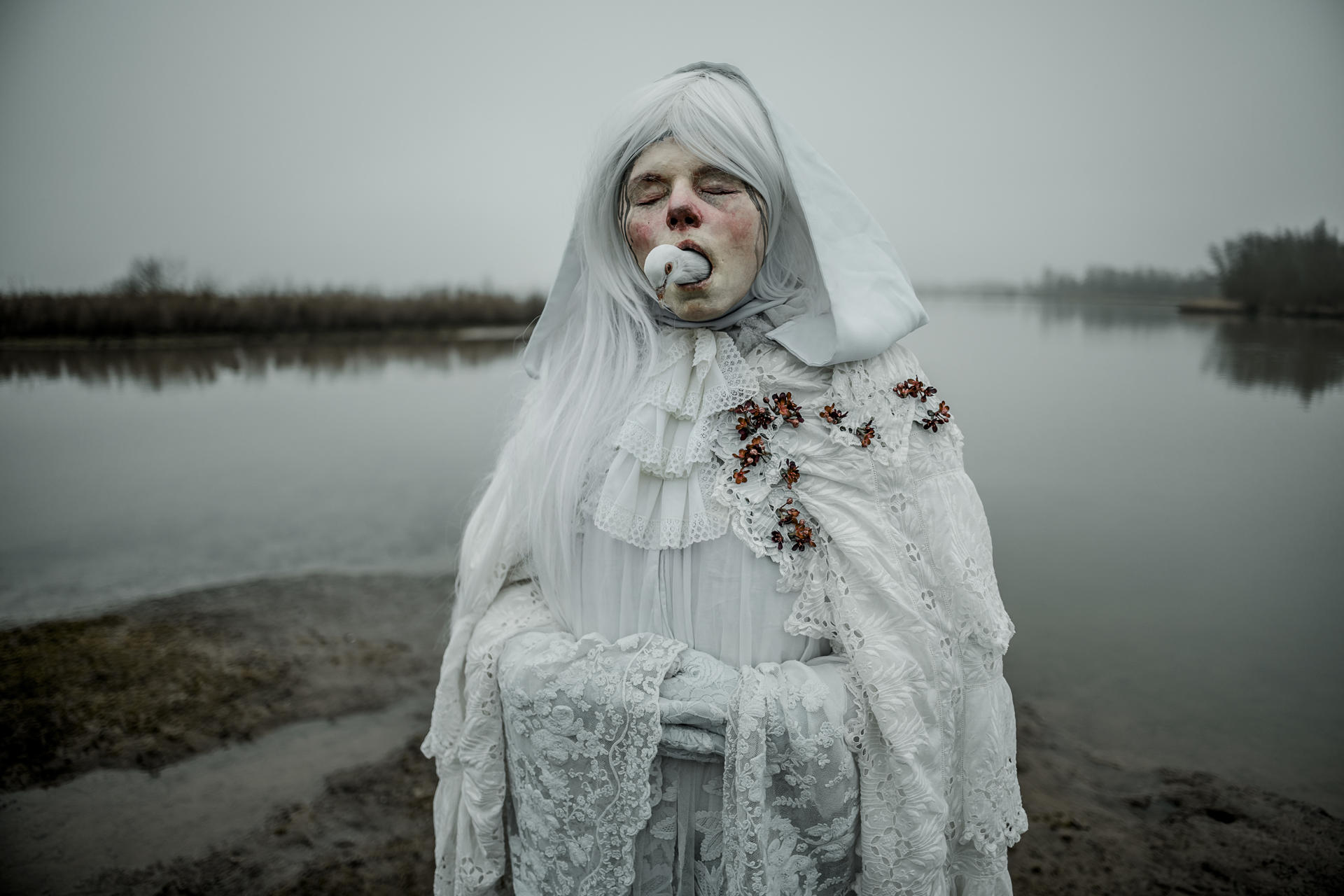
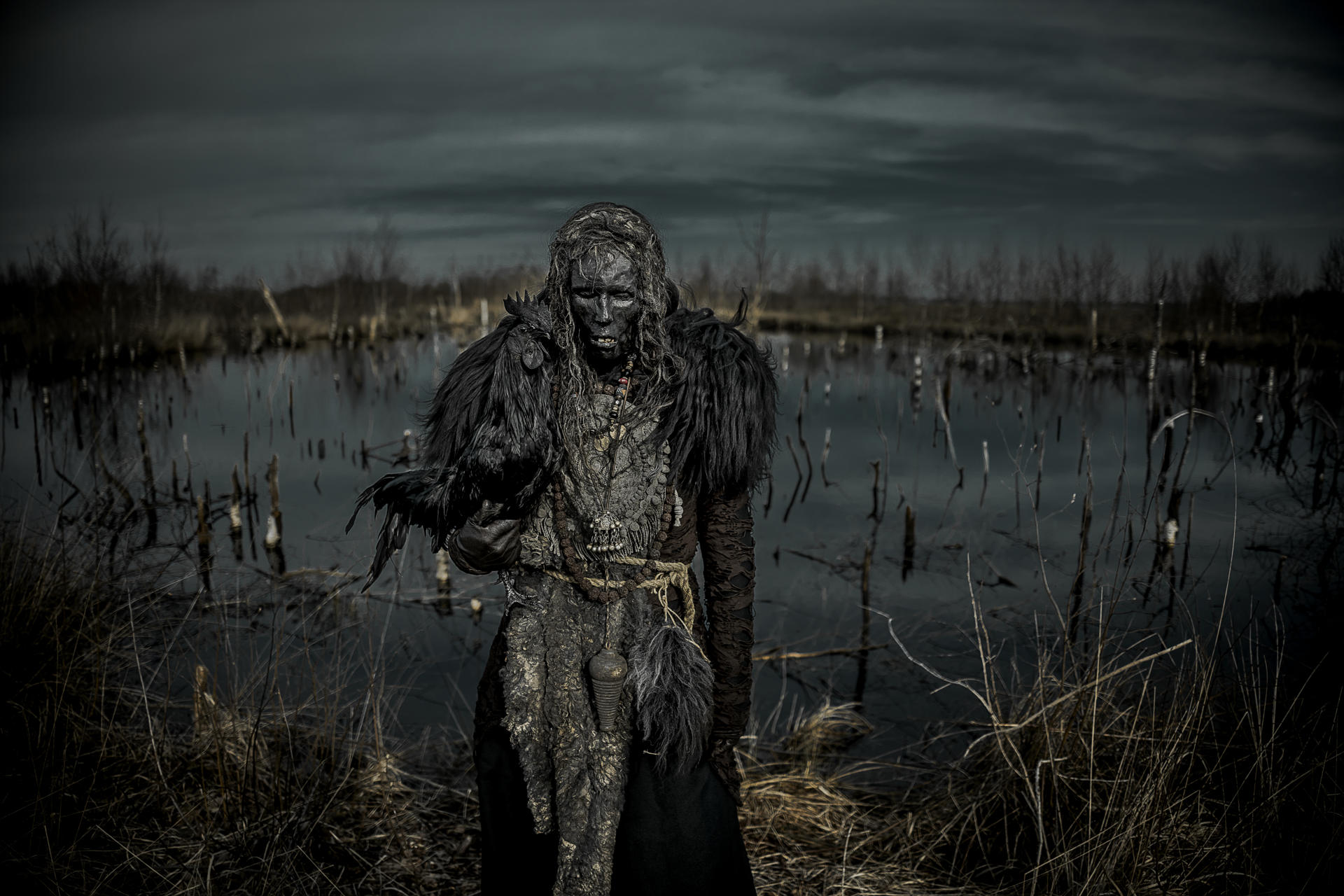
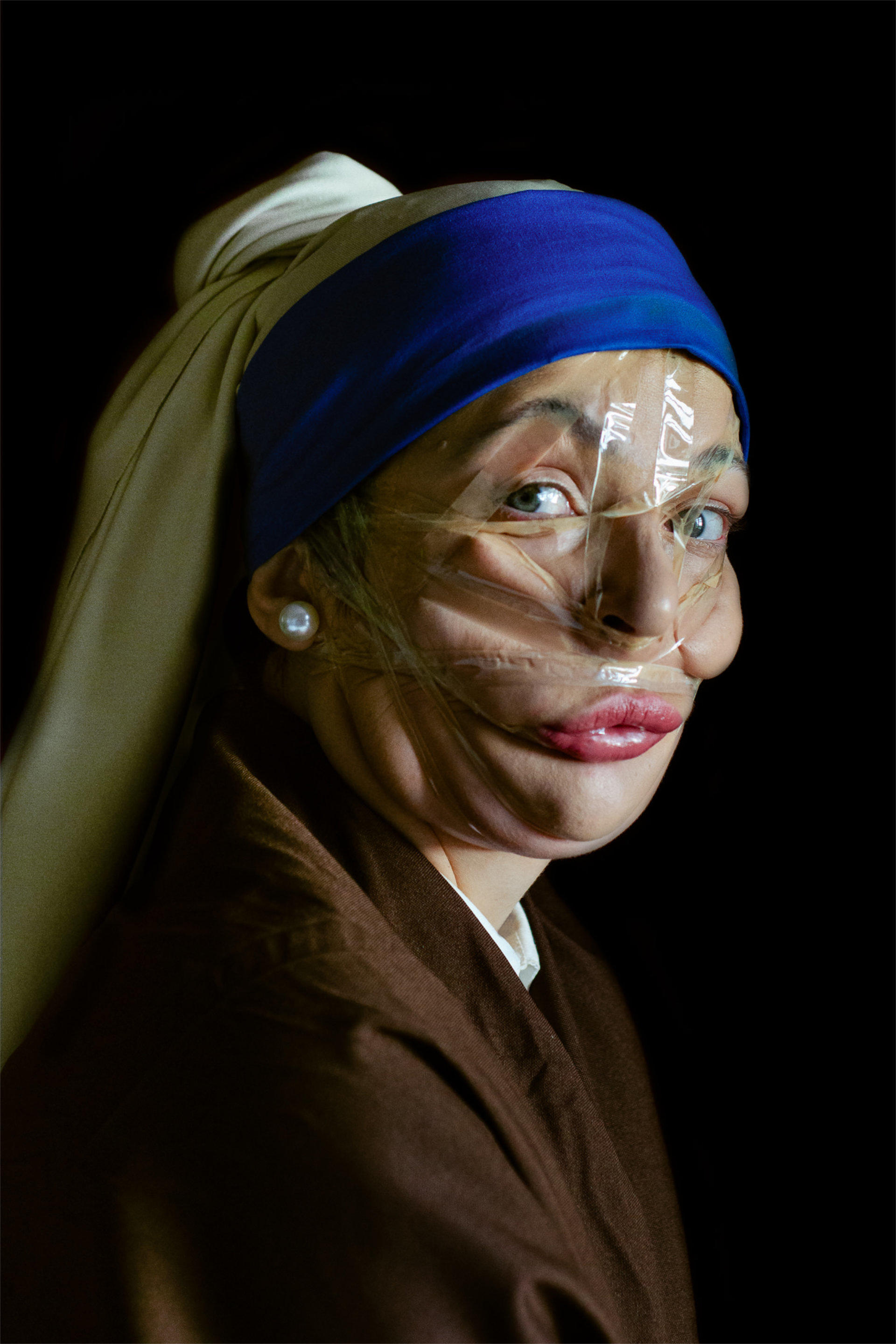
Like the traditional dances and theatres of spiritual possession found in Africa, Afro-Caribbean nations, and the Pacific Islands, macabre artist duo Mothmeister describes donning a mask as a portal to an altered state:
Once the mask is on, the senses begin to vanish. You can’t see clearly. You can’t smell or hear. Breathing becomes shallow — ritualistic. The outside world fades. All that’s left is the being beneath the skin. You’re no longer pretending. You are the character. You’re locked in — fully immersed. Trapped in another self. And there’s a strange kind of freedom in that.
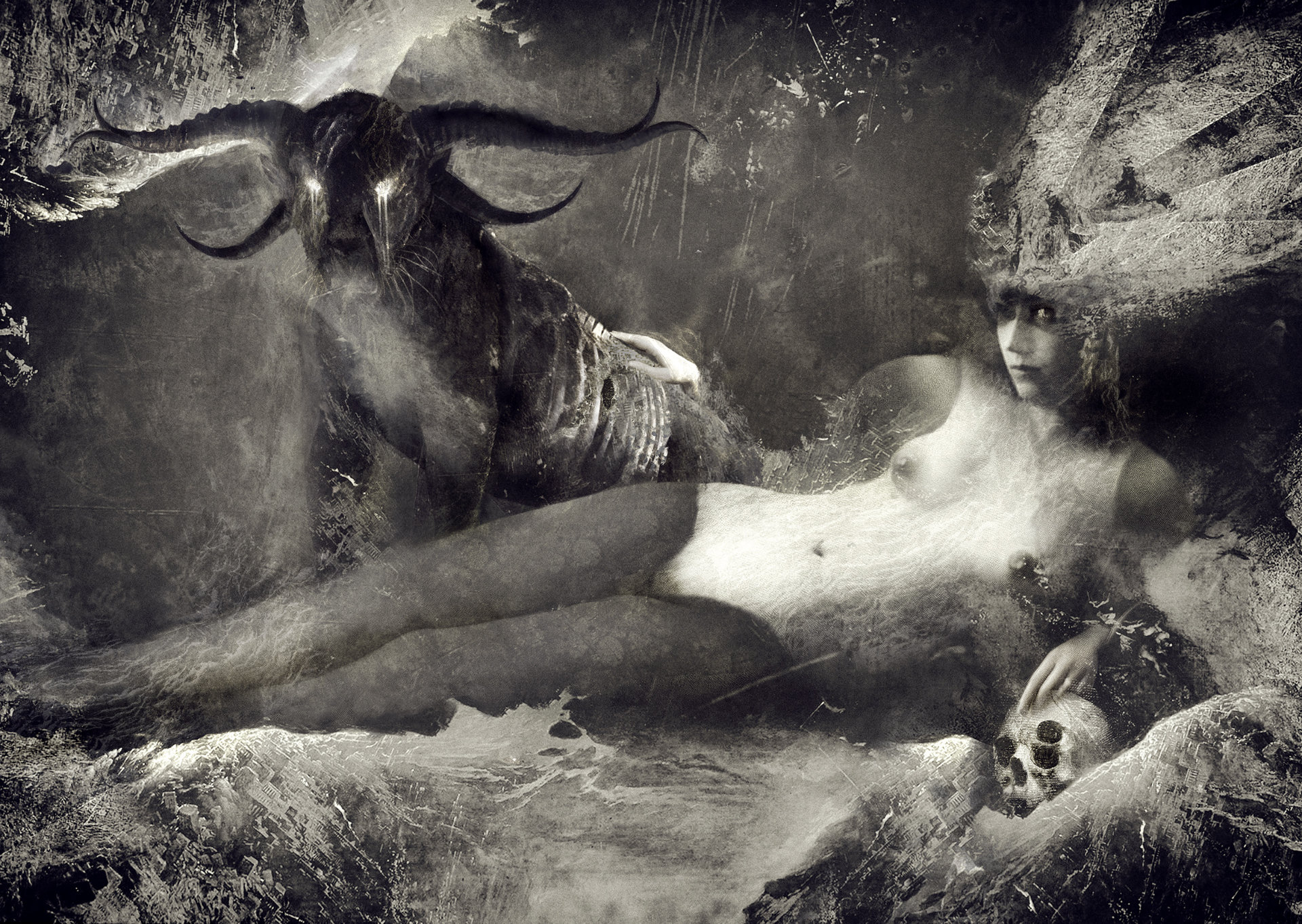
Artist Matt Mrowka describes entering such spaces as a creative necessity when conceiving his light-blasted nightmarescapes:
I usually have a loose daydream image or feeling I want to convey going into a piece but if the painting wants to take a different path, I tend to oblige. I’ve found if I let the process happen more like a channeling, then the work feels more honest and cathartic. Dark art can swing into the realm of “corny” or “cringe” very easily if it’s not completely honest.
“I start from the dark to imagine a timeless dimension,” says illustrator Ariel De La Vega when asked why he prefers to draw on black surfaces. “A space where different planes coexist and the world of symbols and dreams live together. It’s where my psyche, like a mirror oriented towards the internal void, reveals its images…I am in no hurry and have no set goals; I enjoy the process.”
De La Vega alludes to a dark space all of us inhabit every day: the moment we close our eyes. To close our eyes is to enter a space where the outer world is less important than the inner one – a place of dreaming. The dark is inherently, experientially, indelibly linked to not just the danger and privacy of night, but to psychological spaces and the monsters of the unconscious.
In his dramatic and enigmatic manipulations of traditional iconography, illustrator Django Nokes speaks to our inherent shadow-self:
It’s about creating curiosity: something unsettling that still draws you in. My philosophy is that true beauty often carries a shadow, and true horror often hides a strange kind of grace. I want my work to live right in that fragile space between the two.
It is no coincidence that spiritual imagery permeates dark art. As Carl Jung emphasized, faith and magic were often the pre-Enlightenment world’s most common way of dealing with distress and disorder. While the modern artist may understand that the right pill can help, creative practices that use ritual to acknowledge and give shape to personal suffering — making it visible to a community that can respond — still hold tremendous value. Mothmeister opines:
We’ve been atheists from the very beginning — and remain so without doubt. But atheism doesn’t mean indifference. Quite the opposite. Religion, to us, is one of the most fascinating human inventions — a theatre of belief, ritual, control, ecstasy, and fear. The concept of surrendering to a higher power, of building entire lives around unseen forces…it’s both beautiful and terrifying. It transcends the individual.
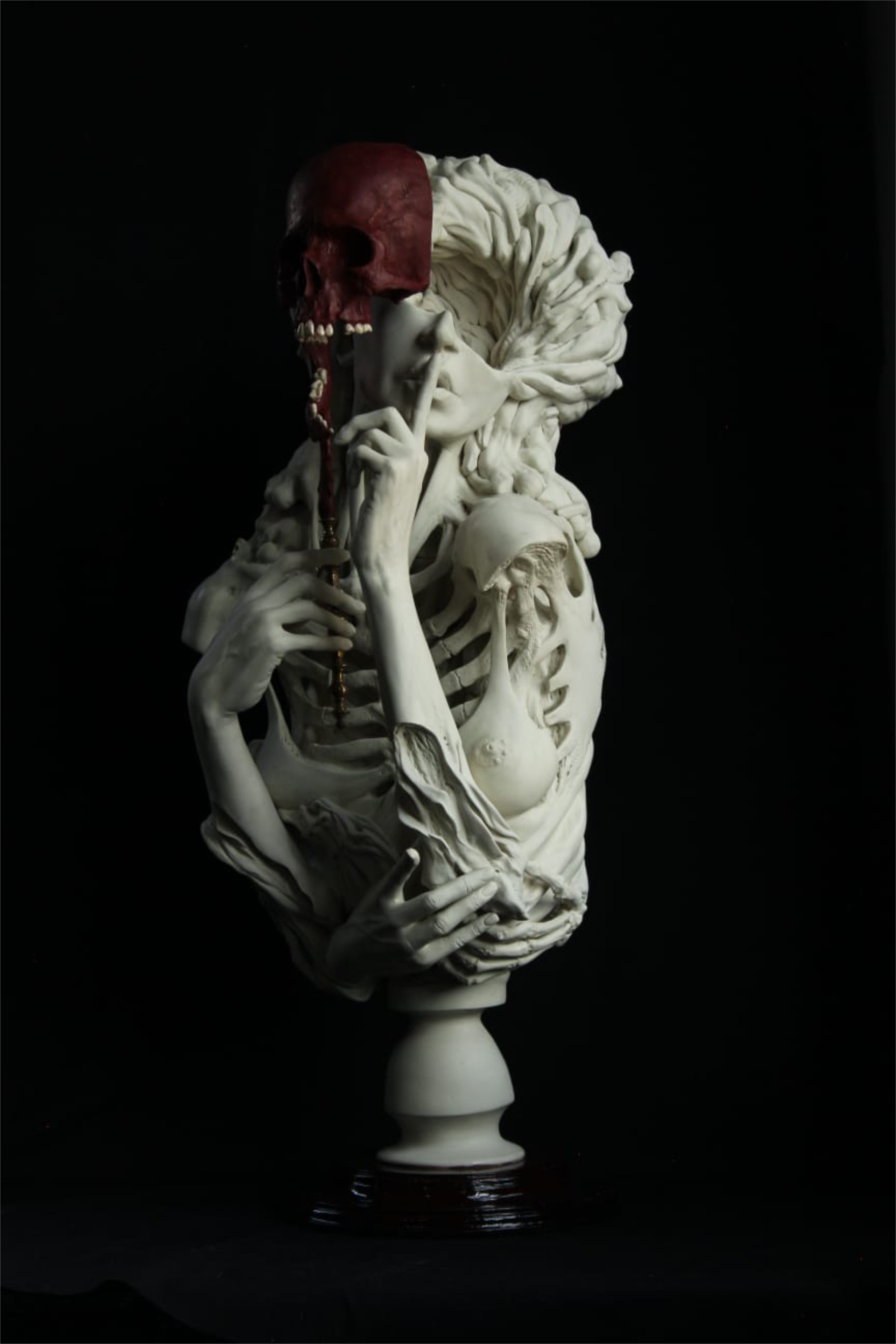
Sculptor Emil Melmoth describes the influence of traditional religious practices on his grotesquely ecstatic amalgamations of altarpiece statuary and medical moulage:
In Mexico, since our origins, we have had a very close relationship with death. In the pre-Hispanic period great importance was given to rituals, offerings and even sacrifices. There has always been a cult of death, from symbolic and ritual aspects to events full of blood and suffering, but at the same time of great admiration and recognition for what they represented.
Later came Catholicism where Christ is represented bloody, carrying his cross, hurt by his crown of thorns, scourged until he bleeds and dies. I have been struck by how the cult of death is manifested from our pre-Hispanic origins and later with the mixture of other religious traditions, mainly Catholicism because it is the largest religion in Latin America. Death is always impregnated with the crudest things such as suffering, blood, sacrifice, but also related to the beauty of the transcendence of the spirit.
Dark art’s historical precedent appears in 18th century Romanticism, often described as a spiritualizing and emotion-forward reaction against the technological innovations of the Enlightenment. It is quite fitting that now, at a time when every day we see into the bright light of technology the new ways that light is going to be used against us by those in power, artists are investigating the value of remaining in the shadows. No matter what progress we make, everyone has nightmares, everyone dies, and no one knows how to deal with it.
To the degree our technological overlords elude tragedy in their lives, they have often done it by exacerbating the tragedies in ours. In a world that’s devolved from clashes of ideology and tradition into a neo-feudal struggle between self-interested power brokers, the Jungian shadow-self hasn’t so much shrunk as gone public: Everyone now feels like an exposed nerve at the mercy of an indifferent and arbitrary state. It isn’t difficult to see why a thirst for the humanism of transforming private pain into public catharsis is becoming one of the few things people can agree on.
It is important to say that despite its introspective and occult tendencies, Romanticism did eventually achieve things in the public sphere — the European revolutions in the 19th century were heavily influenced by Romantic ideals of self-invention and Romantic poets were among the most ardent revolutionaries. Dark art may be just one aspect of a widening understanding of the deeper sources of our pain. The first step to illumination is to admit we are in the dark.
Scroll down to see the entire collection of artists curated by Diana M. Ahuixa.